Reviews: Son of a Preacherman and Sisters of ’78
Excellent shows by Ins Choi and Kristen Da Silva help heat up the fall season

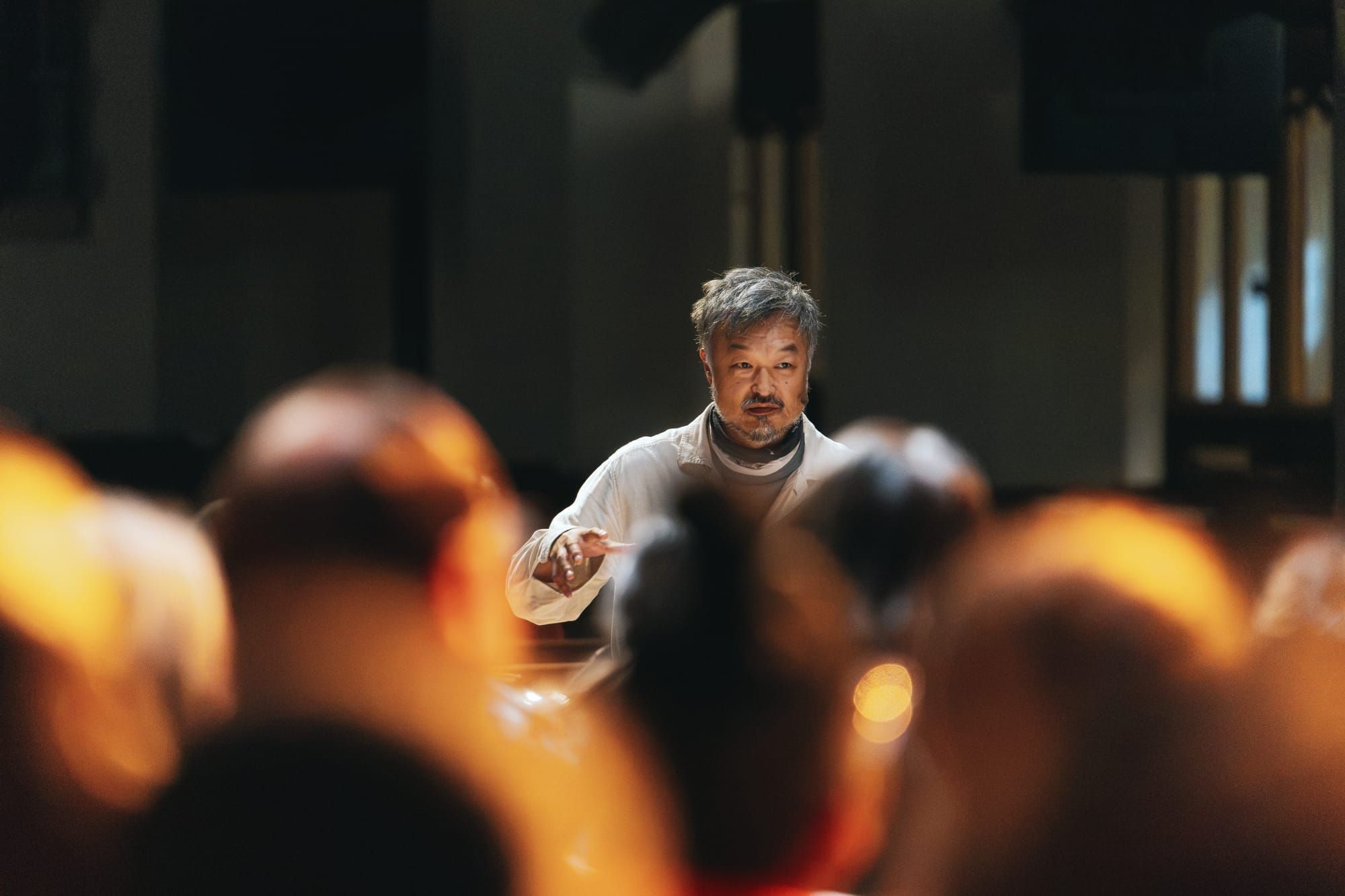
Praise the lord — or at least let us thank the theatre gods.
Kim’s Convenience author Ins Choi is back with another show, and while it may not be structured like a traditional play, it’s no less effective because of that: funny, heartfelt, deeply personal and full of profound insights into the human condition.
Son of a Preacherman (Rating: ✭✭✭✭✭) is so titled because Choi comes from a long line of Christian ministers. His paternal grandfather was a preacher in Korea; and his father, who retired from the pulpit a while ago, helped found the Toronto Korean Bethel Evangelical Church.
It was always assumed — especially by his mother, who once made a pact with God — that he, too, would become a preacher. But he felt another calling: to become a theatre artist, which requires its own kind of inner faith and devotion.
After his family emigrated from Korea to Canada in the 1970s, Choi grew up not seeing many faces like his in pop culture. On the one hand, there was martial arts legend Bruce Lee, and on the other there was scientist David Suzuki. Was Bert, Ernie’s friend on Sesame Street, Asian? (Think about it: black hair, yellow skin)
Things improved a bit later, when he saw Ricky “The Dragon” Steamboat hold court in the wrestling ring, or Christian Hosoi perform the “Christ in the air” move as a skateboarder.
After acting school, he got a taste of the kind of stereotypical roles that were in store for him. Not promising. Then fu-GEN Theatre invited him to write a play, which became Kim’s Convenience, and he submitted the script to every theatre he knew. They all turned it down. When it premiered at the Toronto Fringe and became an overnight hit, they did a 180.
That success led to a remount, a tour and a beloved TV series. But he was most proud of the fact that the show allowed Asian kids to see people who looked like them on their screens.
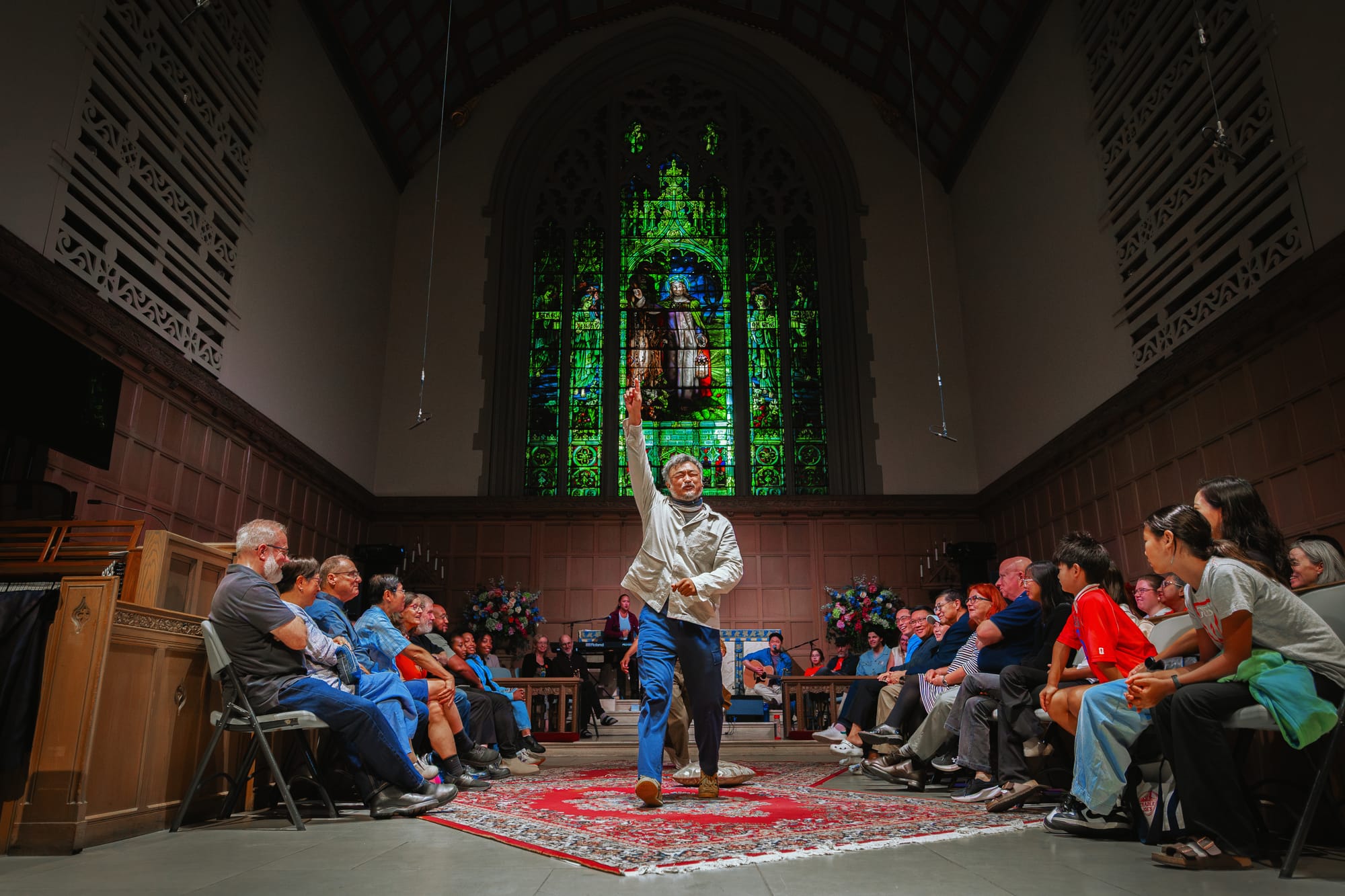
As I suggested above, Preacherman — produced by Vancouver’s Pacific Theatre — isn’t structured like a typical play. For one thing, there are songs, really catchy ones, performed by Choi with backup vocals and playing by Yunike Soedarmasto (keyboards), Haneul Yi (guitar) and Belinda Corpuz (percussion).
These aren’t show tunes, exactly. They feel more like amusing, accessible numbers that might have played on the CBC in the 80s or been performed live in church basements for youth groups, filled with a playful wit and subtle moral questioning. One song imagines what Jesus would think of the world if he were around today; another expresses Choi’s longing to be Bruce Lee’s best friend in various movies.
For this Toronto leg of the show’s tour — it’s already played Vancouver and Ottawa — Choi and director Kaitlin Williams are presenting it in an actual church — the Timothy Eaton Memorial Church near St. Clair and Avenue Rd. Audiences sit in the chancel, the raised area where the choir usually sits. The result is an immersive show that, lit by Jonathan Kim, couldn’t feel more intimate — absolutely perfect for such a personal story.
Besides recounting episodes from his own life, Choi talks about his family history, including an uncle who had to hide beneath floorboards — staged by Williams with chilling effectiveness — to avoid being detected by soldiers. He also divides sections of the audience into various countries, all to brilliantly explain the Korean War.
Underlying the show is the question of what the younger Choi is going to do with his life, especially after his theatre and acting dreams seem to be heading nowhere. Should he continue trying to make theatre or become a preacher? Even though we know the answer, the question still makes us engage with the larger existential question that we all have to confront.
There’s a beautiful section near the end, when he describes being in his father’s office as a child and looking at a marked-up draft of the man’s upcoming sermon, filled with scribbled notes and circled sections (there’s some nice use of photos throughout). Choi compared that to the polished version he would preach later and be filled with awe.
“He always made people laugh, cry, and feel a sense of community,” Choi says about his father’s sermons.
Of course, that’s essentially what he himself has been doing with his theatre work. Like father, like grandfather, like son.
Son of a Preacherman continues until Oct. 25 at Timothy Eaton Memorial Church (230 St. Clair West). Ticket info at pacifictheatre.org
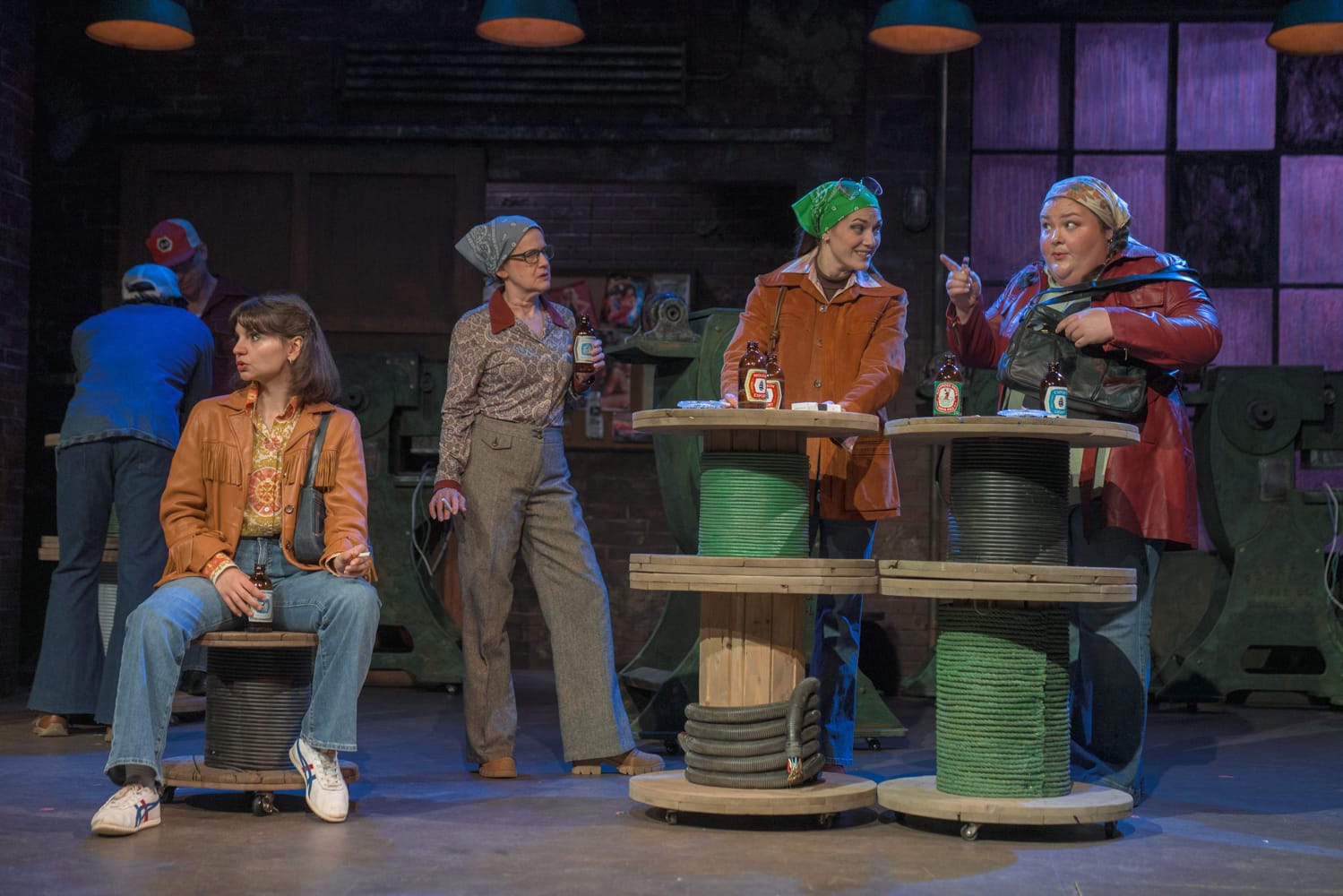
Sisters in solidarity
I’m ashamed to admit that before seeing Kristen Da Silva’s remarkable new play Sisters of ’78 (Rating: ✭✭✭✭✭), I had never heard of the 1978 strike at Fleck Manufacturing in Huron Park, just outside London, Ont.
But Da Silva provides an informative and entertaining look at the historic labour event, grounding everything with the (fictionalized) stories of a half dozen women involved.
The play focuses on Maeve (Madison Hayes-Crook), a young mother whose husband, Andrew (Aiden Altow), has just left their home — which they share with Andrew’s crusty mother, Margaret (Cara Hunter) — for several months to train with the RCMP out west.
Needing extra money to get by but possessing no employable skills, Maeve finds work at the Fleck plant, where she joins her friend Laurie (Shaina Silver-Baird) and others making wire harnesses for cars.
But conditions are bad in the non-union plant: the pay is lousy, it’s cold, there are minimal safety measures and the foreman has wandering hands. The factory has had so many accidents it’s been dubbed “the butcher shop.”
Soon one of Maeve’s co-workers, Joyce (Alyssa LeClair), attempts to collect enough signatures to form a union, something she’d tried to do before unsuccessfully. All of this causes a rift between Maeve and Laurie, who says they should be lucky for having a job at all. In their phone calls, Maeve keeps her job — and her union activity — a secret from her husband.
Da Silva, director Mary Francis Moore and the actors do a terrific job of establishing the rapport among the working-class women in the plant — so much so that we care for each one by the end.
We also get a real sense of the disturbing sexism of the era. It’s there in Andrew’s condescending, entitled attitude towards Maeve; it’s in the patronizing job interview between foreman Lumpy (Geoffrey Pounsett) and Maeve, as well as his boundary-crossing closeness to the younger Angie (Kait Post); but it’s also in a chilling story that the frequently pregnant Natalie (Kirstyn Russell) tells about her physician refusing to give her a tubal ligation because, in his opinion, her husband might want more kids.
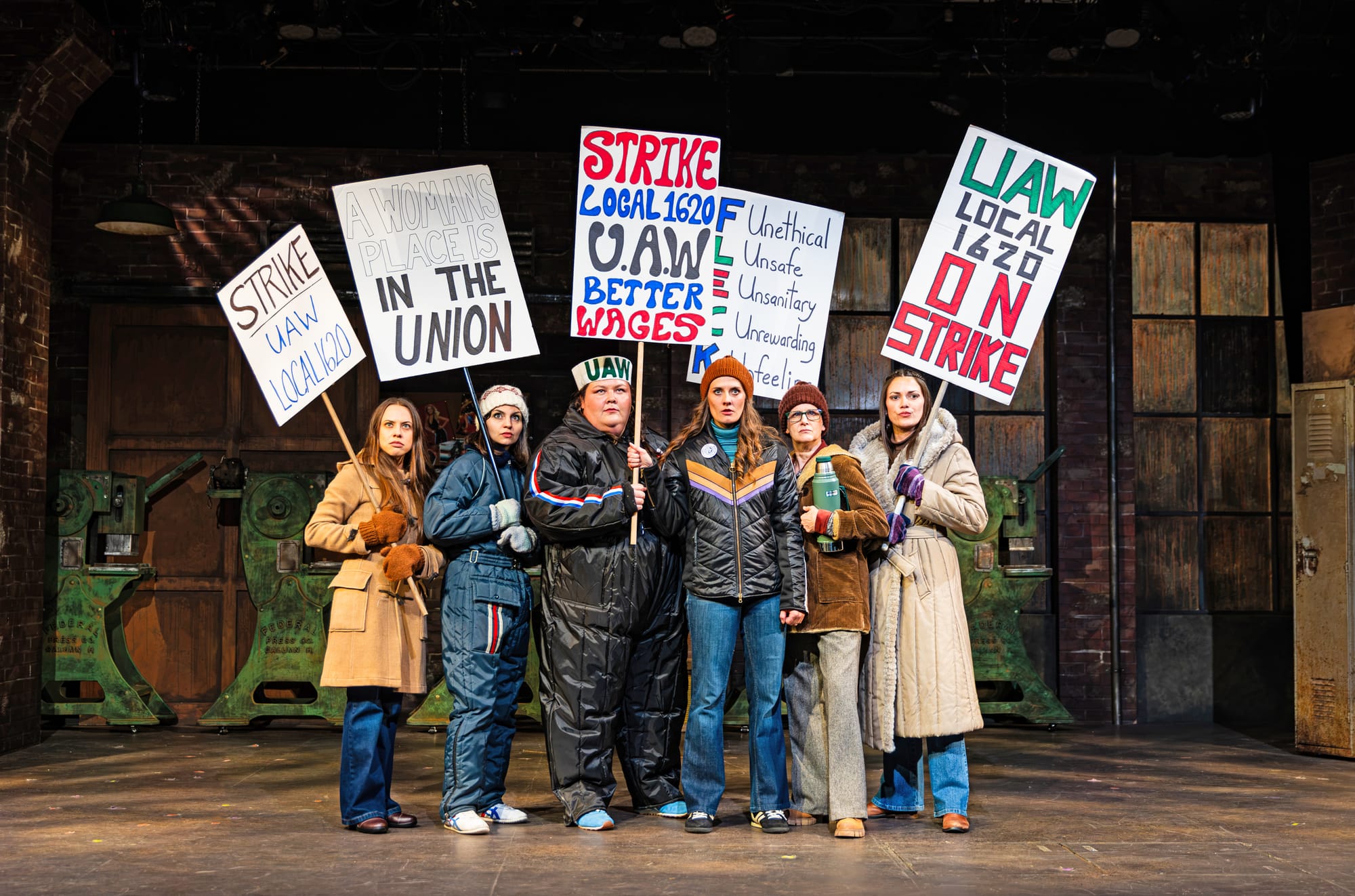
Da Silva handles the labour issue in a way that imparts information without seeming awkwardly shoehorned in — through talk at the plant locker rooms, radio broadcasts, and even domestic conversations. There’s a telling scene in Maeve’s home where her daughter Janie (Goldie Garrett) asks what a “scab” is.
Sean Mulcahy’s set establishes the play’s many locations — a humble kitchen, the plant floor, a bar, a phone in the hallway of the RCMP training facility — while his costumes give us a good sense of the women’s ages and economic backgrounds. Lyon Smith’s sound design and Siobhán Sleath’s lighting enhance the setting — and Smith and Moore use catchy 70s tunes during transition scenes.
Da Silva’s dialogue always feels natural and authentic to the characters’ lives; when the actors say “Youse” it’s because it’s the way they speak, and there’s absolutely no judgement. The script is also gloriously free of grandstanding, inspirational speeches; when, in a key moment, LeClair’s Joyce addresses dozens of workers, it’s to appeal to their sense of fairness and their injustice — she knows their lives.
The play is so artfully written and performed — Hunter also plays a seasoned worker at the plant — that I could have watched the women talk amongst themselves for a few more scenes.
But the way the play ends, right after a brilliant joke about smiling, feels just right: unsentimental, unadorned and to the point. These women have work to do and lives to support.
This is an important play, and in case no Toronto producer picks it up for a transfer (it began this summer at the Blyth Festival), it’s worth making the trip to Hamilton to see it.
Sisters of ’78 continues at Theatre Aquarius (190 King William St., Hamilton) until Oct. 18. Ticket info at theatreaquarius.org or 1-800-465-7529