Meet Toronto comedy’s best kept secret
The Comedy Bar and Second City vet discusses directing kids and clowns, and hanging out with Hal Prince and Jason Robert Brown

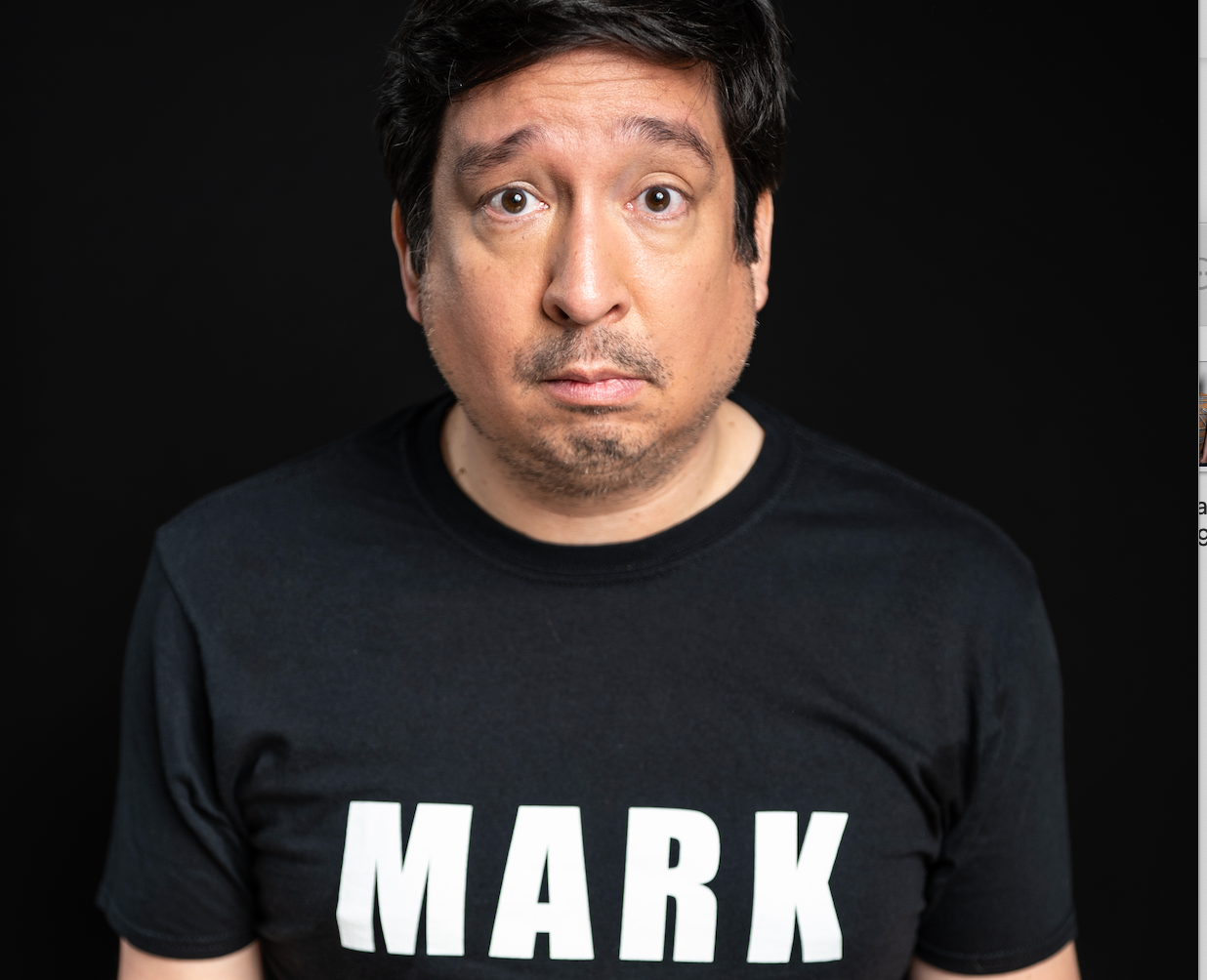
If you’ve been to a comedy show in Toronto in the last couple of decades, chances are Mark Andrada was in the room.
He may have been in the tech booth, controlling lights and sound (he was technical director of Comedy Bar for its first 13 years). Or perhaps he designed that Sketchersons show you saw way back when it was at the Poor Alex Theatre (RIP).
More recently, you’ve probably seen his work at Second City, where he’s been involved on and off since co-starring in Co-Ed Prison Sluts, in which he was nominated for the first ever Canadian Comedy Award, losing out to his former clown instructors Mike Kennard and John Turner (a.k.a. Mump and Smoot).
These days he’s directing comedy shows there for young people, including the upcoming holiday revue Rudolph Runs Wild, which begins performances this weekend.
“The running story in the show is that Rudolph is a character that we’re looking for,” says Andrada, seated in one of the comfy lounge areas overlooking Queens Quay at Second City’s York St. home.
“There are lots of games and improv, and many opportunities for kids to get onstage. There are touches of panto in it, too.”
When I caught No Grown-Ups Allowed earlier this fall, which Andrada directed and co-wrote some songs for, I was impressed with how much care he took to introduce young audiences to basic comedy concepts. Such as: What is improv? What’s the difference between an improvised scene and a sketch? What does a music director or stage manager do? And if someone is out of the cast (which happened the afternoon I attended), who is the person that fills in for them?
“These are all really important questions that we tend to take for granted,” says Andrada, who also voices the character of Amado, the community-minded arborist in the TVO Kids animated series Work it Out Wombats!
For his first shows aimed at young people, Andrada wanted to get them to shout out their improv suggestions, just as adults do.
“I didn’t want them to have to raise their hands — that’s not authentic to what an improv show is,” he says. “At the holiday show last year, we had a problem with getting them to stop giving suggestions. We needed a way to get them to stop without telling them to shut up. I thought, ‘How can we do it with gratitude?’ That’s when I came up with the 3-2-1 countdown and the whole audience saying ‘Thank you.’ That gets everyone on the same page to start listening and watching again.”
Being the dad of a four-year-old son (who’s about to turn five) has given him a new way of looking at live shows.
“I take him to a preposterous amount of theatre — we’re out almost every weekend,” he says. “Recently, I took him to see Guys and Dolls at Stratford. During intermission I always ask him what he thinks of the show, how he feels and whether he understands what’s happening. This time, he said he understood things, but he had one question: ‘What is a gambler?’ So then I had to explain the concept of gambling, followed by who ‘sinners’ were.”
One of his coolest early theatre gigs was being part of the Toronto workshop of Jason Robert Brown’s musical Parade, which would premiere on Broadway a year later. At the time, he didn’t recognize Brown’s name, but he was a big fan of director Harold Prince, who had directed one of his favourite shows, the long-running Phantom of the Opera.
“I was part of the ensemble that came for the parade moments,” he says. “We paraded across the stage, sang. We learned the songs at the piano next to Jason, and I remember thinking, ‘Wow, these are great, and he’s really good.’ When people went backstage when they weren’t on, I’d sneak out and sit behind Prince, like an obnoxious kid. I remember him turning around, pointing at Jason, saying, ‘That kid’s the future.’ Also, Brent Carver taught me yoga backstage.”
His clown training — besides Kennard and Turner, he also studied with Fiona Griffiths and Karen Hines — came in handy when he directed early 2-Men No-Show productions with Isaac Kessler and Ken Hall.
“They had no clown experience, and I was like, ‘You guys are clowns,’ and so I started teaching them the fundamentals, saying, ‘You’re already doing 90% of this naturally. Here’s just the extra 10% to make sure you’re fully reaching the audience. And now they’re the kings of clown.”
Having had a front row seat — or more often, a view from the control booth — for thousands of shows, Andrada has seen lots of comedy trends. These days, with a TikTok or Instagram account, the barriers to entry for aspiring comics are lower than ever.
“It’s interesting now,” he says. “The onus is definitely on you to promote yourself. That was always how it was in stand-up. But now everyone’s a stand-up. Even character and sketch comics have to promote themselves. There’s good and there’s bad. If you’re a self-starter, and if you have that initiative, drive and focus, it’s great. But I sometimes wonder about those comics who are brilliant but don’t have those promotional skills.”
For his Second City kids shows like Rudolph, he’s always interested in finding universal moments for people to laugh at. In any given audience, you might have five- or six-year-olds as well as 12-year-olds, as well as parents.
“If you can get everybody laughing at the same joke, even if they’re laughing for different reasons, we’ve done our jobs,” he says.
“When you’re improvising a scene and you say no to an offer or switch the energy down, that can get a sardonic laugh from the older kids and grown-ups, but it won’t play to the littles, they just think you’re a bummer,” he explains.
“But if you if you make the choice to play ‘up’ instead, then you still have the same reaction from the grown-ups, the 11-year-olds will find it funny because you’ve probably done something unexpected, and the littles laugh because of your energy and your physicality. So everyone wins.”
Rudolph Runs Wild opens at the Second City (110 Harbour St.) on Nov. 21 and plays every Saturday and Sunday until the end of the year, with added weekday shows from Dec. 22 to 31. secondcity.com or 416-343-0011.