Review: You Had to Be There documents the Toronto play that changed comedy
Some of the biggest comedy and theatre stars discuss being involved in the legendary Toronto production of Godspell

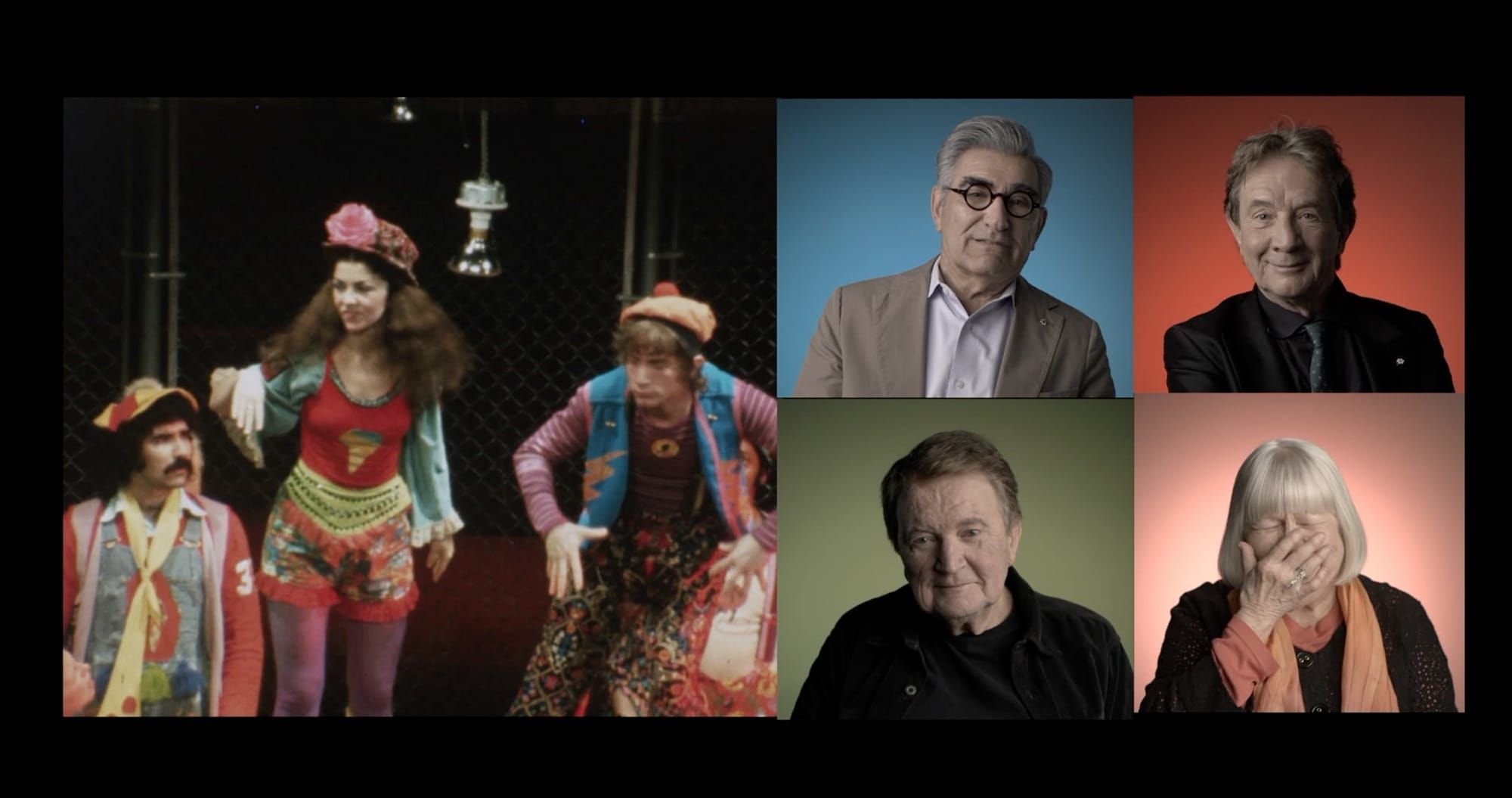
Exactly two years ago, theatre, TV and film legend Victor Garber confirmed to me in one of my favourite interviews that a documentary about the famed 1972 Toronto production of Godspell was finally in the works, with Judd Apatow attached as a producer. They were soon going to film a reunion dinner in Los Angeles to be a part of the doc.
Well, now that film — given the unruly but completely period-appropriate title You Had To Be There: How the Toronto Godspell Ignited the Comedy Revolution, Spread Love & Overalls, and Created a Community That Changed the World (In a Canadian Kind of Way) (Rating: ✭✭✭✭✭) — is out, and it was worth the wait. And that reunion provides a lovely little scene near the end.
Directed by Nick Davis, You Had to Be There looks at the phenomenon that was the Toronto sitdown production of Stephen Schwartz’s religious-themed musical, which had been successful off-Broadway and in London before eyeing Toronto.
How come so many performers in the cast — among them Martin Short, Andrea Martin, Eugene Levy, Gilda Radner and Jayne Eastwood, as well as Dave Thomas later on in the run — went on to comedy superstardom?
While no video exists of that cast, headed by London, Ont.’s Garber, who a month into the run went on to star in the film adaptation, one day Short brought an old tape recorder to the theatre and placed it onstage. (As we learn early on in the film, he was used to taping himself at home in Hamilton and pretending he was Frank Sinatra.)
Davis gets great use out of that illegal bootleg, and also 70s-style animation by Ace & Son Moving Picture Co. to bring the complex, multi-pronged story life.
First came the auditions at the Masonic Hall. At the time, Short, Levy and Thomas were all students at McMaster University, where they were doing campus theatre in their spare time. The Maine-born Andrea Martin had seen the show in New York, and was devastated when she didn’t get a callback.
Avril Chown showed up to the audition with her friend Paul Shaffer to accompany her on piano. Schwartz, spotting talent, asked Shaffer to play the music for all the auditions, and then hired him to become the musical director.
Garber, who had sung songs from the musical with his band, received a standing ovation at the audition, a tough act for next-in-line Levy to follow. Radner auditioned with the unlikely song “Zippity Doo Dah” and won everyone’s hearts with her indomitable, childlike spirit.
Then came the show, which got rave reviews, got extended and transferred and including things like Short’s brief run of onstage intermission impressions before a producer from New York saw it and put an end to it. The cast and others in their group like John Candy would convene at 1063 Avenue Rd., which ought to have a plaque outside about the comedy connection.
Davis gives each one of the cast members their proper due, including performers who didn’t become household names, like Chown — who has an industry story late in the film that will break your heart — Valda Aviks and Rudy Webb.
After the show ended, the timing was right for many cast members to join the inaugural Second City Toronto company. Short took a break, attempting to do not-for-profit theatre, like a production of John Herbert’s Fortune and Men’s Eyes, set in a male prison (after seeing it, his then girlfriend Radner told him: “Aw, honey, don’t ever do a play like this again. Ever. Promise.”) He soon wised up and joined Second City.
Shaffer went to Manhattan, where he told Short and Radner that they were as good, if not better, than the performers there. Radner shortly followed and went on to make history at Saturday Night Life. And then the producers of Second City formed SCTV.
Besides the surviving cast members — all but Radner, who died of ovarian cancer in 1989, at the age of 42 — Davis has assembled lots of comedy and/or theatre aficionados to discuss the subject, like Lin-Manuel Miranda, Mike Myers (who followed in his fellow countrymen’s footsteps), Heidi Gardner and Janeane Garofalo.
Davis even springs a surprise on all the cast members — which I won’t spoil here — and watching their reactions is worth the price of admission.
You Had to Be There screens this week at the TIFF Lightbox (350 King West), and begins a run at the Hot Docs Cinema (506 Bloor West) on Oct. 9. See info here and here.
Tonight (Oct. 2) at TIFF there’s a post-screening Q&A with star Jayne Eastwood and producer Tom Powers, hosted by my friend Norm Wilner, and on Oct. 10 there’s a post-screening Q&A with Eugene Levy and Eastwood.