Why the Hadestown live capture is so damned good
The pro-shot of the Tony Award-winning musical made box office history on the weekend and expands into more theatres this week

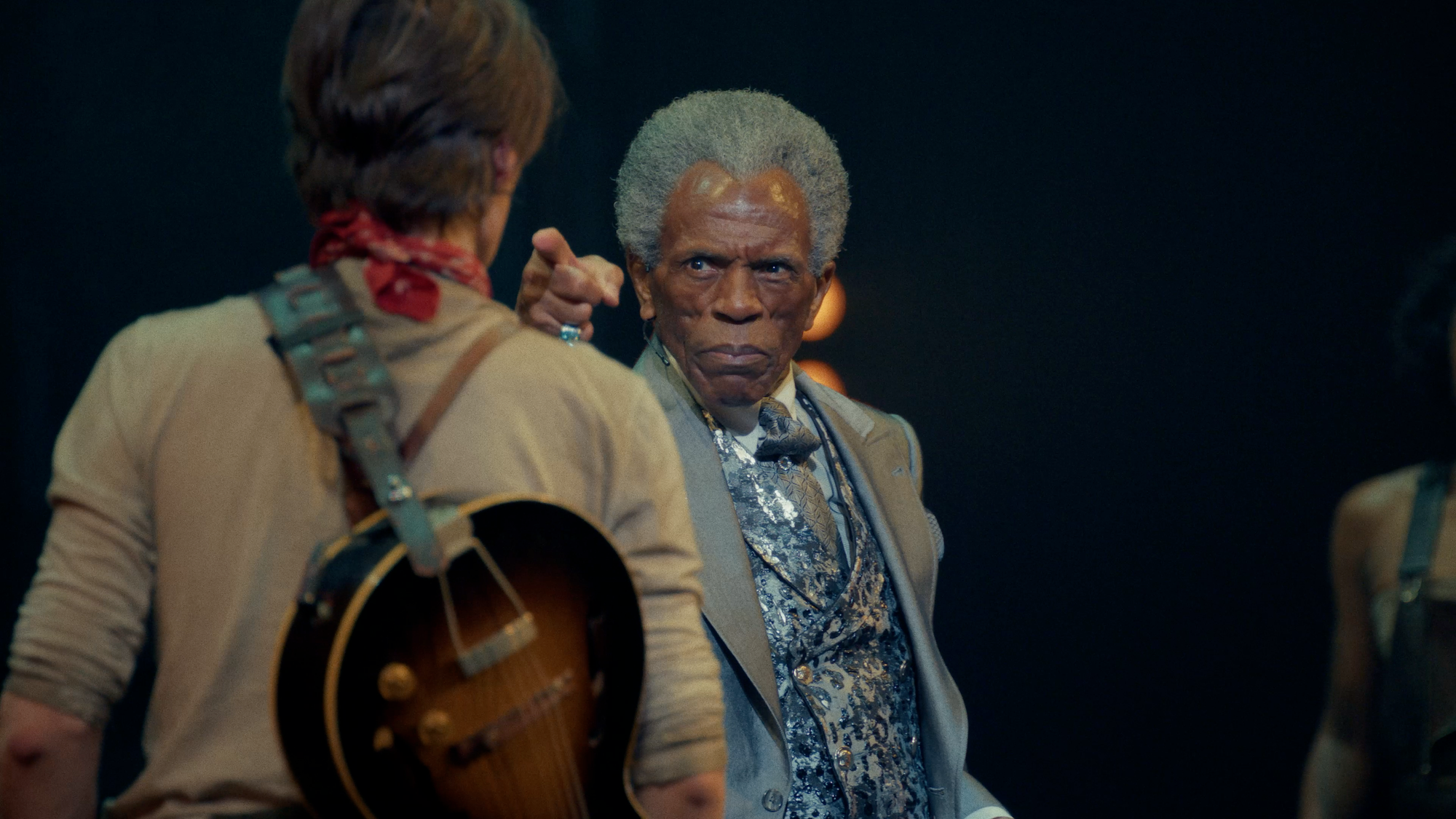
Yes, Christopher Nolan’s The Odyssey has been one of the summer’s big box office successes. But that’s not nearly as surprising as the performance of a much smaller-scaled recent film with a similar mythological theme: the live capture of the hit Broadway and West End musical Hadestown (Rating: ✭✭✭✭✭).
The pro-shot of Anaïs Mitchell’s Tony Award-winning show was only expected to play five days. When I consulted downtown Toronto Cineplex online listings last weekend, there was usually one screening per day — often in the early evening, and pretty much fully sold-out.
Turns out the demand for the film exceeded expectations. In North America alone, the film earned a whopping $10.2 million on opening weekend, surpassing Hamilton’s then record-breaking $10.1 million haul last fall. (To be fair, Hamilton had already been available on the streaming platform Disney+ for a couple of years.)
As a result, the surprise hit has expanded to more theatres this week, and its run has been extended indefinitely. A quick look at Cineplex listings for this upcoming weekend revealed that there are three or four Friday screenings of Hadestown at multiple theatres in the GTA.
Which means theatre-lovers now have the opportunity to see the best live-captured musical I know. I still have some issues with the musical itself, but as a film attempting to replicate the experience of being at a show, it’s unprecedented.
For one thing, director Brett Sullivan, working of course with director Rachel Chavkin (who won a Tony for her impressive staging), makes no attempt to hide that we’re watching a live performance. In fact, it celebrates that experience. The film was captured over three nights at London’s Lyric Theatre, and at the top we’re shown actors getting into costume and performing their pre-show ritual, musicians warming up as well as excited audience members clutching their programs and streaming into the theatre.
This contrasts starkly with last fall’s misguided and horribly shot version of Merrily We Roll Along, which ignored the audience and tried to pretend the show was, in the director’s words, “a classic Hollywood production.” There were so many close-ups, watching it felt like being at a dermatology clinic.
The way Sullivan captures the experience matches the vibe of the show, which feels like a juke joint retelling of the Orpheus and Eurydice story, with the band onstage blaring out Mitchell’s jazz and folk score and Hermes (André De Shields reprising his Tony-winning performance) introducing the characters and the story. Another sign of an electric performance? De Shields gets wild applause from a simple, stylish adjustment of his silver-grey suit before he opens the show and, as narrator, introduces the world of gods and humans.
Chief among the former is King of the Underground Hades (Patrick Page), whose wife Persephone (Amber Gray) splits her year between winters in hell with her hubby and summers aboveground. The latter include Orpheus (Reeve Carney), a struggling musician, and homeless urchin Eurydice (Eva Noblezada), who fall for each other.
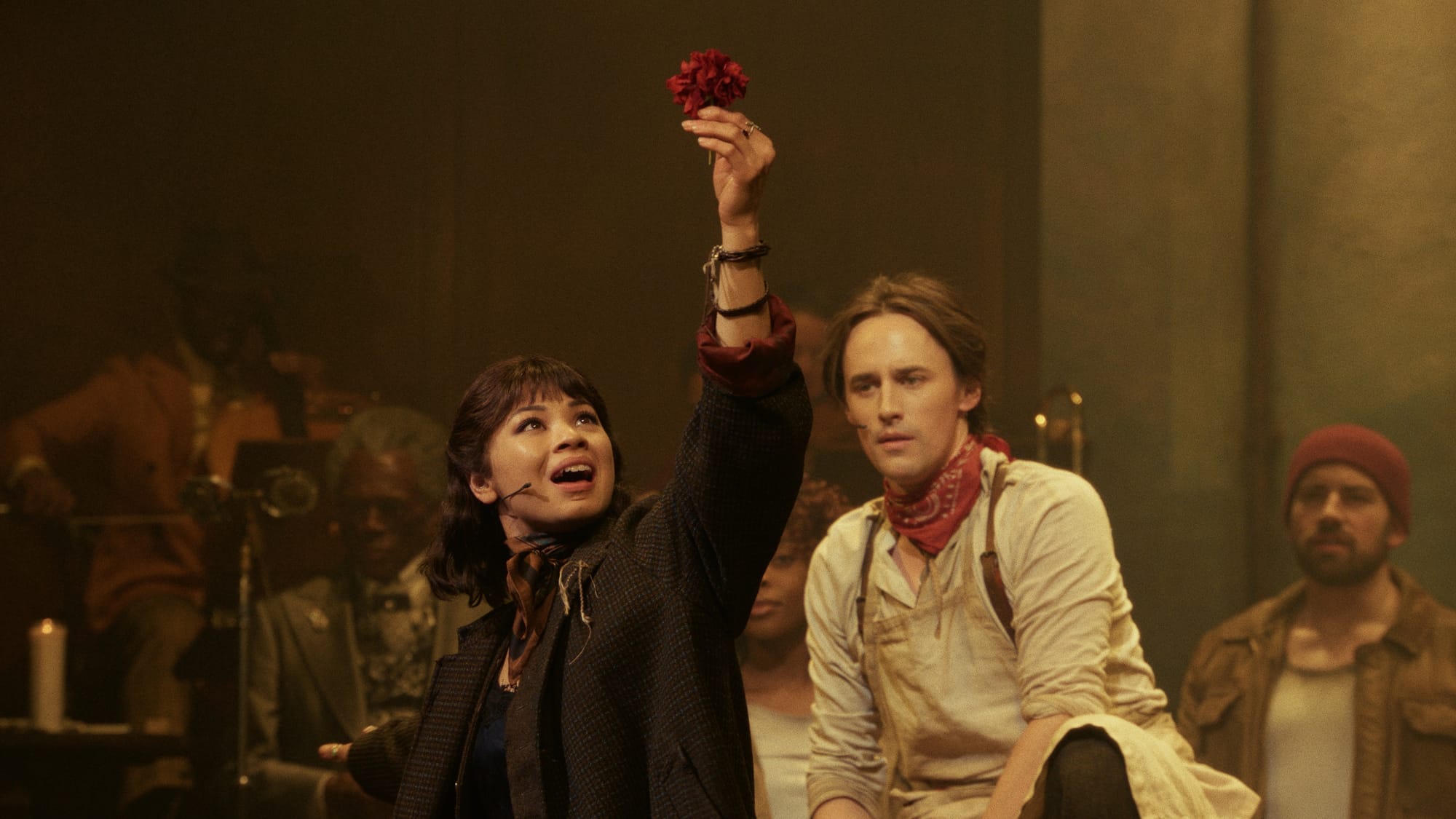
There’s lots of set-up and world-building in the first half. Mitchell, who wrote the music, lyrics and the book, imagines a train between heaven and hell, an idea that gives the show lots of literal momentum, as well as its first great song — the image of De Shields, who turned 80 in January, shuffling along and imitating a locomotive is worth the price of admission.
A bit more contrived is her idea that Hades and his workers are busy mining coal and oil and processing it in pollution-spewing factories, resulting in ecological damage aboveground.
This climate change premise contributes to Eurydice’s hardship; living with a starving artist is tough in a storm, and so when your boyfriend is wrapped up in trying to write his one song, glory, potential sugar daddy Hades’ offer of warmth and wealth can sound pretty damned tempting.
What struck me watching the musical this time around — I saw it on Broadway back in 2020 — were all the political notes. Remember when Trump erected a wall to keep out Mexicans during his first term? Hades erects a similar barrier to “keep us free” in the show. What’s more, the disparity between the insanely rich and the dirt poor is a big theme in the show.
If Hamilton was the perfect show to capture Obama-era optimism, then Hadestown sums up the hellish world we’re currently in, where autocrats rule and prevent the simple worker — the same folks who bought into the wall idea — from getting ahead.
The second act has more dramatic and emotional beats than the first. It’s here that we see deeper layers to Persephone, which Gray shows off in a hugely affecting performance that swings between self-destructive addict and nostalgic neglected wife longing for the early days, as well as Hades and the central couple.
The OBC leads reassembled for the 2025 London remount, and it’s worth noting that Page tore his Achilles tendon before the run and so uses a cane and lugs around a big black protective boot. (David Neumann’s choreography for his character has been tweaked here.)
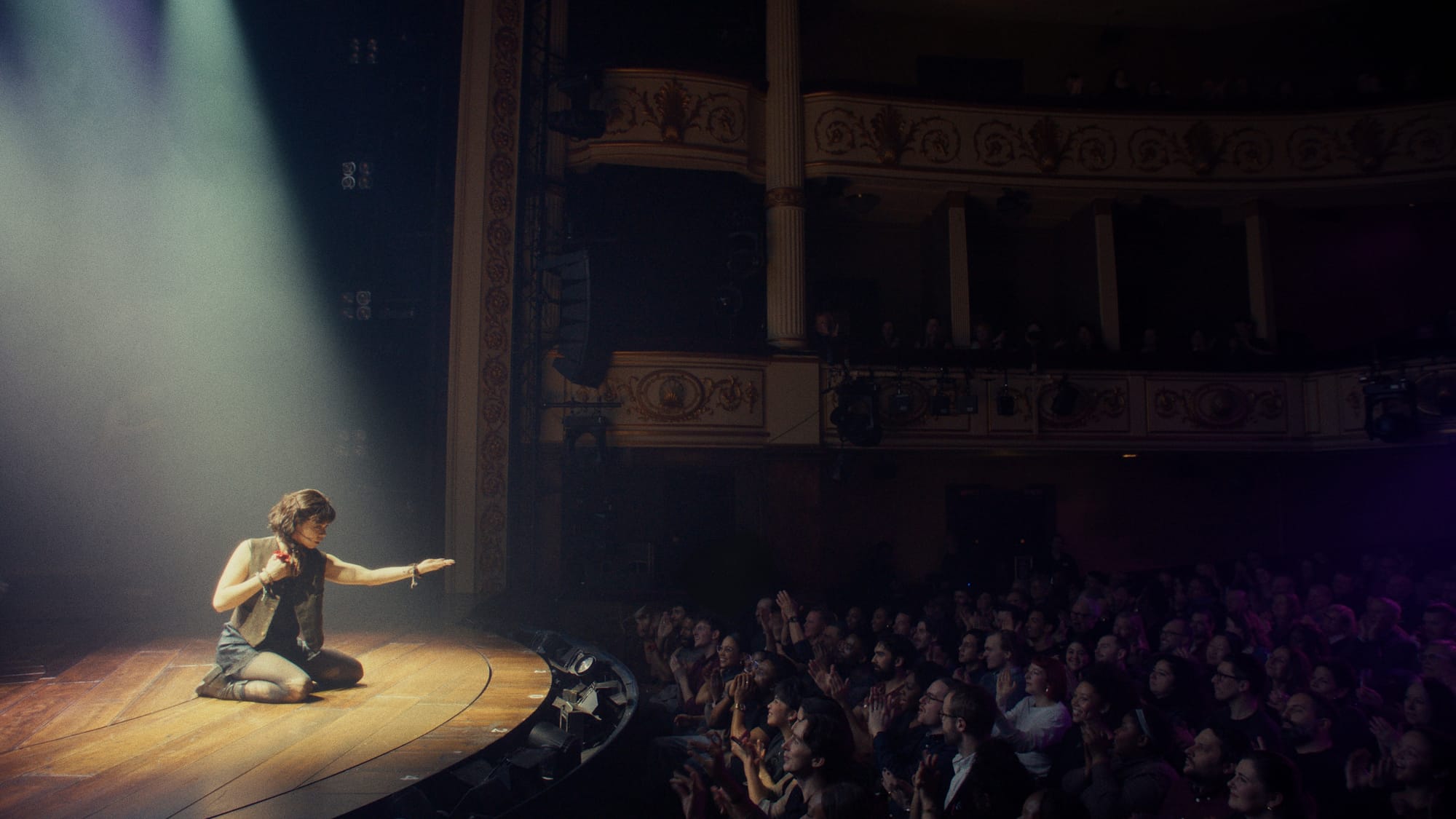
Sullivan knows when to come in close to savour subtle exchanges between characters, and when to pull away and show us the larger stage picture. In a few instances, we get side views — as if we’re actors spying from the wings — of actors playing to the crowd. And there are several moments where we get the perspective from the rafters or from down below — call them the heaven-and-hell cams.
This kind of sensitive filming serves as a great way to capture a terrific production, and iconic performances, for the ages. (Carney and Noblezada met and fell in love during the show, and have performed together in subsequent productions like Cabaret and The Great Gatsby. Their chemistry is palpable.)
Hadestown is still playing on Broadway (seven years and counting) and on tour. The fact that people around the world can now experience it in this pro-shot is gratifying; not everyone has access to professional theatres or can make a trip to a major theatre city. Seeing the show in this pro-shot version can only whet people’s appetites for seeing it live, with different performers. Much of that $10.2 million weekend haul came from repeat viewers.
Let’s hope the film’s success encourages other companies to do something similar. The Metropolitan Opera and National Theatre Live offerings regularly sell out. The Stratford Festival is amassing a library of filmed productions of every Shakespeare play, many of which screened at theatres for a limited period.
In all these cases, the play’s still the thing, but when captured by a sensitive director, the film can be a very good thing, too.
Hadestown is currently screening at multiple movie theatres.