Review: The Odyssey is a miracle of a movie
Try to see Christopher Nolan’s epic account of the Homer poem on the biggest screen available

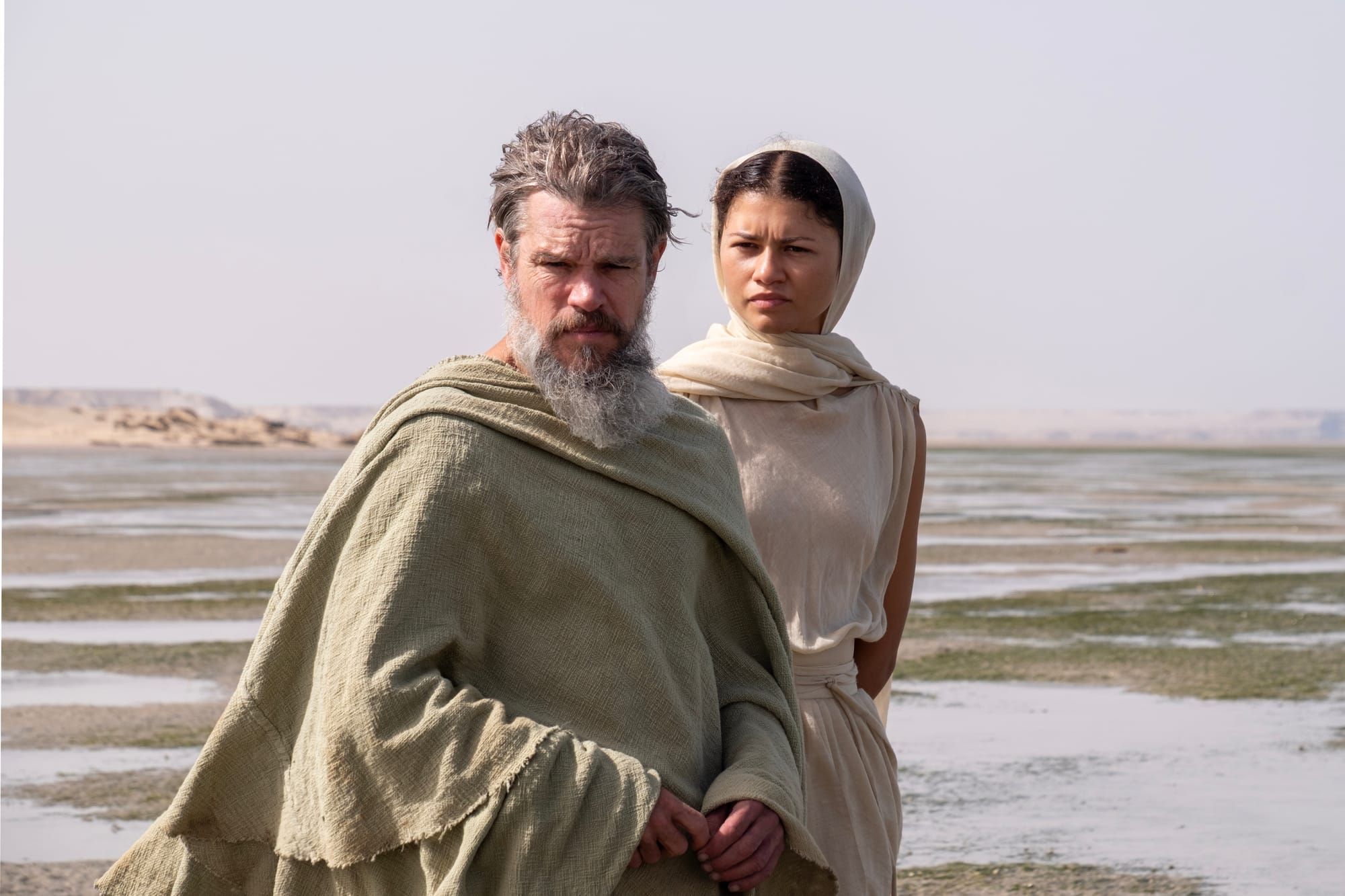
There’s nothing small about Christopher Nolan’s The Odyssey (Rating: ✭✭✭✭).
At nearly three hours, it’s long. The only film ever shot in 70 mm IMAX — the biggest screen format possible — it boasts a starry international cast that includes several Oscar winners playing everything from soldiers and monsters to nymphs and gods. Narratively complex, it covers a massive swath of history and geography, with jaw-dropping, ambitious action sequences that barely look touched by CGI. But it’s also a very relatable human tale of a man trying to return home after a long, arduous war.
In short, it’s a miracle of a movie. And it deserves to be seen on the biggest screen possible.
While Homer’s epic poem is nearly 3,000 years old, Nolan’s film begins with a very contemporary sound: rapper Travis Scott banging his staff as the blind bard Demodocus, invoking the Muses to help him tell the story of Odysseus (Matt Damon), whose cunning strategy helped the Greeks defeat the Trojans.
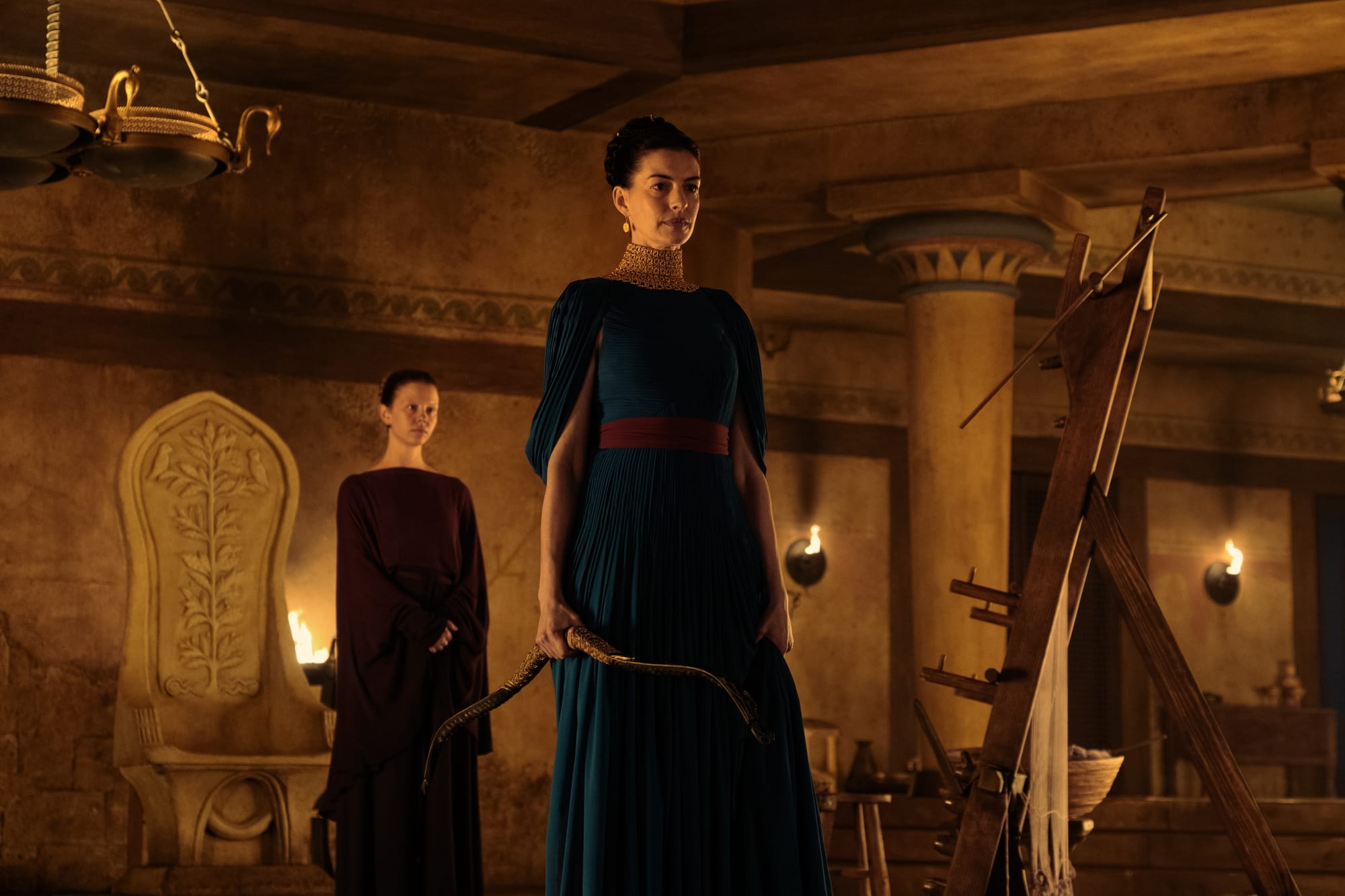
Most of the plot is split between a) Odysseus and his trusty crew’s long voyage back to Ithaca, where he’s King; and b) what’s currently happening there, where his wife Penelope (Anne Hathaway) and son Telemachus (Tom Holland), whom he left as an infant, are trying to hold down the fort as 100 entitled and hungry suitors, headed by Robert Pattinson’s Antinous, are looking to wed Penelope, assuming the King is dead.
Newcomers to the story might be a tad confused. But Nolan, who also wrote the script, and his editor Jennifer Lame, have constructed the story artfully, filling in backstory and character beats when we need them, always keeping the stakes clear. (I know there’s a website that tells you the best place to take a washroom break, but I wouldn’t encourage stepping out. Pee beforehand.)
Mimicking the oral tradition from which this tale emerged, the film’s narrative keeps passing hands. Early on, Odysseus’s faithful servant, the blind Eumaeus (a dignified John Leguizamo), who looks after the King’s loyal dog, Argos (who won’t die until he sees his master, a nice bit of foreshadowing), delivers some much-needed initial exposition.
When Telemachus, understanding he’ll be a target as his father’s heir, escapes Ithaca to learn news about his father, he meets Menelaus (Jon Bernthal), husband of Helen (Lupita Nyong’o), whose abduction by Paris began the war in the first place. Menelaus fills in information about Odysseus’ exploits in Troy, and hints at what happened to his brother Agamemnon (Benny Safdie) — with more details to come.
But most of the storytelling arrives from Odysseus himself as he’s stranded on the island of Ogygia, his overgrown, grey beard suggesting how long he’s been eating lotus leaves. There, held by the nymph Calypso (Charlize Theron), he slowly recounts the circuitous journey he and his crew took after leaving Troy. These include encounters with the one-eyed Cyclops Polyphemus (Bill Irwin, in a sequence that would have made Ray Harryhausen proud), the mysterious witch Circe (Samantha Morton, in a shiver-inducing performance), and a truly haunting scene involving the sirens (wisely not shown in close-up).
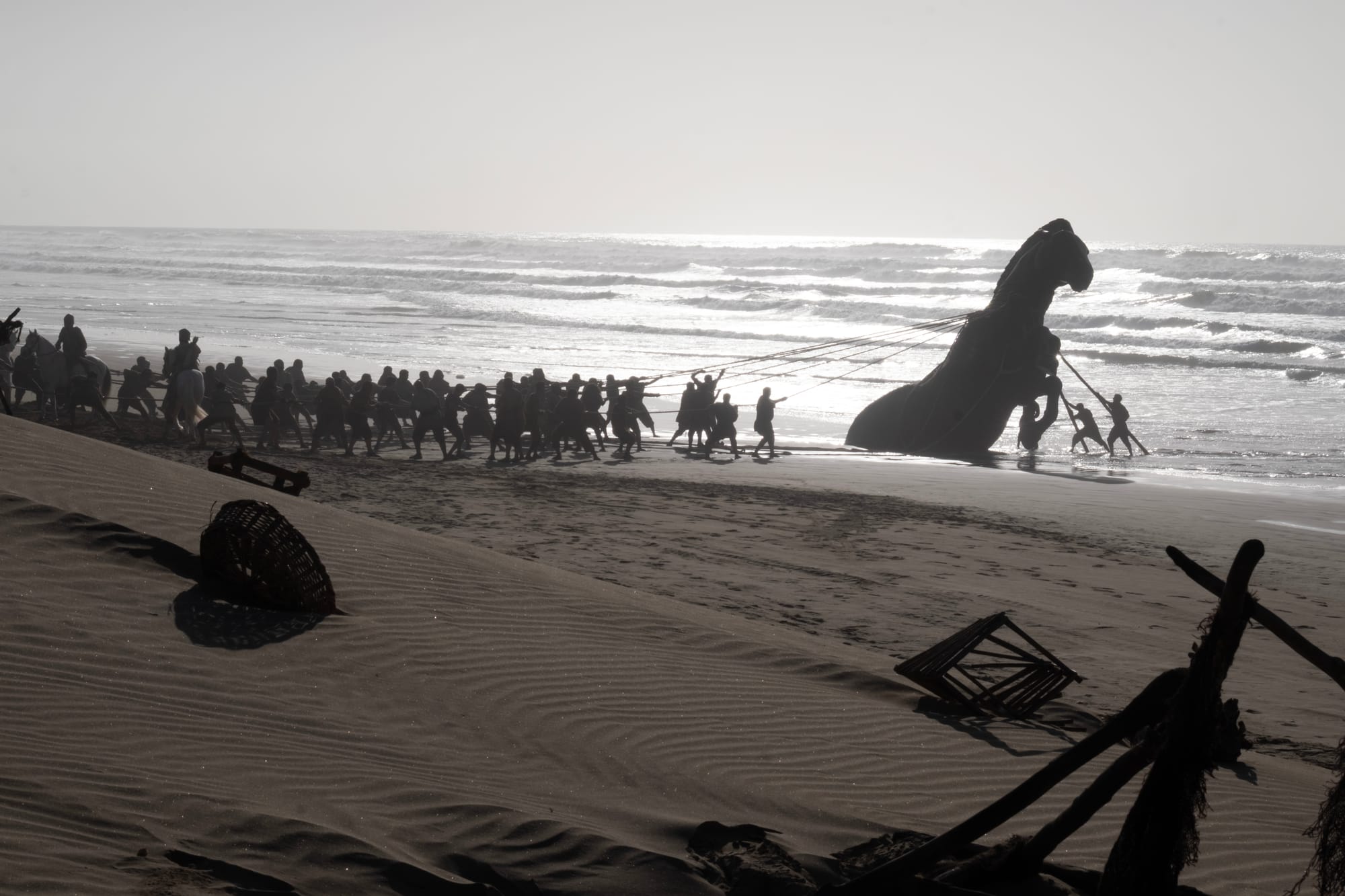
Not surprisingly, Nolan handles the big set pieces masterfully. If you’ve ever wondered how that Trojan Horse trick was pulled off, he shows you, claustrophobia and all. Odysseus’ trip to the gates of Hades is nightmarish, the blind Tiresias (James Remar, unrecognizable) hovering over the ground to deliver his prophecies. Ludwig Göransson’s score, here and elsewhere, adds layers of propulsive drama.
As the film progresses, the themes get more complex as Odysseus, armed with Tiresias’ predictions, begins to wonder if he can help save his men from their fates. More significantly, he comes to understand that his entire journey has been caused by angering the gods — namely, by breaking Zeus’ requirement about hospitality throughout.
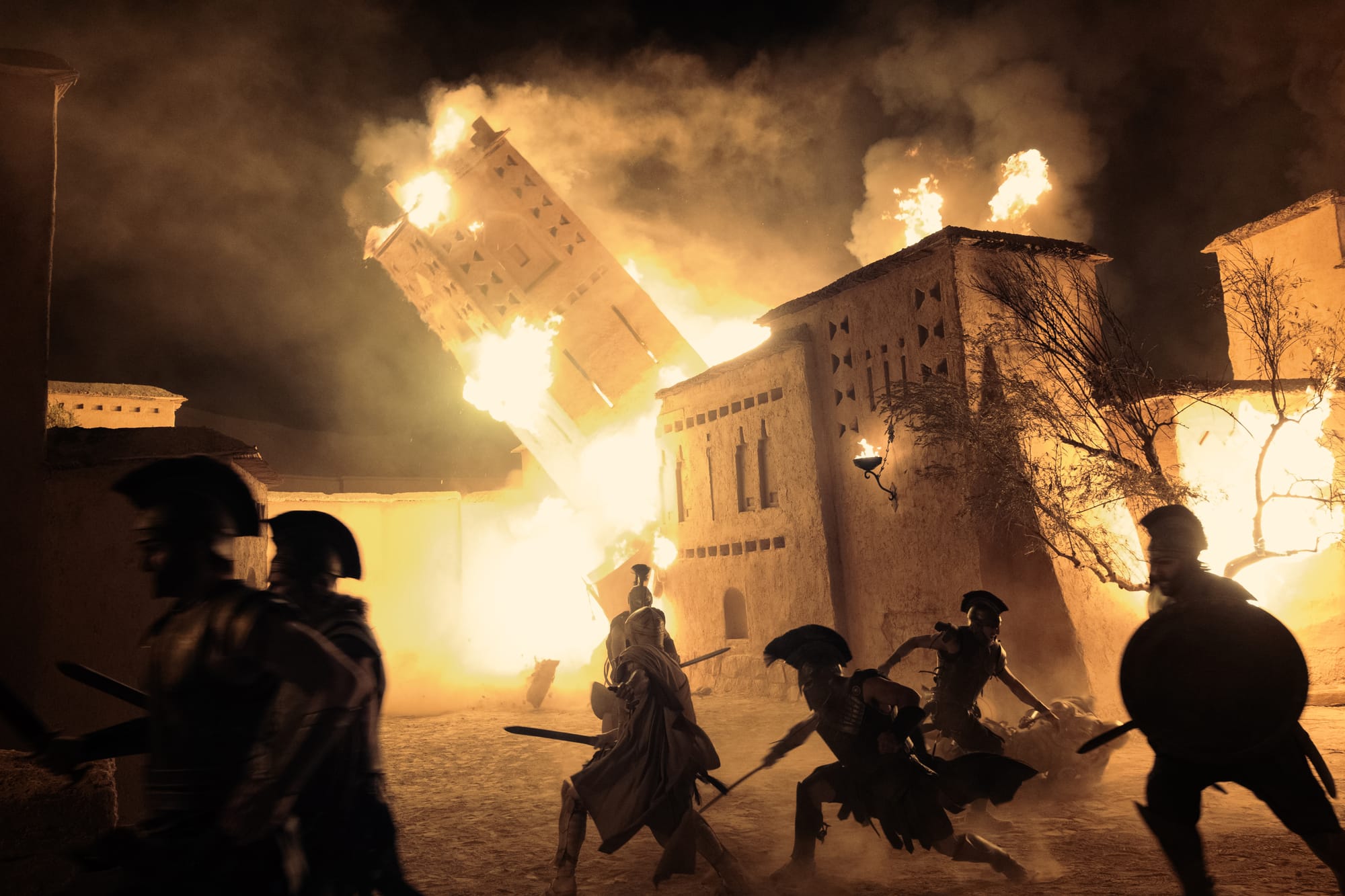
The final part of the film, in which Odysseus’ eyes are opened to his culpability, are astonishing. It’s here that we see the brutal destruction of Troy and the various homecomings that greet the victors.
The film is not without its flaws. When we first meet Helen her face is savagely scarred, but we don’t see how she received her wounds. We’re also not given a flashback about Paris stealing Helen in the first place: a mistake, I think.
I’m not sure why Nolan chose to obscure Agamemnon’s face in a helmet. And while Odysseus spends a good chunk of the film on his boat, we don’t get much significant interaction with his crew, including his first mate, Himesh Patel.
On a less serious note, back at Ithaca, Telemachus’ repeated use of the word “dad” sounds oddly informal and momentarily breaks the spell of the period film. I’m also not sure it was a good idea to have Mia Goth’s Melantho be practically the only maid or lady-in-waiting to Penelope. As Margaret Atwood pointed out in The Penelopiad, there were many others, and they met tragic fates when Odysseus returned home.
The climactic fight scene back in Ithaca is so dimly lit, it’s hard to know what’s going on at times.
Also, one more note. Homer’s epic wasn’t exactly a laugh-fest, but the lack of humour to break the tension begins to feel noticeable after the hour-and-a-half mark. It’s all very solemn and important. But that’s very Christopher Nolan, after all.
The actors, all speaking in a sort of accent-less American (even Pattinson, Patel, Holland and Goth), are well cast.
Damon, who’s so good at playing cagey characters who know more than they let on, is perfect as the crafty, resourceful Odysseus. Hathaway’s Penelope proves to be as resourceful as her husband, carefully monitoring the situation at home, while Holland’s Telemachus embarks on his own coming-of-age journey, with incredibly moving results.
Pattinson relishes his role as the film’s chief antagonist, never overdoing it, while Elliott Page has a couple of strong scenes as a soldier with an intriguing connection to Antinous (a plot point that could be made a bit clearer). Morton’s Circe is so good I could have watched her offer up soup and tend to her animal menagerie for another five minutes.
But the real star of the film is Nolan, whose films usually impress me but leave me cold. Here he’s found a story that has echoes through his entire oeuvre, but one that beautifully marries craft, narrative and emotion.
I can’t wait to spend another three hours in this world.
The Odyssey opens in theatres Friday (June 17).