O brother... the Monks are back, and there’s going to be laughter (and lentils)
Veronica Hortigüela and Annie Luján discuss their friendship, clown, the Edinburgh Fringe and the power of Ferris Bueller

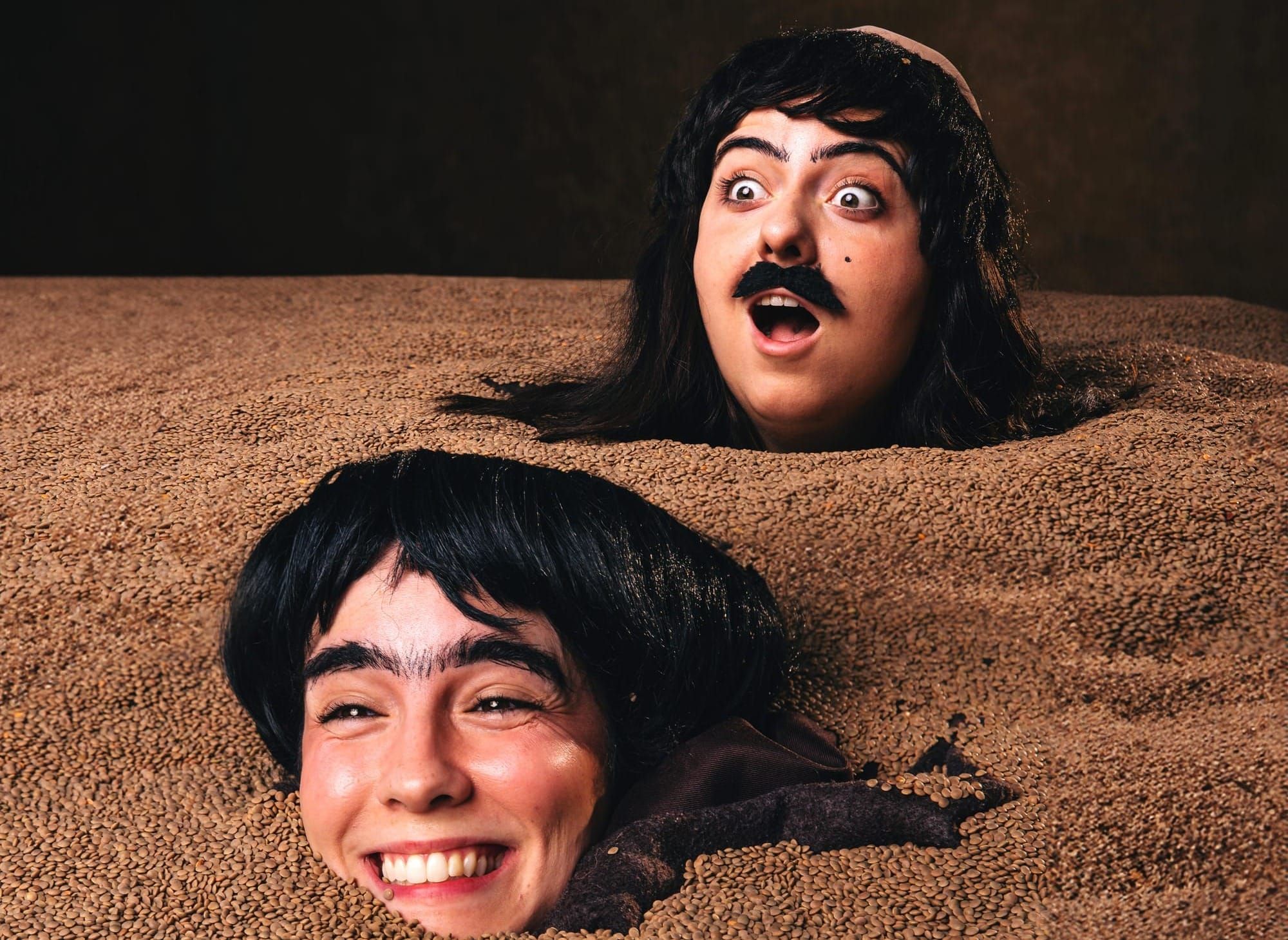
Don’t be surprised if you’re walking by the Tarragon Theatre this fall and feel the rumbling of a fake storm, hear the braying of a makeshift donkey or — more likely — the roar of a packed audience laughing its collective ass off. Monks, the award-winning show performed by creator/directors Veronica Hortigüela and Annie Luján, is back.
After a wild, raucous and sold-out run at the 2024 Toronto Fringe, which I was lucky enough to see, the show — about two bored monks who leave their Sisyphean task of counting lentils to goof off while the abbot is away from the monastery — received several remounts.
First it showed up at Crow’s Theatre’s Studio for a brief run, and then it played the Theatre Centre, where it received two Dora Award nominations and the Toronto Theatre Critics’ Award for Best New Canadian Work. Just a few months ago it wowed international audiences at the Edinburgh Fringe. More tour dates are yet to be announced. But for now it’s part of the Tarragon’s fall season, where extra performances have already been added to keep up with demand. See ticket details here.
I spoke via Zoom with the two clown-trained performers, who have also starred in more “traditional” theatre like Prodigal, Bremen Town and The Bidding War (Hortigüela) and Dance Nation, King Lear and The Welkin (Luján), on the day of their first preview.
When you were developing Monks for the Toronto Fringe two-and-a-half years ago, did you ever imagine it would have such a long life?
Luján: Definitely not. There was no hope of that because we weren’t seeing this kind of show in Canada, so we didn’t know what place it would hold or if it would work for a more traditional theatre audience. But we were optimistic. We built it believing that there were other reckless hearts out there craving this kind of stuff.
Hortigüela: If you looked at how our costumes were made, or where we sourced many of our props and set, you could tell we didn’t expect to still be doing the show two years later. For this run, and after a summer of doing the show as many times as we had in the two previous years combined, we’ve had to take stock of some items, rebuild costume pieces, and really consider longevity and endurance in a different way — not only of ourselves but of the show.
What has it been like being back at the Tarragon, where the show first found an audience?
Hortigüela: Kind of poetic, and really special. We were generously given some rehearsal space prior to going into tech here, and the space that they put us in was the Near Studio, which is where we first performed it. It almost felt like returning to elementary school: you walk through the big doors and think, “This all felt so huge before, and now that I’ve gone and seen the world, it feels safer and smaller than I remember.”
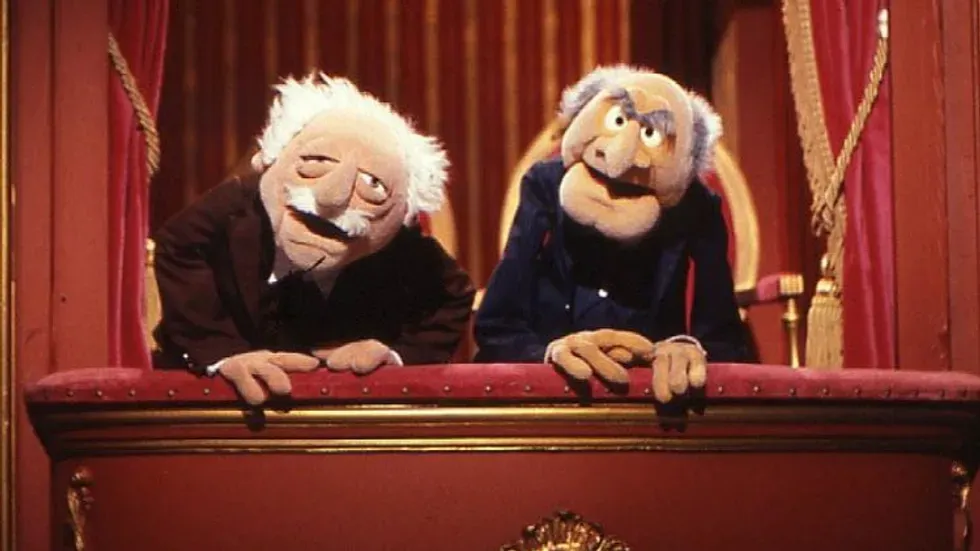
The Tarragon has this history as the birthplace of new Canadian plays and playwright-centred creation. You’ve received acclaim from the Doras and the Toronto Theatre Critics’ Awards, who both singled the show out as a play, even though initially there wasn’t much of a script. How did that make you feel?
Luján: With the Dora nomination for outstanding new play, we were in the same category as playwrights, and I would never call myself a playwright. We didn’t write Monks, we devised it. We didn’t have a script until our stage manager asked for one a week before the Fringe.
As for being at the Tarragon, it’s an honour to be included in this crazy, beautiful, varied lineup this season.
Hortigüela: It’s been exciting to know that our curiosity about how clown and devised theatre and traditional scripts intersect is shared by others. We might not have all the answers about where it “fits” exactly, but we’re excited to find out. It’s great that, even though there’s no 80-page script, it’s still recognized as theatre.
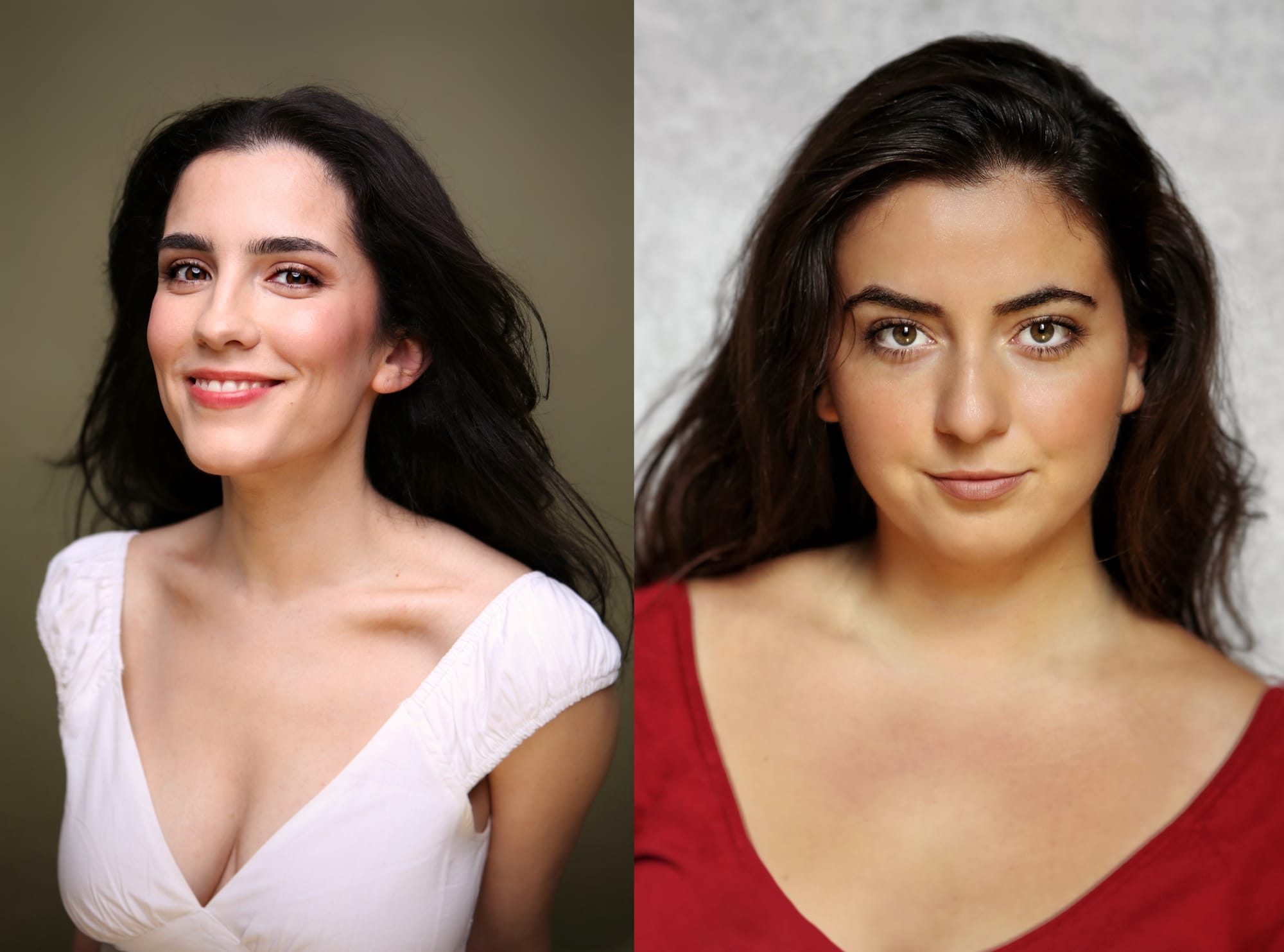
Where did you first meet, and did you immediately click?
Luján: We met in high school on orientation day. Veronica was wearing bright red skinny jeans, and she walked right into a door. I remember being so charmed by her. It was an arts Catholic high school, so you can draw links to the idea behind Monks. Since the age of 14, we have been making shows, hosting school talent shows, basically being a duo.
Hortigüela: My fondest high school memories are sitting at Annie’s desktop computer writing a play together one line at a time. We had the patience to write each line of the play together. We were very lucky in that our teachers identified something in us; yes, we were interested — as many of our peers were — in acting, but we also had this desire to create our own work, and they continually presented us with opportunities to do that.
People sometimes ask us how we’ve developed this chemistry or this feeling of absolute trust. I wouldn’t call it telepathy, but rather this ability to understand when one person is moving forward and the other is supporting, and vice versa. The secret is that we’ve known each other since we were 14. We’ve been developing that working relationship and our shared influences culturally and artistically for half our lives.
Can you talk about some of those shared cultural and artistic influences?
Luján: After we got back from our respective theatre schools, we started really looking at clown. We got obsessed with this L.A. company called the Idiot Workshop, and it felt like the beginning of this clown renaissance happening around the world, where clowns didn’t have to look like clowns. So much of it was just around this desire for audience and presence, for theatre not to feel like a movie or TV — it was about connecting people. Then got introduced to other clowns around the world, like Natalie Palamides, and companies like Spymonkey in the UK.
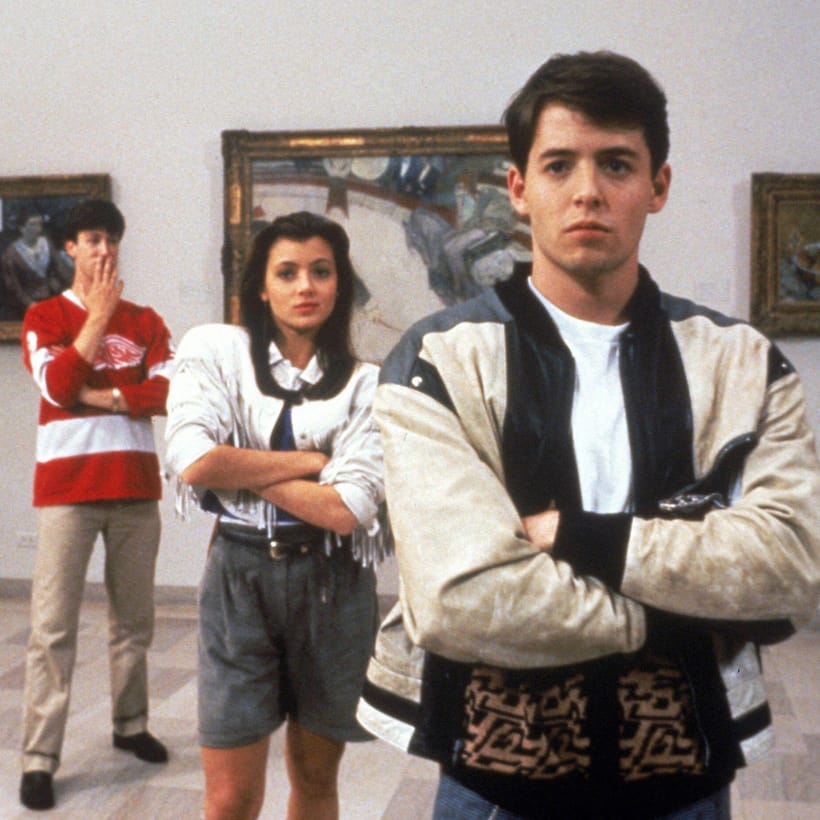
Hortigüela: All of that is so true, but my mind immediately went to one of our earliest film obsessions: Ferris Bueller’s Day Off. It seemed like we watched it every other day, sitting on Annie’s bed. It’s so interesting that in the film’s friend duo, there’s a high status/low status dynamic that is absolutely a cornerstone of clown duos. Ferris constantly breaks the fourth wall and speaks to the audience. They go to a huge parade. It’s an adventure, but it’s also really simple — it’s about what happens when someone calls in sick. It totally feels like there’s a connection between Ferris Bueller and the work we’re interested in now.
You could almost call your show Monks’ Day Off. On the subject of simplicity, I love the simplicity of Monks. Pretty early on, the audience understands the situation clearly. It feels like you take the audience’s experience very seriously. Do you have any tips on how to take care of the audience?
Luján: Trust the audience. Deal with them with warmth. Whatever they give you, you have been trained to handle it and take care of them. Is so important.
Hortigüela: The audience interaction begins very gently. For example, asking the audience a rhetorical question, and then maybe asking one person a Yes or No question, and then building on that. We encourage people to step out of their comfort zones, but also accept the reality of who is in front of you, and acknowledging that some people want to participate more than others. You can't be totally blind to that fact.
Luján: Everything is intentional at the beginning. We say, “You came and you wore exactly what we asked you to wear.” That’s us setting up that any nervousness you have right now, you’re doing everything right. I’ll come over and tell you you look amazing, and here’s a bell to ring if you feel like I’m ignoring you. These are all ways to make people feel good and to trust us, so we have a bit of a runway to lose some trust and then gain it back as we navigate that interaction.
Can you sum up the Edinburgh Fringe experience this summer?
Luján: There’s this unbelievable kinetic energy at the festival. There’s so much momentum, so much “Have you seen this? Have you seen that?” We met some of our clown idols, invited them to our show, went to theirs. A big, big part of our experience was the fact that we had five minutes to load in the show and five minutes to load out. Crazy.
Hortigüela: Edinburgh is its own world. There’s so much going on at all hours of the day, with such an incredible variety of work. It was the first time there for every one of us in the show, and it’s a really challenging and difficult thing to take on. We felt lucky to be going with a piece of work that we believed in so deeply. Since returning, people have asked for advice, and it feels impossible to answer. I don’t know how one prepares for the Edinburgh Fringe. My sister had a baby this summer, and I feel like we didn’t go through dissimilar experiences. It’s like I had a baby too.
It’s been wonderful seeing you both in so-called “traditional” theatre over the past couple of years. Do you apply your extensive clown training to more traditional shows?
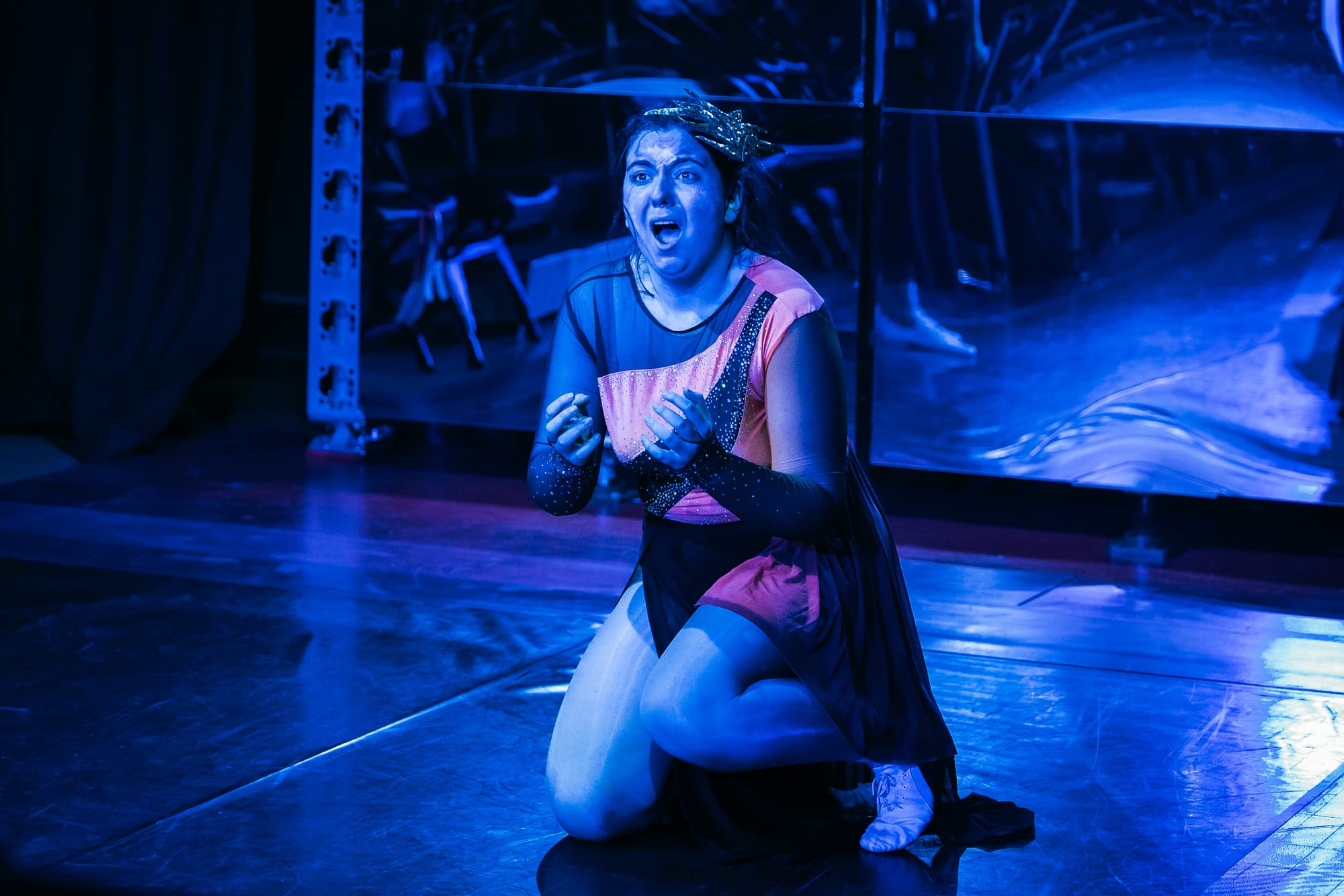
Luján: It was funny going into Dance Nation after a run of Monks because my character, Zuzu, looks at the audience a lot, and there is so much failure in her story. I loved that character, and it felt like such a gift to be able to play this little clown who who has so much hope and fails so massively and changes from that.
Hortigüela: I did a season at the Stratford Festival a couple of years ago, and we did those shows day after day for months. Frankly, I liked it when something went wrong, when someone dropped something or a prop malfunctioned. I remember there was a moment in Little Women where Allison Edwards-Crewe throws a folder, and a couple of times the folder exploded and paper went everywhere. It felt like such a gift as opposed to being a horrible thing that needed to be covered up. That’s my clown training: mistakes are a gift.
Individually, you’ve worked with some of the most decorated and beloved actors in Canadian theatre, some of whom go back to the beginning of the scene in the 70s and 80s. I’m thinking of artists like Nancy Palk, Oliver Dennis, Kyra Harper, Fiona Reid and Tom McCamus. As emerging artists, did you get any advice from them, even indirectly?
Luján: No advice per se, but I love watching other actors work — I love seeing their process. I watch how people negotiate scenes physically, how they try things out. I remember being blown away watching Tom McCamus try different things each day in Lear.
Hortigüela: I remember watching Nancy Palk and learning so much about how to carry oneself in a room with confidence but curiosity. I laughed watching huge talents like Fiona Reid and Stephen Sutcliffe play with one another in the room — with respect for the work but also a tremendous sense of grace and humour.
Not to name names, but I feel so reassured about my own insecurities when I watch people with illustrious careers have moments of self-doubt and self-criticism. We’ll be in a crowded dressing room during tech week, and someone will say, “Why didn’t the director give me a note? Is it because they think I’m a lost cause?” You realize these things are just a natural part of the process.
Annie, you’ve got a show coming up at Crow’s next spring called Laura Secord’s Thing, which is kinda giving off Oh, Mary! vibes of history through a campy, comic lens. What can you tell me about it?
Luján: I can’t tell you too much yet because I don’t know a ton myself. I think you’re definitely right about history through a comedic lens. Brad (Gira, who’s writing) and Will (Dao, co-creator with Luján, and also director) are so fantastic and so confident in their comedic tone. Brad’s characters are incredibly delicate and funny. I’m excited to play in this world.
Are you developing anything else together?
Luján: We’re always thinking about other shows. We constantly send each other messages, and our Notes app is full of these ideas. We didn’t realize how busy Monks would keep us. So frankly, it’s been a time thing.
Hortigüela: We’ve been working on other shows alongside Monks since we first began, but they’re very far from any level of presentation. We’re excited to keep exploring how clown and theatre can intersect. We’re also intrigued by adaptation, and how you can grow a cast. We’re excited to continue exploring.
Luján: Also, Monks was born at Sweet Action Theatre. That’s where we made it over seven-ish months. That place is so sacred to me. It was so serendipitous that the second my love for clowning came into my life, a clown theatre built during the pandemic let us use its space. It all felt so organic.
Hortigüela: For anyone curious about Monks and excited to see more work like it, I would encourage them to visit Sweet Action. Go online, see what’s going on. There are so many classes and workshops. There are full performances, and people try things out, sometimes bringing the same work and continuing to explore and adapt in front of a live audience. That is absolutely essential for work like this.
Monks opens Thursday (Oct. 22) and continues at the Tarragon Extraspace (30 Bridgman) until Nov. 15. Ticket details here
Ticket giveaway winner
Congratulations to Cyrus S., who won a pair of tickets to Steve Ross’ upcoming play 12 Dinners by correctly answering that Ross is playing Nicely Nicely Johnson (Guys and Dolls) and Shylock (Something Rotten) in the Stratford Festival’s current season. 12 Dinners runs Nov. 26 to Dec. 10. Ticket details here.