How my neighbour got me to fall in love with Guys and Dolls all over again
At the Stratford Festival, the classic musical is an odds-on favourite, but I wasn’t totally sold on Death of a Salesman

When I review a show, I don’t normally mention the people around me at the theatre — unless, say, I’m at a play for young audiences or a family-friendly holiday pantomime and I want to draw on their reactions for some colour.
But during my first trip of the season to the Stratford Festival, I was sitting next to about three or four young people, including a girl who looked to be about 11 or 12. Unprompted, she told me that her mother — at the end of the row — had already seen the show we were seeing, Guys and Dolls (Rating: ✭✭✭✭✭), and had liked it so much she wanted to return, this time bringing them all. Smart parent. She and her siblings had no clue what the show was about.
When she asked me if I had seen it before, I told her yes, a few times, including the earlier time this production had been staged in this very theatre. A few moments later, I overheard her brother leaf through the list of musical numbers and exclaim, “There’s a song called ‘Sue Me!’”
(If they had been a little older, I would have told them that I can always spot a musical theatre lover when they meet me and hear my last name.)
As the lights dimmed and the rousing overture began under conductor Franklin Brasz, I wondered if this 76-year-old musical featuring gamblers, small-time gangsters, nightclub performers and urban missionaries would speak to these kids.
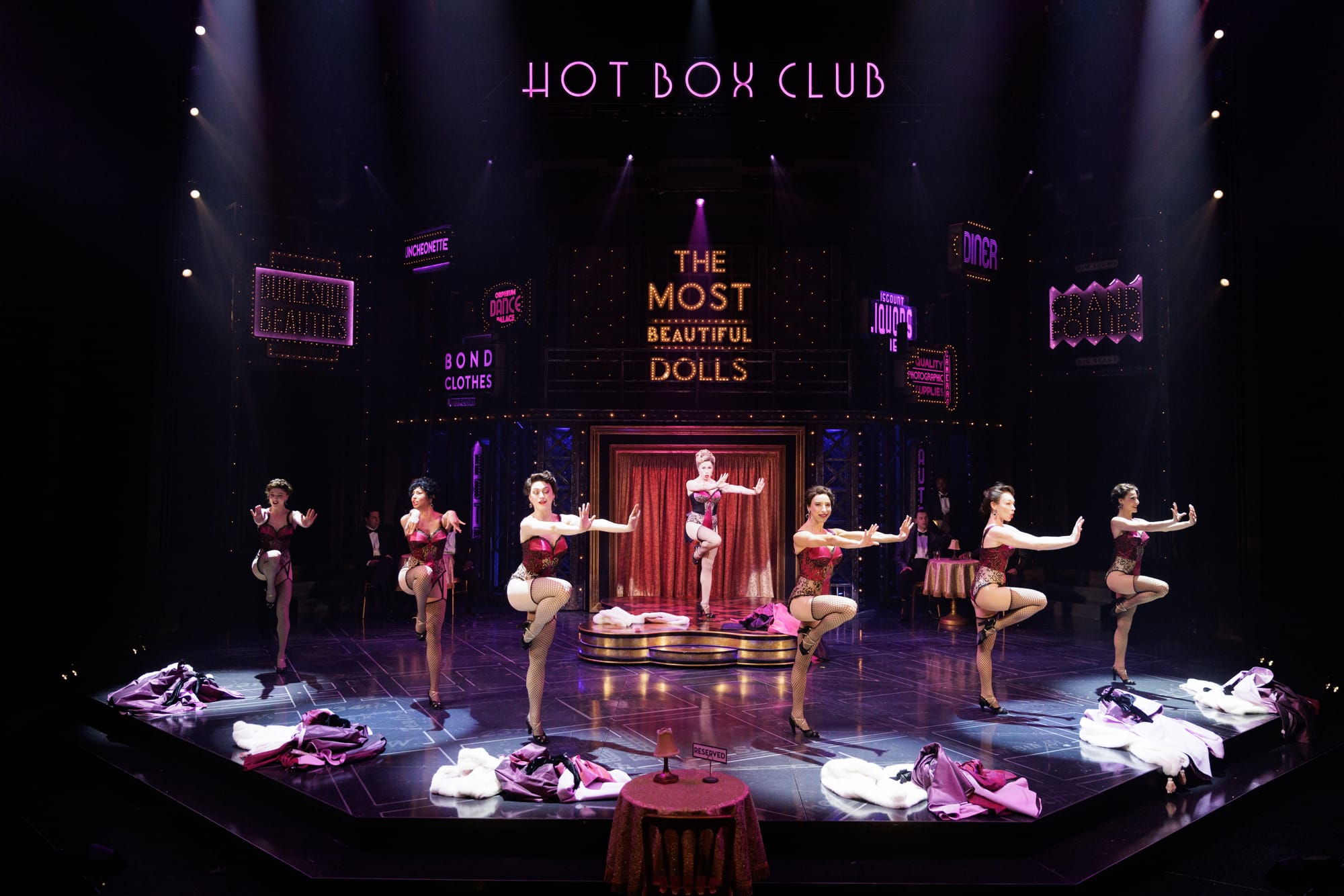
Do they even know what an organization like the Salvation Army — called the “Save-a-Soul Mission” in the show — is? In a post-Barbie world, would they immediately understand that the word “dolls” in the title referred to real women? Would they get the sexual innuendo in a song like “If I Were a Bell,” or the sleazy brilliance of a song like “Take Back Your Mink,” which is about women insulted by what they’re expected to do in exchange for luxurious gifts, all performed while basically performing a striptease?
I needn’t have worried. Just as I was once again swept up in the story — and in particular Donna Feore’s masterful telling of it — I noticed my seatmates laughing and enjoying themselves immensely. What’s more, I kind of rediscovered the show through their reactions.
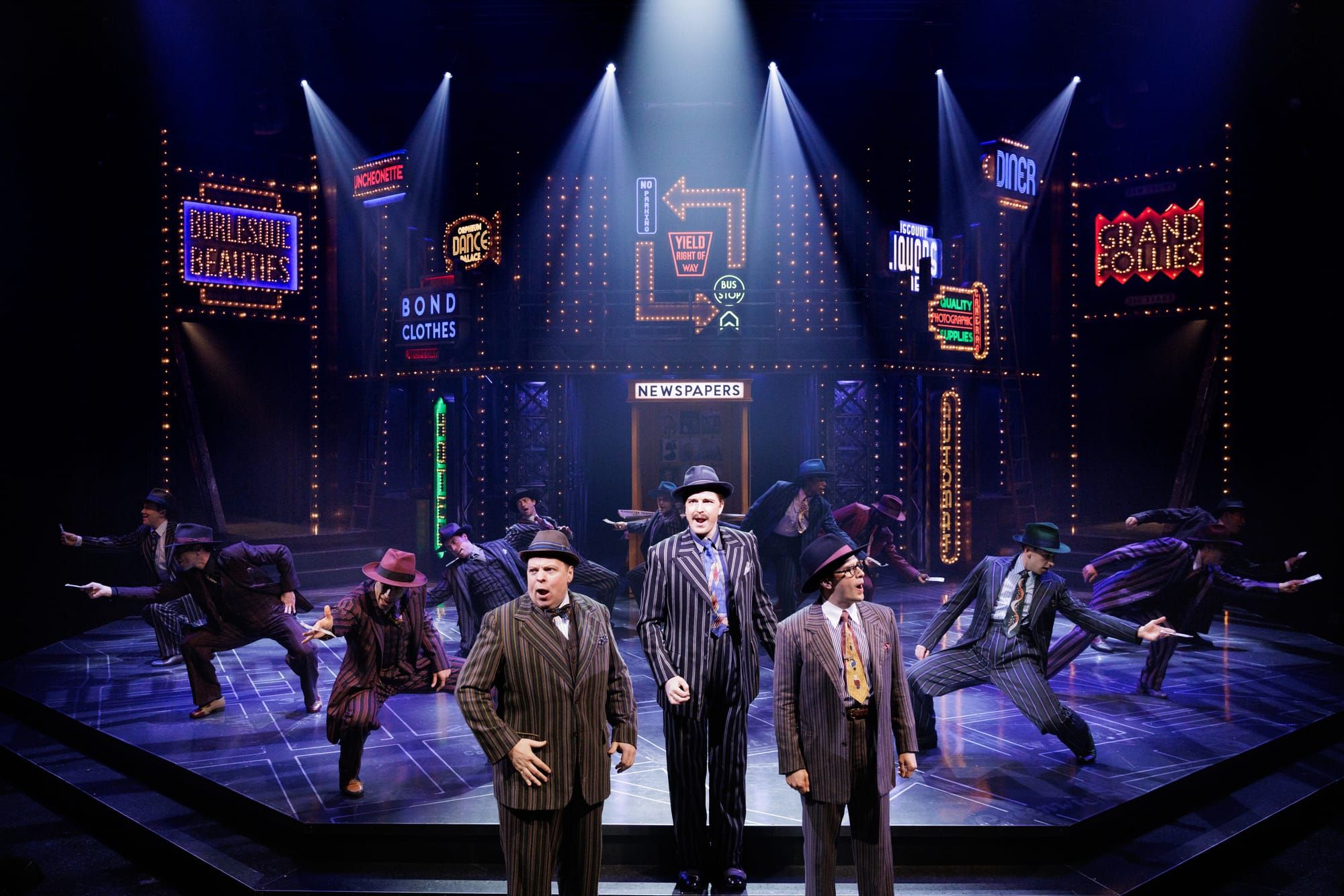
The opening, for one, is terrific, and the way Feore and lighting designer Bonnie Beecher turn a black-and-white cityscape into something pulsing with vibrant, exciting colour and hustle and bustle is stagecraft genius. Even if racetrack betting seems antiquated, and nobody uses the word “tinhorn,” who’s not charmed by the catchy “Fugue for Tinhorns,” with its overlapping lyrics and the bold sight of three gamblers dispensing racing tips?
The fact that soon after this scene, book writers Jo Swerling and Abe Burrows introduce other elements of the plot — including missionary Sarah Brown (Olivia Sinclair-Brisbane) and Nathan Detroit (Mark Uhre), who’s looking for a place to host an illegal craps game — is just masterful.
My seatmates laughed when Steve Ross introduced himself as Nicely Nicely, and I thought, “How can you not laugh when Steve Ross appears?” Dressed, like his tinhorn colleagues, in a snazzy suit by Dana Osborne, he is so completely and utterly in character, and yes, the explanation of his name is very funny.
They immediately understood the situation between Nathan Detroit — whose name got a giggle (who has a name like that these days?) — and Miss Adelaide (Jennifer Rider-Shaw), who have been engaged for 14 years without him putting a ring on it.
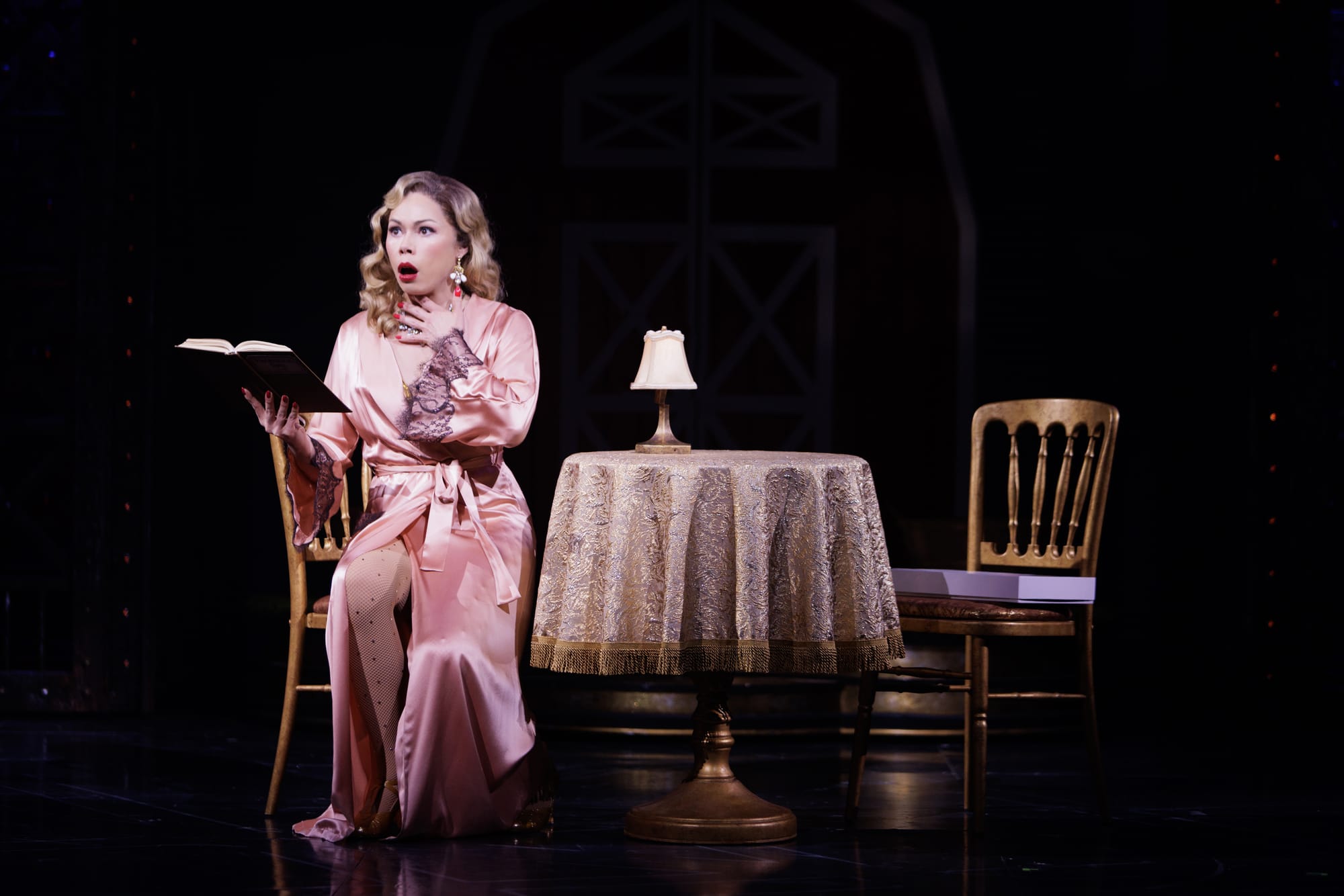
When the time came for “Adelaide’s Lament,” my favourite number in a show full of bangers, in which a sneezing, wheezing Miss Adelaide reads in a medical textbook that her illness might be caused by her anxiety over her marital status, my neighbour was laughing hysterically.
Why? Well, certainly it was because of Rider-Shaw’s note-perfect performance, a self-contained little drama all its own. But I’m sure they were laughing because of the pure comedy of the music and lyrics. You don’t necessarily need to know what “Bromo Fizz” or “la grippe” are, but how can you not be completely charmed by: “if she’s getting a kind of a name for herself / and the name ain’t his”?
Some things I didn’t mention to my neighbour? I was disappointed to open the playbill and see that Dan Chameroy was out as the show’s romantic lead, Sky Masterson. But his understudy, Alex Kelly, stepped in brilliantly, singing his songs in a fresh and spontaneous way, executing his dance moves as if he performed them four or five times a week. Most importantly, he took command of the stage in true leading actor fashion.
Another thing I didn’t tell my neighbour was that initially I was skeptical that Sinclair-Brisbane could pull off Sarah Brown. Don’t get me wrong; she’s a gifted actor — she made my list of “breakthrough theatre artists” several years ago. But I’d only seen her play knowing, somewhat jaded characters before (like Joanne in Rent and Vicki in Chris, Mrs.), and I didn’t think she was right for the principled, somewhat stiff Sarah.
Well, what do I know? Outfitted appropriately in her uniform and unflattering wig (in the first half), she makes Sarah dignified and principled, but also realistic about the chances of converting Times Square degenerates into believers.
The scene I always pay extra attention to is the one where Sky takes Sarah to Havana — which in this staging features just one of many showstoppers choreographed by Feore to display the superb ensemble. We know that Sky is doing this to win a bet, but within a few minutes the two have to completely change their feelings for each other. And both actors fully convince you of that transformation.
During the intermission, my neighbour and I check in to see how we’re liking the show, and she’s all smiles. Wait, I think, until you see the Crapshooters’ Dance, which is even more kinetic and exciting than I recall from before.
I used to think the gentle ballad “More I Cannot Wish You,” sung by Sarah’s grandfather, Arvide Abernathy (Stephen Patterson), was dull and slowed down the show. But the relaxed rhythms are perfectly suited to this character, and something about Patterson’s affecting performance and perhaps the times we’re in — when the disparity between the rich and poor is greater than ever — made the number feel like a balm.
The duet “Marry the Man Today,” in which Sarah and Miss Adelaide discuss their romantic lives, may include some dated references (Reader’s Digest, Guy Lombardo), but its advice (essentially: marry a guy today, you can always change him tomorrow) is as popular today as it ever was.
And each time I watch “Sit Down, You’re Rockin’ the Boat,” I marvel at the construction and catchiness of the song, and how its placement gives the show a huge burst of energy before heading into the final stretch — especially when led by Ross.
My seatmate saw that I was taking notes, and before we went our separate ways, asked where she could read my review. She typed the name of my newsletter into her phone.
I hope she and her siblings continue to see more theatre, and to respond to it so openly and spontaneously. More I cannot wish them.
Guys and Dolls continues at the Festival Theatre (55 Queen, Stratford) until Nov. 1. Ticket details here
Partial Sale
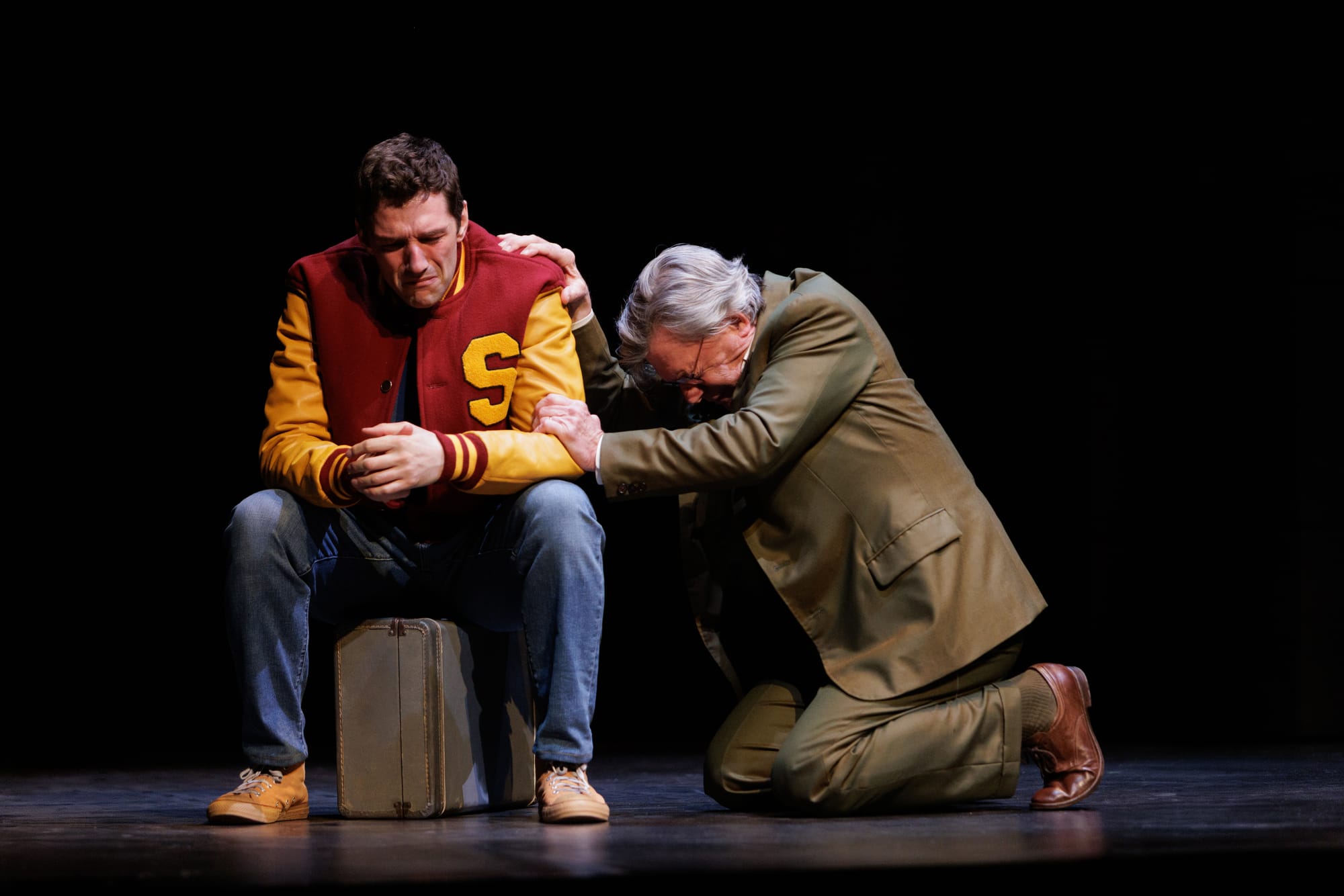
While Arthur Miller’s Death of a Salesman (Rating: ✭✭✭) still packs a powerful punch, I wasn’t completely sold on Dean Gabourie’s production.
I admire the use of actor/musician Michael Louis Johnson, who delivers a mood-setting pre-show as a trumpet player and during the show adds music evoking the spirit of the 1940s — how poignant is it to hear “Blue Skies” in a tragedy?
But while this production is well-acted, particularly by Tom McCamus as a Willy Loman who has stubbornly bought into a certain idea of American success, even as he ages out of his usefulness to his employers, and Joe Perry as Biff, the once-promising son who sees his father for who and what he really is, it doesn’t feel particularly fresh.
The Avon Theatre is intimate, but the show seems somewhat dwarfed, and the suggestion of tenements in Scott Penner’s set looks cheap and rather obvious. Gabourie leaves a lot of the stage blank, which means flashbacks can occur quickly, but also doesn’t give us a lot to look at.
Still, at a time when the U.S. seems to be devouring itself, and A.I. is making so many jobs and workers redundant, it’s hard not to be affected and moved by Miller’s story of promise and disillusion.
Death of a Salesman continues at the Avon Theatre (99 Downie, Stratford) until Oct. 24. Ticket details here