The road to Jane Austen’s Northanger Abbey
Director/adapter Tyler J. Seguin and star Georgia Findlay discuss bringing Austen’s early novel to the stage

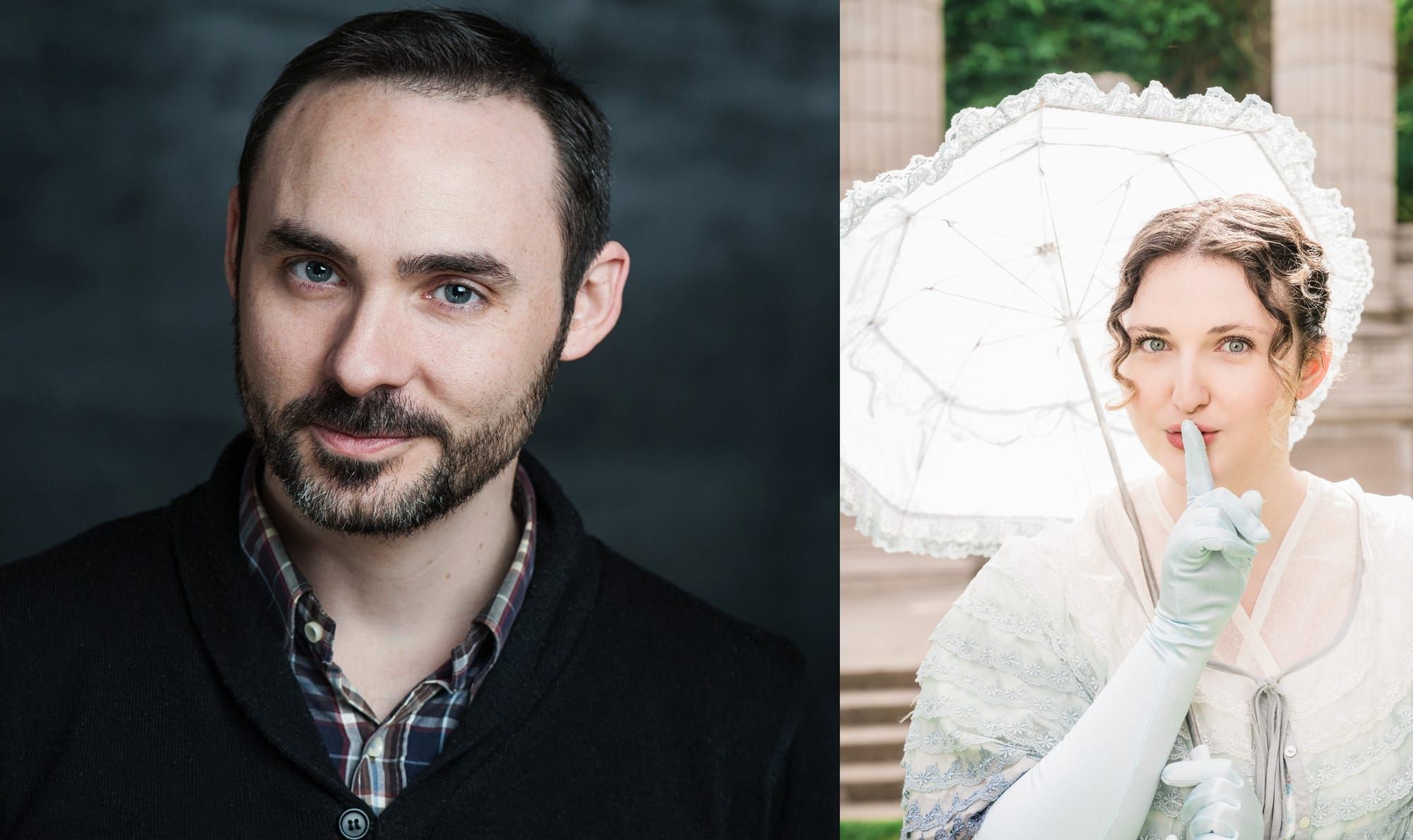
When Georgia Findlay was nine years old, her favourite novel was Jane Austen’s Pride and Prejudice. Several years later, she and her grandmother took a trip to England where they visited Austen’s home in Chawton, Hampshire, admiring her writing desk, first editions and living areas.
And so it’s a propos that this summer, Findlay is donning an empire waist dress as one of the writer’s first heroines: Catherine Morland, the young, highly imaginative protagonist of Northanger Abbey, which Austen sold to a publisher in 1803 but never saw come out (it was published posthumously in 1817). The show, being performed at the stately Greek Theatre at the Guild Festival Theatre in the east end, runs through August.
“Catherine is unlike many of Austen’s other heroines — she’s not naive, necessarily, but she’s innocent and down for anything,” says Findlay, who makes her third appearance with the Guild Festival Theatre, after stand-out turns in The Drowning Girls and The 39 Steps.
“She’s wide-eyed and excited about the world, and has created quite a fantasy life in her mind. Many things go right over her head, which is quite fun to play. She’s very sheltered, but there’s something really refreshing about her lack of cynicism. She’s full of hope and optimism and excitement to discover the world.”
The GFT has dubbed its warm weather season “Gothic Girl Summer.” Its production of Jordi Mand’s Brontë: The World Without, wraps up this weekend. And while Austen’s gentle comedies of manners might seem far removed from ghosts roaming the moors or mad women in the attic, Northanger Abbey in many ways satirizes the Gothic novel trend of the late 18th century. Catherine is obsessed with those novels, and when she’s invited by friends to the titular abbey, she sees potential evil and horror lurking behind every creaky door she’s told not to enter.
“We had already programmed Brontë and were looking for a companion piece for it,” explains Tyler J. Seguin, co-artistic director of GFT along with Helen Juvonen.
“We had talked about adapting a literary classic, and were wondering what would make the most sense. It came down to this and The Turn of the Screw. The Henry James is really interesting, but its world is small and contained. I felt that Northanger had a more expansive world, with a Gothic flavour that would carry us through this production and allow for lots of virtuosity.”
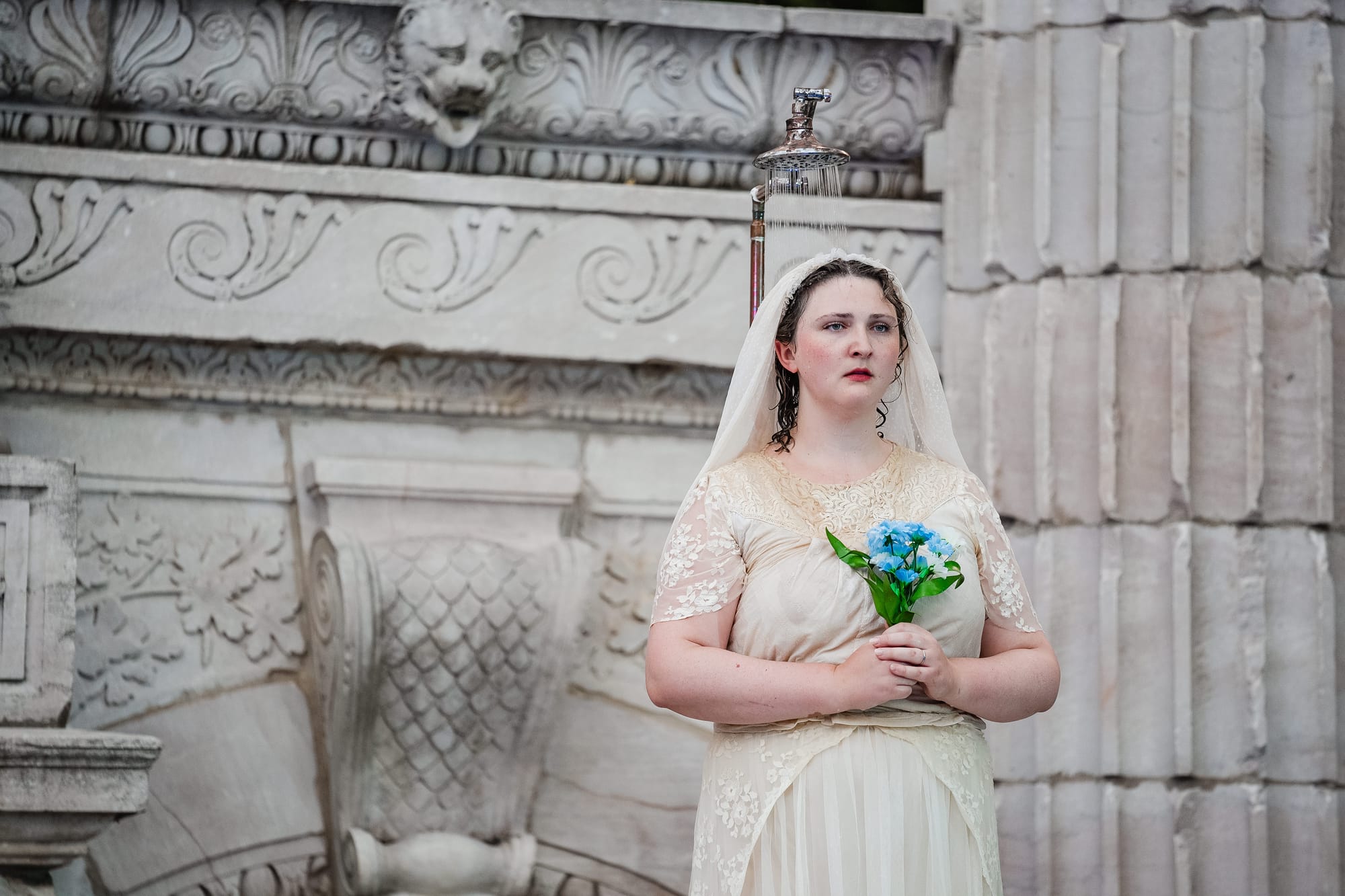
Seguin directed last year’s The 39 Steps, which included lots of amusing tricks, including actors changing characters quickly and ingenious bits of theatricality. Three of the actors from that production — Findlay as well as Isaiah Kolundzic and Kiana Woo — return. Andrew Prashad rounds out the cast.
“I was really proud of that show, which crystallized the kind of work I’d been doing over the years,” says Seguin. “There was a controlled chaos that I personally love and thrive in. I really enjoy seeing the imagination of the artists present onstage.”
While Seguin, who also directs, will be fine-tuning his adaptation until opening night on August 7, Findlay is prepared to be onstage for pretty much the entire show. Besides playing Catherine, she’ll be playing an Austen-like narrator.
“As of now, I think there are two times in which I get to leave the stage,” she says, laughing. “I can take some sips of water.”
The glorious Greek Theatre, with its magnificent columns and grand arched entrance, ought to nicely suggest the imposing abbey, as well as the airy spaciousness of the resort town of Bath, another of the book’s key locales.
“Performing on that stage it’s easy to get in touch with your imagination and allow yourself to really play and enter this fantastic world because it’s just so gorgeous,” says Findlay.
“There’s a moment when Catherine arrives at Northanger Abbey, looks around, and says it’s so beautiful and... well, it really is. It’s this stunning place that inspires awe. It feels like such a privilege to be on this stage. Especially for a period piece, that sort of thing really helps transport an actor.”
That said, the venue does have its limitations. There’s no room for an overhead lighting grid, for instance, and the set has to be struck after each performance.
“Unlike High Park, which has a permanent or summer-long set-up, we have to build a set every night,” points out Seguin. “Because of the nature of the park, every light, speaker and microphone has to come down. And so you just have to take a really different, more minimalist approach to design. You also learn to build a world through sound.”
Seguin approaches this production with heightened emotions. It’s his final show as co-artistic director with Juvonen. Alison Wong takes the reins in September.
“It’s been an incredible, really life-changing experience working with the Guild,” he says.
“A lot of people said Helen and I had ‘founder’ energy. We were the third artistic directors, but I think we approached it like a startup company. One of our goals was to get it to a certain level, with the creativity and work and community building that went into that. I’m really proud of the artistic work we’ve done. And I’m proud of things like the new works program, being able to support youth training, and establishing partnerships with companies across the country.” (The company’s production of The Veil is being remounted at Stratford this fall).
Seguin is looking forward to spending more of his time and creative energy making theatre, not administering to it.
“Writing this adaptation has really sparked that desire and reignited my interest in writing,” he says. “I’m looking forward to being able to make artistic choices and not worry about the math of how a production will work out, wondering ‘Will this choice be too strange?’ or ‘Will it affect our company?’ There’s a certain burden of responsibility with running a theatre company. You can’t just follow your bliss.
“That said, I’m going to miss a lot of things. Every spring, we open up a shipping container and pull the stuff out and get things organized. I walk down that gravel road behind the theatre, and see the columns in front of me, and go, ‘Wow.’ I’ve been getting overwhelmed by the emotion of it, the lastness of it, and feeling all the beauty. It’s made this summer really special because I am cherishing the moments of, like, watching the sunset behind a performance, or seeing a fox run in front of the stage during rehearsal.”
One thing both artists have been pondering lately is the importance of live theatre, especially with the threat of A.I. in creative fields.
“With the whole A.I. situation in the arts, I feel like theatre will survive, and my hope is that there will be a real renaissance of theatre and live performance,” says Findlay.
“People crave real human connection and storytelling, and you can’t replace that on stage. I’m so happy to be a part of that. When the pandemic hit, I thought I’d hitched my horse to the wrong wagon. Now everything else feels artificial, and theatre feels like something that has existed forever and will continue.”
Seguin nods.
“When anything you see on a screen immediately becomes untrustworthy, the only thing you can believe is another person in the room,” he says “We crave that human connection, knowing that something they see is real.”
Note: This interview has been edited and condensed
Northanger Abbey previews August 6, opens August 7 and runs until August 23 at the Greek Theatre, Guild Park & Gardens (201 Guildwood Parkway). Ticket details at guildfestivaltheatre.ca