End of summer roundup, Part 2: out-of-town
The Last Five Years and Grease in Gananoque, And No Birds Sang in Port Hope and Dora Awards debacle

While the Toronto scene slows down during the warmer months, regional theatres are hives of activity. So August felt like a good time for some theatre day trips.
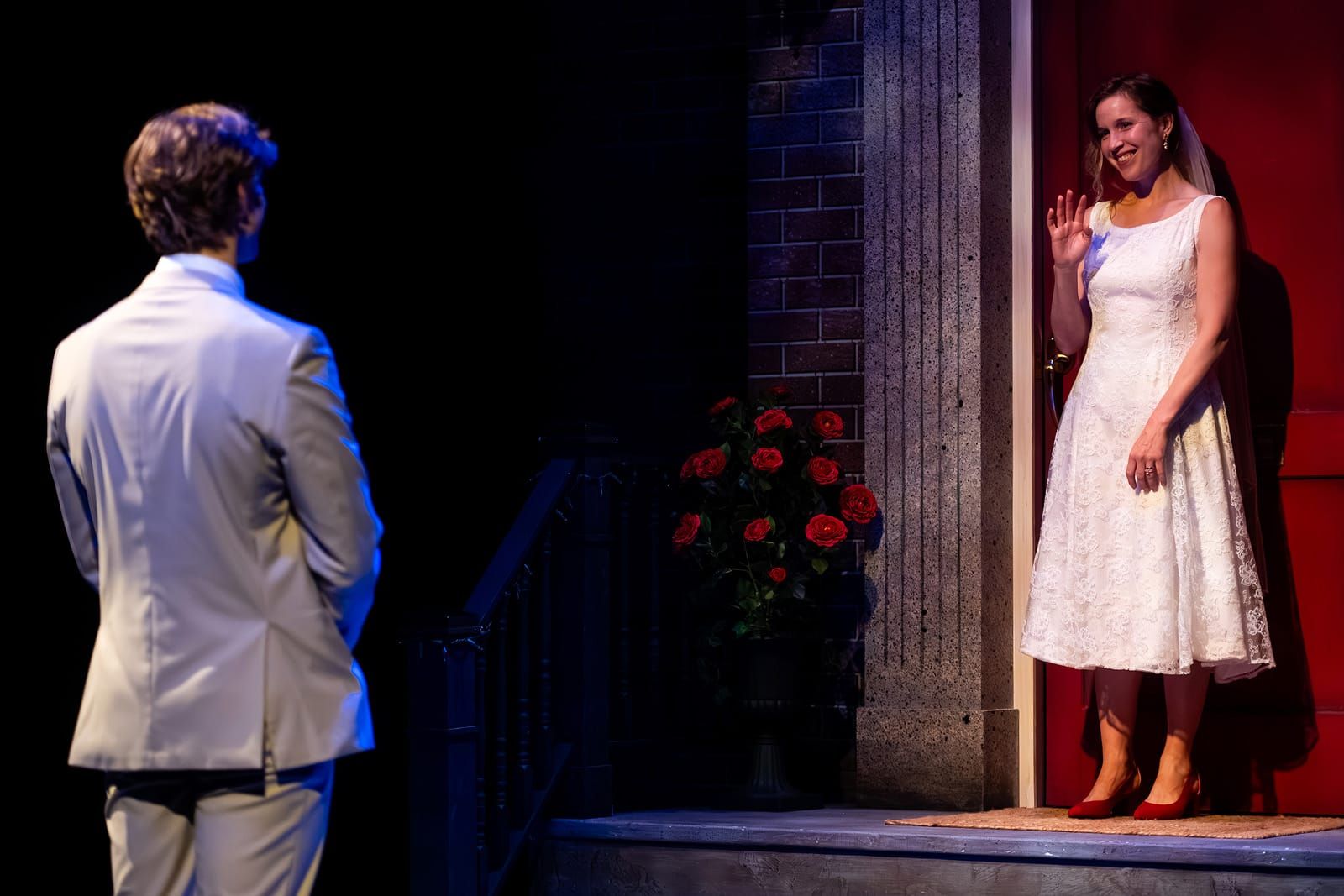
I’m very glad I made the trek to the remarkably picturesque town of Gananoque, Ont. (just beyond Kingston) to see Jason Robert Brown’s The Last Five Years (Rating: ✭✭✭✭) at the Thousand Islands Playhouse.
The show is one of my favourite musicals, partly because of the unusual, but highly effective, way Brown presents the story. It basically recounts the rise and fall of a 20-something New York couple’s relationship. Jamie (James Daly) is a quickly-rising novelist, while Cathy (Tess Benger) is a struggling actor hoping for that big break.
Brown’s innovation? He begins Cathy’s narrative at the end of the five years, after the couple has broken up, with each of her subsequent songs moving backwards in time to the happy beginning. Interwoven with these are Jamie’s scenes, which begin shortly after the two have met and proceed until the sad, quiet conclusion.

The only time the two sing together comes in the magical middle, when they wed and share vows in Central Park.
There’s incredible pathos in this set-up, since we know at the outside that the relationship doesn’t last. Jamie swoons over his “Shiksa Goddess” in the second song, but we’ve already seen this shiksa numb with grief and sadness.
What this structure does is make us wonder if things could have turned out differently for the pair. Where did things go wrong?
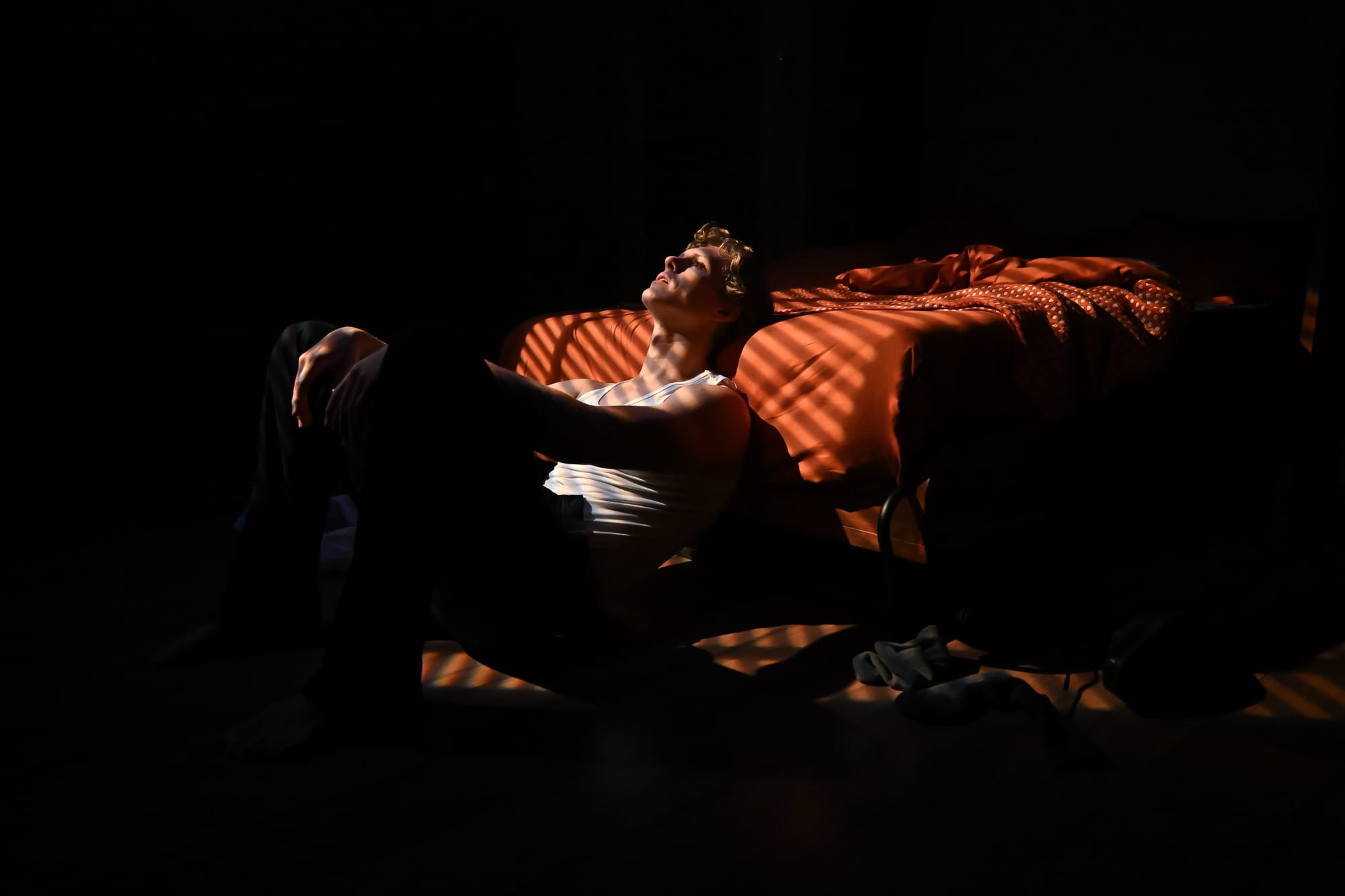
If Cathy had booked shows in New York, would she be less filled with resentment about Jamie’s literary success? And if she had been more supportive, would Jamie have had less desire (and opportunity) to stray? Then again, does Jamie’s ego — his constant need to attend literary parties — contribute to the couple’s downfall? Were they too young? Too culturally different?
TIP’s artistic director Brett Christopher delivers a sensitive, persuasive reading. He smartly presents the show in an alley staging, essentially dividing the audience in half and splitting our POVs — much in the way the characters are divided. Joshua Quinlan’s handsome set, meanwhile, presents the exterior of a building’s entrance at one end and the interior at the other, and his costumes feel just right for establishing where the characters are at in their lives. Jeff Pybus’ lighting captures everything from a brassy, sexy number sung from a theatre dressing room to a dimly-lit, early morning confessional.
Benger, a winning performer in both straight plays (Cock) and musicals (Kimberly Akimbo, A Sunday in the Park with George), makes a completely convincing, heartbreaking Cathy, with a voice shimmering with different colours. Her despair in the first scene is palpable, and as she moves backwards in time she’s unafraid to show Cathy’s anger and growing insecurity as well as, eventually, the raucous humour and confidence that must have attracted Jamie to her.
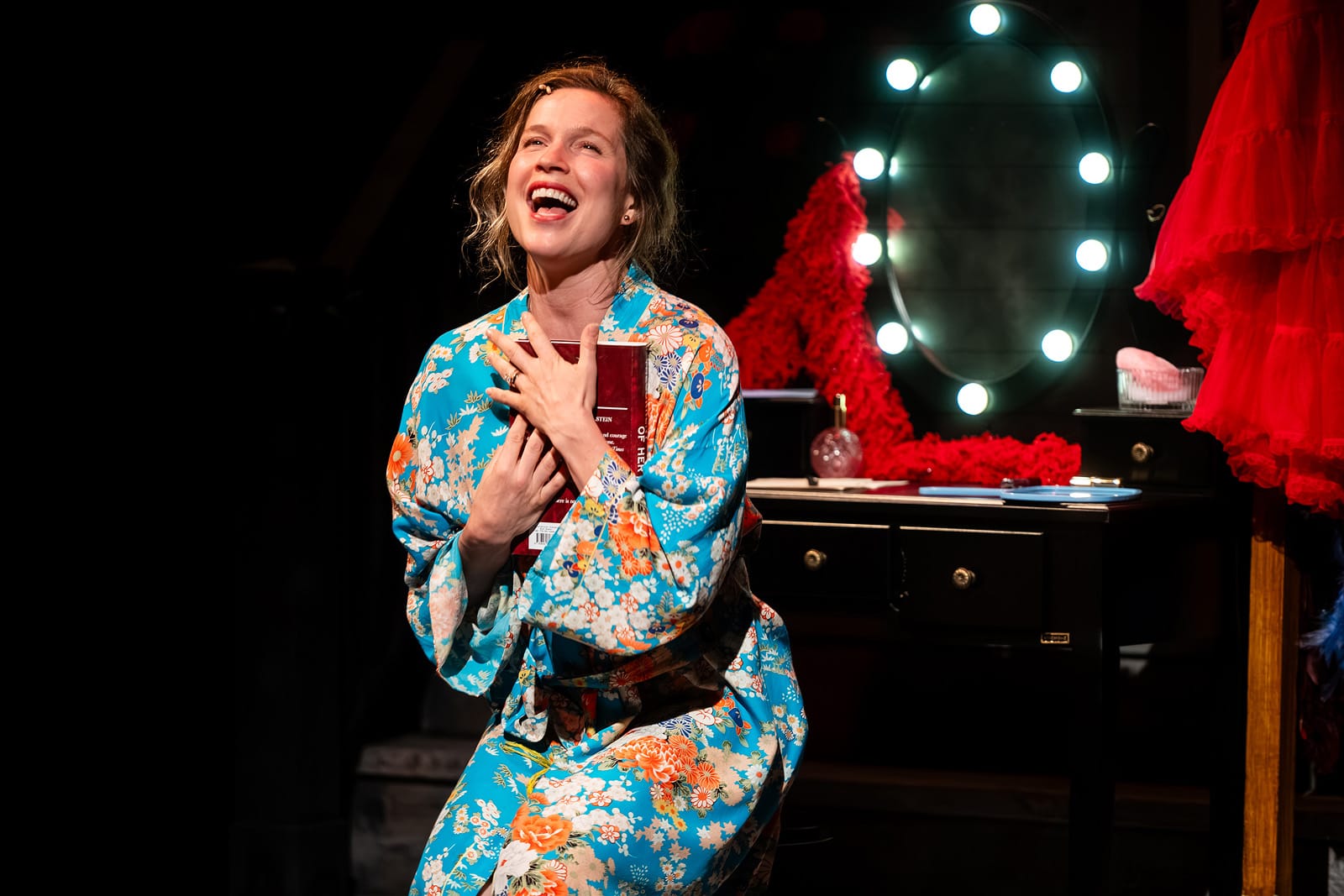
Daly, while he nails Jamie’s extroversion and charisma — you easily believe that people would be drawn into his orbit — is frankly miscast. Looking like a grown-up Rolf Gruber, he doesn’t quite convince us of those Shabbas dinners with the Washington Heights Shapiros, and he can’t master the rhythms and inflections of “The Schmuel Song.” (If Brown were writing a song based on him, it’d be called “Goyishe God.”) But even if you can sense him straining with some of the songs’ higher notes, he makes up for that with his focussed, clear reading of the text, including the show’s most devastating putdown: “I will not fail so you can be comfortable, Cathy / I will not lose because you can’t win.”
Music director/pianist Patrick Bowman and the five person band bring immediacy to the multi-faceted score, one of Brown’s best. And throughout, director Christopher plays around with the staging, having Cathy find clues, for instance, about Jamie’s secrets among his papers, or using a scooter to suggest Jamie’s quick career ascent. The way we see the opening and closing scenes from different angles is artfully done.
Last Five Years continues at the Thousand Island Playhouse’s Firehall Theatre (185 South Street, Gananoque) until Aug 30. Ticket details here.
Greased lighting
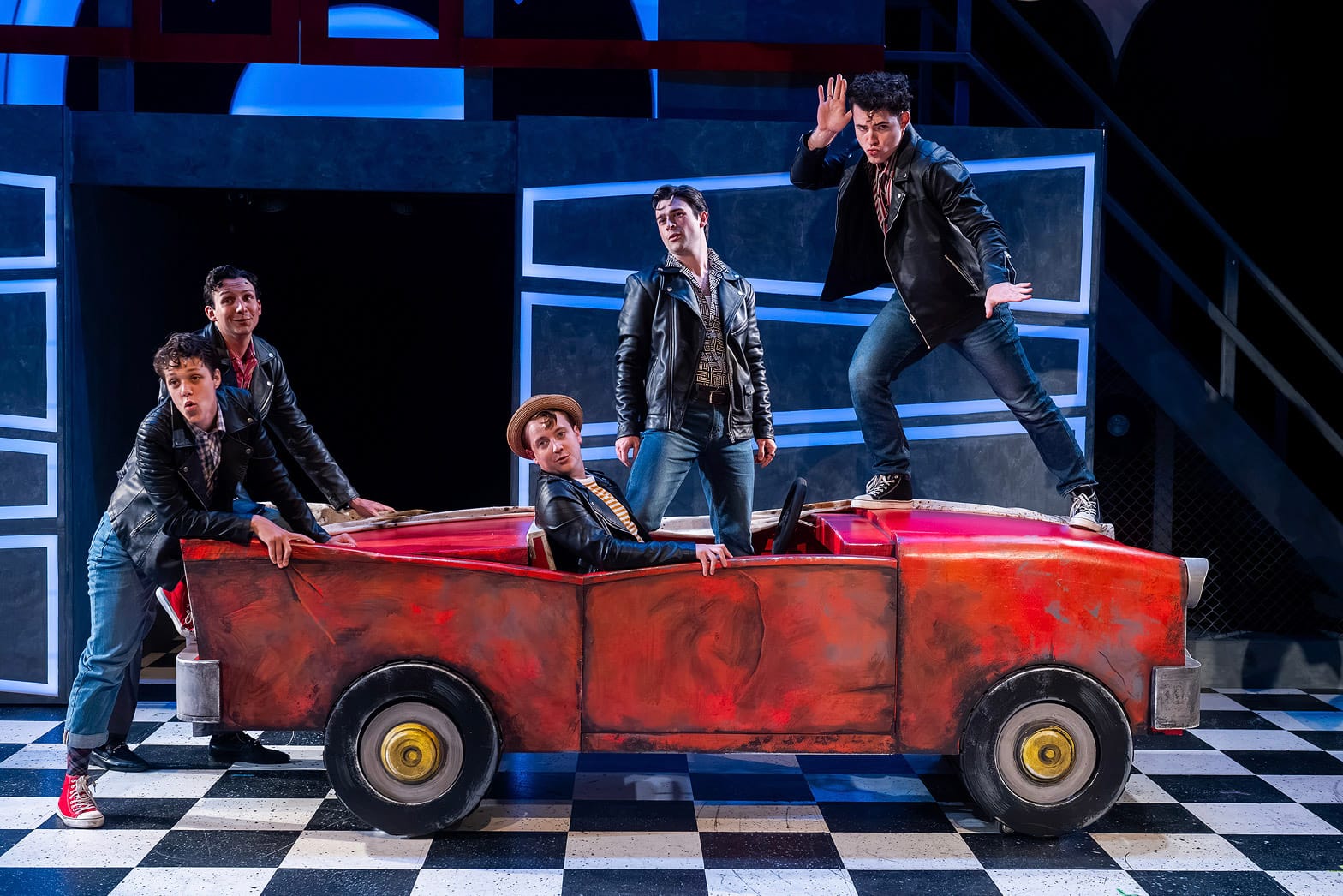
I wasn’t planning on seeing TIP’s sold-out production of Grease (Rating: ✭✭✭), but my friend had an extra ticket and so I joined her. I’m glad I did. While I of course know the 1978 film very well, I’m less familiar with the musical. And the two are quite different, although numbers from the movie usually make their way into current stage revivals, which is the case here.
Jim Jacobs and Warren Casey’s nostalgic look at greasers in a 50s high school isn’t the most sophisticated show, but it provides some breezy entertainment about dating, peer pressure and even unwanted pregnancy. (If you read between the lines, it might even touch on eating disorders, since one character’s sole personality trait seems to be downing food.)
Director Thomas Alderson does a decent enough job managing all the elements, although the show is hampered by some uneven casting and the lack of an antagonist. The outline of an oversized jukebox hangs over Freddy Van Camp’s set, which has a checkerboard tile floor, neon lights and retro signs along with a staircase that does a lot of work. And there are some lively dance numbers to Jesse Weafer’s choreography.
Standouts in the cast include Will Lincoln-Gouett’s swaggering head honcho Danny and his second-in-command Kenickie (Alex Fellowes Smith), with Jameson Mosher and Acacia Roshel charming second fiddles as Roger and Jan, and Sierra Holder giving her Marty a studied worldliness and poise. Kade McCloud nearly steals the show in the double role of the suave Teen Angel and the fast-talking DJ Vince Fontaine.
While there are a few missteps — one performer is so mannered and puppet-like in their physicality that it’s distracting, and another actor is miscast in what should be a comic role — most of the rest of the show lives up to that line from “Summer Nights”: “had me a blast.”

War wounds
The fact that beloved author Farley Mowat penned his war memoir And No Birds Sang two kilometres from Port Hope’s Capitol Theatre, where an adaptation of the book is receiving its world premiere, is a lovely detail. It’s a shame the play (Rating: ✭✭) isn’t more effective.
The 1979 book has been adapted by playwright Dave Carley, and directed by Capitol Theatre artistic director Rob Kempson, both of whom I admire a lot. But despite the personal details and often harrowing material, the work feels stiff, with too much telling and not enough dramatizing. The fact that it’s being performed in the smaller upstairs theatre with cabaret-style seating lends the show some intimacy, but it also means sightlines can be challenging.
An 18-year-old Mowat (Aaron Macpherson) wants to fly with the RCAF to fight in World War Two but is rejected because he looks too young. So he joins the army instead and trains in Montreal and England before being transported to Sicily.
Mowat meets several colourful characters and survives experiences that are alternately absurd and horrific (for instance, he and his men land on the wrong beach). But the power of his narrative feels blunted because his story has no shape or momentum.
Kempson’s most noticeable addition is using various instruments — including a piano, violin and guitar — as both props and sound effects. This choice seems odd, particularly when a guitar is slung around to mimic a rifle. Why? This isn’t a musical, although when the group strums and plays, you expect them all to break out into song.
Daniel Reale and Mayson Sonntag play various characters, and while the actors shift parts skillfully and economically, none of their characters is memorable enough to sustain the audience’s interest.
Mowat, of course, was a well-known environmentalist and activist. And so it feels strange that his love of nature isn’t a running theme in the work — especially when the title bleakly refers to the effect of war on the natural world. When the title arrives near the end of the play, it feels anti-climactic and unearned.
And No Birds Sang continues at the Sculthorpe Theatre at the Capitol Theatre (20 Queen St) until Sep. 6. Ticket details here
Dora Awards debacle
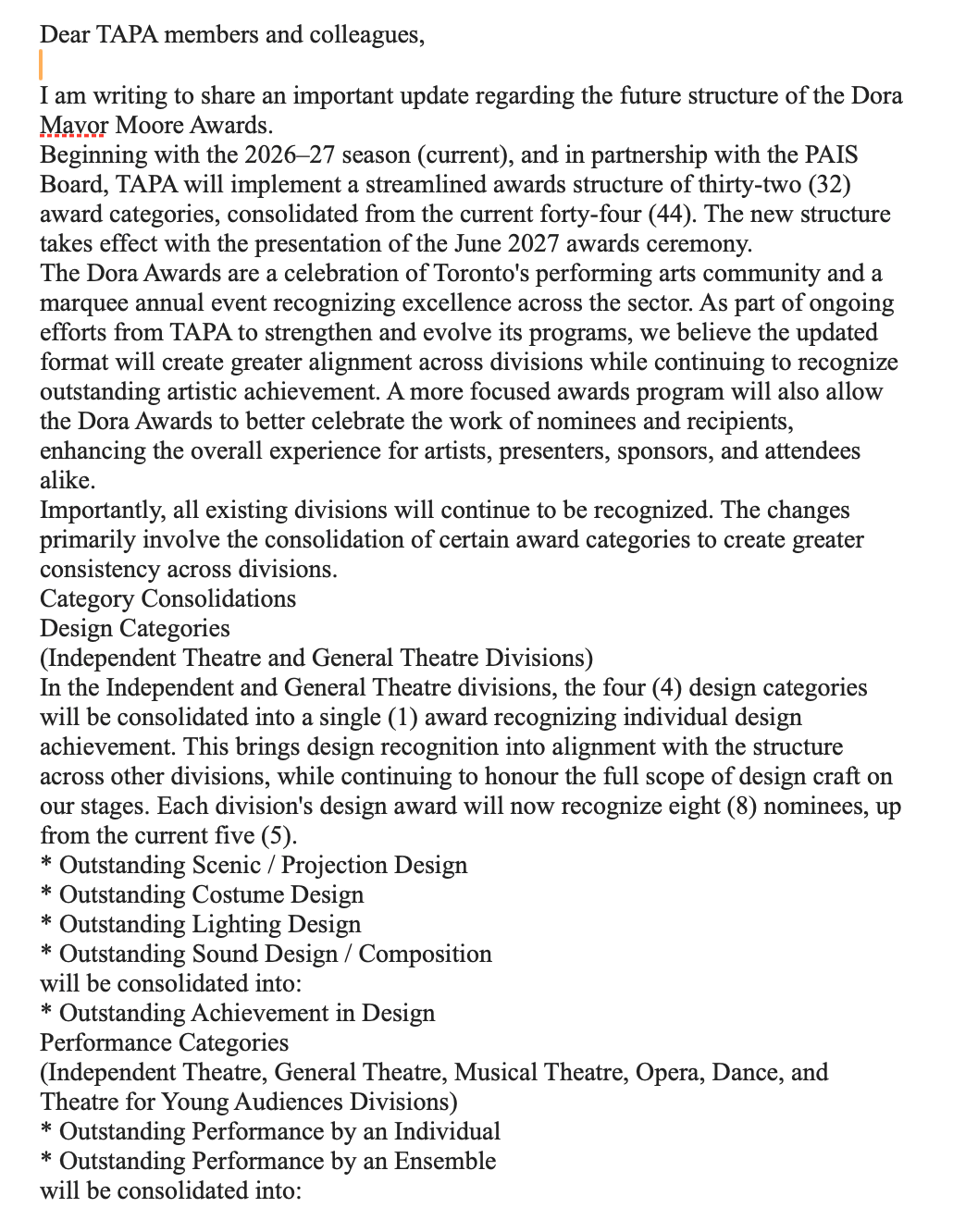
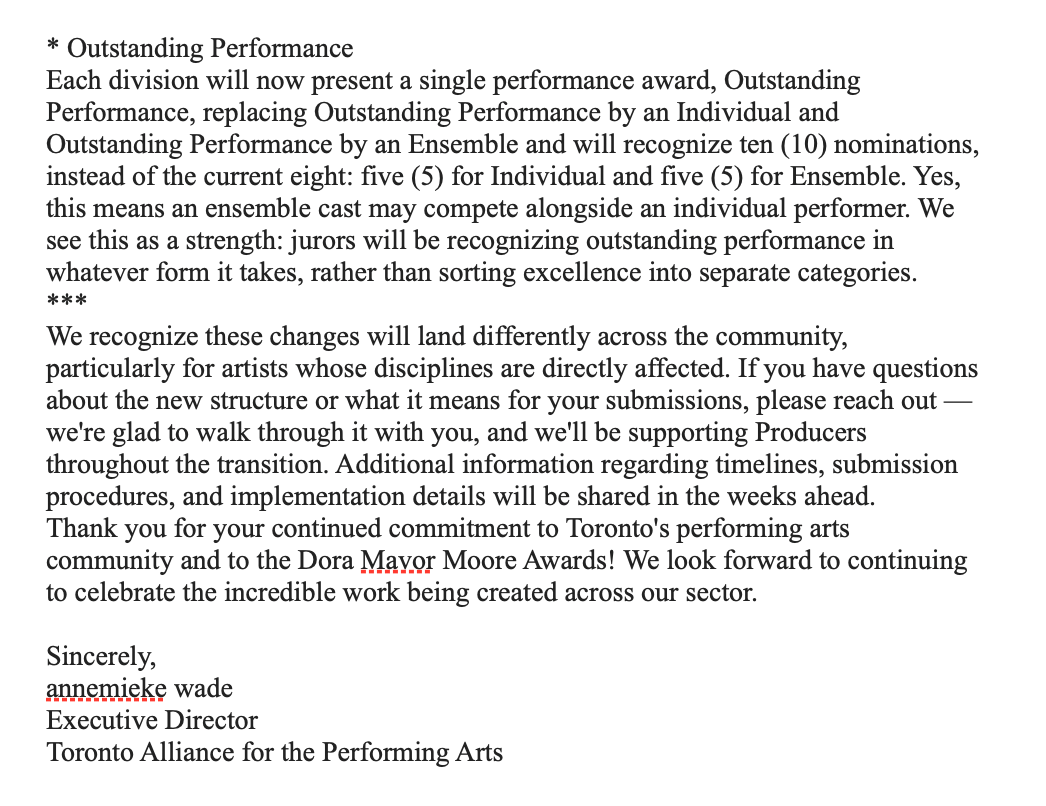
WTF is happening at the Toronto Alliance for the Performing Arts (TAPA), who recently emailed its members about changes to its annual Dora Awards?
For both the General and Independent Theatre categories, they’re getting rid of the individual design awards — which previously were for Outstanding Scenic/Projection Design, Outstanding Costume Design, Outstanding Lighting Design and Outstanding Sound Design/Composition — and consolidating them into one award: Outstanding Achievement in Design.
“This brings design recognition into alignment with the structure across other divisions, while continuing to honour the full scope of design craft on our stages,” writes TAPA’s executive director annemieke wade. “Each division’s design award will now recognize eight (8) nominees, up from the current five (5).”
Um, yeah, the number of current nominees is five — in each design category. TAPA is essentially taking a nominee list of 20 (5 x 4) and more than halving it to 8.
In the Performance categories, however — for Independent Theatre, General Theatre, Musical Theatre, Opera, Dance and Theatre for Young Audiences Divisions — there will only be a single Dora handed out per division.
“Yes, this means an ensemble cast may compete alongside an individual performer,” explains wade. “We see this as a strength: jurors will be recognizing outstanding performance in whatever form it takes, rather than sorting excellence into separate categories.”
Things were already tough with the lack of “supporting” or “featured” performance awards, and with the Dora handed out to one individual rather than two (back when awards were divided by gender).
Now it’s going to be even tougher for emerging artists to make their marks and earn recognition. Can you imagine the uproar that would happen at the Tony Awards if its four performing awards in plays and musicals were reduced to one each?
I’m attaching the TAPA letter for you to read in full, which includes when the new rules will take effect (for the 2027 awards). I expect there will be lots of discussion before that date. Here’s the TAPA website.