The delicate dance of directing Dance Nation
Director Diana Bentley and movement director Alyssa Martin discuss the wildly polarizing show about pre-teen competitive hoofers

This post is sponsored by the CBC podcast PlayME. The full audio version of Pamela Mala Sinha’s play NEW and an interview with the playwright are now available for streaming and downloading through your favourite podcast app. See more below.
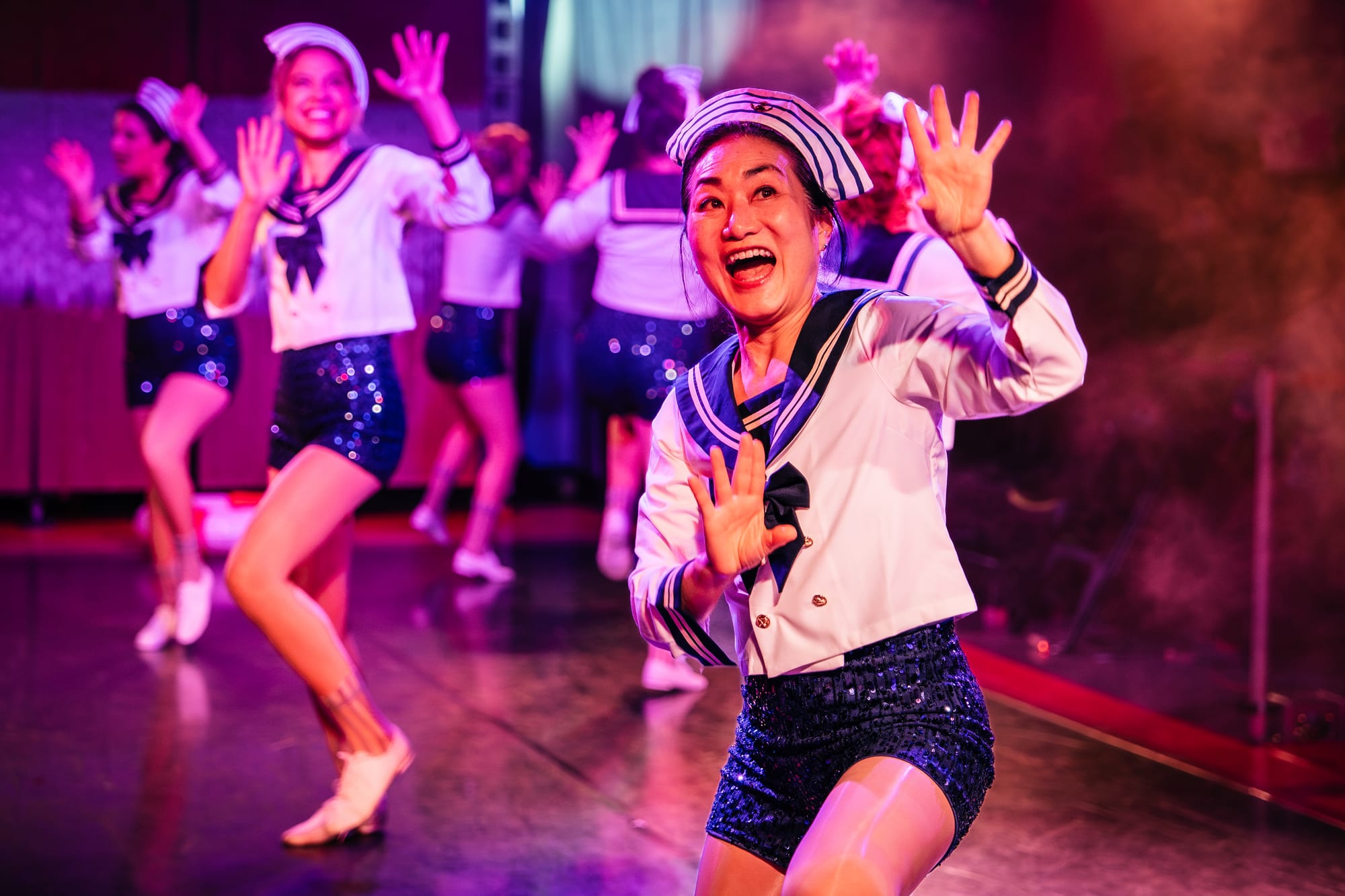
Movement director Alyssa Martin remembers taking part in dance competitions much like the ones depicted in Dance Nation, the nearly-sold-out show at Coal Mine Theatre about pre-teen girls (and one boy) vying for dance glory. Here’s my rave review.
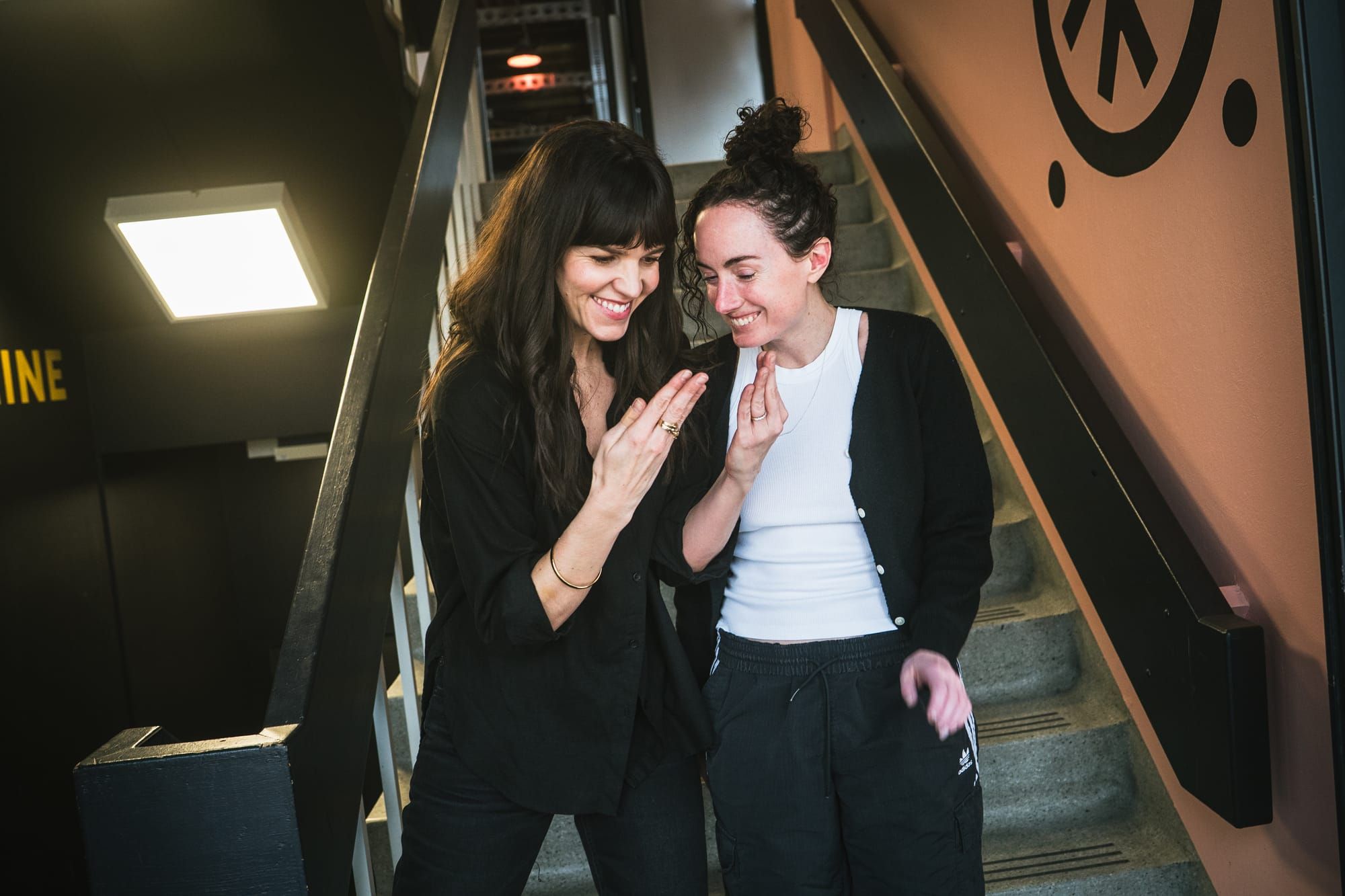
“I was deep, deep, deep into competitions,” says Martin, on a Zoom call with the show’s director Diana Bentley.
“We went to Orlando, Florida. I remember dancing to a song by Vanilla Ice. I did all the regionals. I did solos. I was the one getting lifted. I was hungry for it. We travelled around in the back of vans, with our tutus. I still have really close friends from that time. We went for the tiaras.”
And so she was a natural fit to helm the movement for the show, a rare co-production between Coal Mine and the immersive theatre company Outside the March, in association with Martin’s own Rock Bottom Movement company.
Martin says playwright Clare Barron got the details of this odd, intense subculture of the dance world just right.
“She really nailed the specific teen competitive dance world, and there’s enough vagueness that you can really place yourself in what she’s describing,” says Martin.
“But what struck me most is the nuance of the friendships between the dancers. There’s something about competitive dance as a teenager and how much time you spend with the people you are competing with, that creates a very specific dynamic. The first time I read it, I was so moved. I felt I’d never been so reflected in a piece of theatre.”
Martin and Bentley collaborated on last season’s Dora Award-winning show People, Places and Things. Movement became a critical part of that show, but the two were determined not to mimic the choreography from the original National Theatre/Headlong staging.
Bentley describes the beginning of their collaborations thusly: “We get together and go through the script a beat at a time, and then we physicalize everything and we play music, and we go scene by scene by scene by scene by scene.
“And then we give ourselves permission to kind of come up with something, and present these offerings,” she continues. “We prep everybody, and then we slowly start to see it. We give ourselves permission to draft and redraft.”
For People, Places, that meant the two were making major changes to how the movement fit into the show and captured the main character’s hallucinations — even during previews.
“We had to figure so much out,” says Bentley. “We kept turning to each other, and going, ‘That’s not it, we haven’t quite found it.’ But we had enough trust in each other, and in the design team and actors.”
Among the co-directors’ challenges in Dance Nation was to create dance sequences for the pre-teens that felt authentic but were not — how to put it kindly? — the most artistically imaginative.
“That was liberating, but also frustrating,” says Martin. “I realized one of my jobs was to figure out who Dance Teacher Pat (Salvatore Antonio) was as a choreographer, and then choreograph through this fictional character, this man living in America. What kind of music did he like? What were his influences?
“As for the choreography, I have quite a prolific CV of horrific choreography to draw on. It was really fun to play with the actors and lean into the cringe and the campiness, and be okay with the dances being really hard to watch, while also maintaining the magic that would have kept the girls interested.
“On top of that, there were also moments, such as when Zuzu (Annie Luján) and Connie (Zorana Sadiq) are dancing alone in their rooms, where we played with improvisation, places where the kids could tap into feeling amazing with what they were doing. And none of that is supposed to be cringe.”
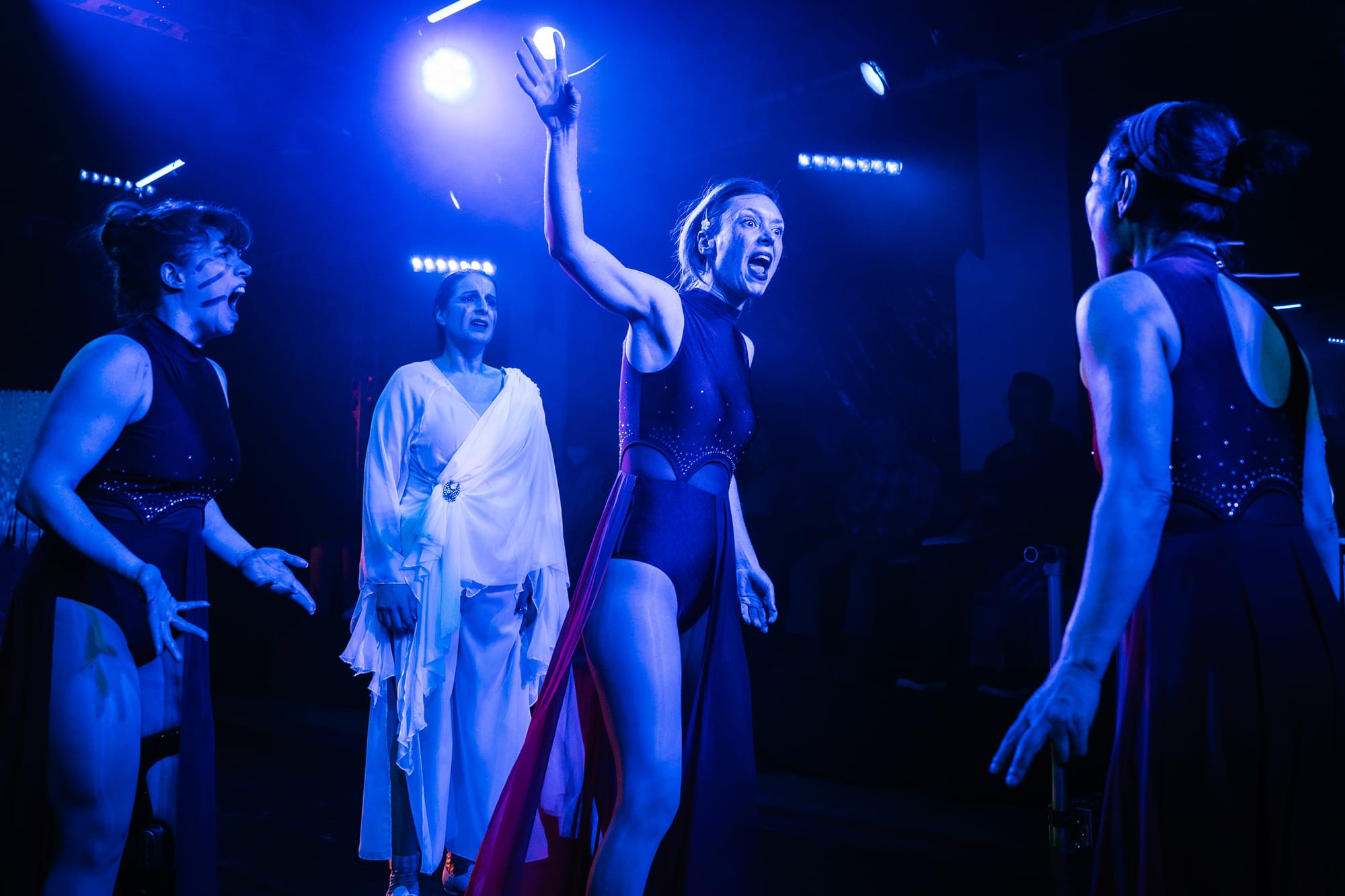
One of the joys of the material is watching adult actors — aged anywhere from their 20s to 70s — play children. We simultaneously see the adults they are to become, as well as the children they once were.
Among the ensemble, two actors, Keating and Oliver Dennis, are unique in that they have a perennial youthfulness about them.
“I agree — they both have this wonder and youth in them that always shows up when they’re onstage,” says Bentley.
“Another thing is that these actors are all clowns. But their clown is in how they listen — it’s not outside, it’s interior. Annie is another great example. The comedy in the show is very important, but it has to always hang on the edge of being scary, as opposed to out-of-the-box satire. All the actors in the show understand that. They can all stay really deeply inside the truth of the play, in a way that their clowns understand.”
Bentley is excited by the mix of responses to the material. (Our conversation took place a few days after the show’s opening, and on the day a less-than-stellar Globe and Mail review, in which the reviewer called herself a grinch, came out.)
“The reaction has been pretty polarizing, as I believe all great theatre should be,” says Bentley.
“The play definitely has a fangirl following. And then, as with all theatre, there are people who sit with their arms crossed. I think it brings up a lot of material for certain audience members. And I think that’s also the point. It should be grinch-making for some audience members. At some previews, people went wild, while others didn’t know what to make of it.”
Dance Nation continues at the Coal Mine Theatre, 2076 Danforth Ave., until May 10. Ticket details here
Making it New
The full audio drama version of Pamela Mala Sinha’s remarkable play New is now up at the CBC podcast PlayME. Audience members who saw the original staging at the Berkeley Street Theatre — a Necessary Angel production, in association with Canadian Stage and the Royal Manitoba Theatre Centre — will notice a few casting differences.
But the additions are great: Lisa Ryder now plays Abby, a white woman who’s been in a relationship with Qasim (Ali Kazmi) for a year, not knowing he’s married; Zorana Sadiq (who coincidentally is in the ensemble for Dance Nation) now plays Aisha, an activist who desperately wants to get pregnant; and Ellora Patnaik plays Sita, a dancer who speaks very little English and who’s grieving a loss.
The playwright herself played Sita in the original staging, and she is stunning here in the key role of young bride Nuzha, who finds a sense of freedom and independence in her newfound country of Canada in the 1970s.
The audio drama, which follows three couples and one newcomer in a Winnipeg apartment — is a little difficult to parse at first. But once you figure out who’s who — which was helped by Alan Dilworth’s direction and Michelle Bohn’s set design in the physical production — the play and its rich, moving themes kicks into gear.
In the interview segment, Sinha shares lots of details about her inspiration with co-host/producer Chris Tolley. Her mother, Rubena Sinha, a noted dance artist, acted as cultural consultant, and had a surprising but just-right contribution to a key early scene (as well as a great anecdote about a date). There’s also lots of talk about the early arts and culture scene in Winnipeg, which included Sinha’s mother.
Sinha talks a bit about sharing work with her partner, playwright John Mighton — interestingly, she didn’t let him see an early draft of her second play, Happy Place.
And she discusses her fascinating new work, a commission from the Tarragon, which was inspired by the Indian royal Gowramma Virarajendra, who became Queen Victoria’s goddaughter.
As I wrote in my original review of New back in 2023, the play “deserves a long life, both here and elsewhere.” Now, thanks to PlayME, you can listen to it wherever you are.