A West End Arthur Miller and a Montreal-set indie rock rom-com
Reviews of the National Theatre Live’s broadcast of All My Sons and Chandler Levack’s Mile End Kicks

Arthur Miller is having a moment. His Death of a Salesman has just been revived on Broadway. Two of his plays are currently enjoying revivals in London. Leanna Brodie and Jovanni Sy’s Salesman in China is returning as part of the Mirvish subscription season after its Stratford triumph. And in June, the indie company By the Word Productions is presenting Franca Miraglia’s play American Devotion, about a fictional visit by Norman Mailer to the Connecticut home of playwright Miller and wife Marilyn Monroe, right before Miller is set to testify in front of the House Un-American Activities Committee.
And then there’s Ivo van Hove’s recent West End production of the playwright’s 1946 work All My Sons, which just won Oliviers for best revival and best supporting actor. Beautifully captured for the National Theatre Live series, it opens in movie theatres this week, and attention must be paid to securing tickets. It’s a blistering production of a great play, and works incredibly well onscreen (Rating: ✭✭✭✭✭).
The Kellers are an upstanding family in an unnamed town, just after the end of WWII. Patriarch Joe (Bryan Cranston) runs a factory, in which his principled son Chris (Paapa Essiedu), back from the war, also works. Mother Kate (Marianne Jean-Baptiste) believes her other son, Larry, who was declared MIA during the war, is still alive. But Chris has asked Ann (Hayley Squires), Larry’s former girlfriend, to their home to propose to her; the two have been secretly corresponding for the past couple of years.
Ann and her family’s lives are intimately intertwined with the Kellers’. They used to live next door, but moved after an incident at Joe’s factory, in which Ann’s father, Steve, was a partner.
The factory produced several cracked cylinder heads that were patched over and then sold to the U.S. Air Force, resulting in the deaths of 21 American airmen. Originally, Joe was arrested for the crime, but he was exonerated, and instead Steve went to prison. Ann and her brother George (Tom Glynn-Carney) haven’t kept in touch with their father.
But on the same day that Ann visits the Kellers, George, a veteran who later trained as a lawyer, visits his father in prison. And as with a classic Greek tragedy, the news he brings is going to shake the house — and its characters — to their foundations.
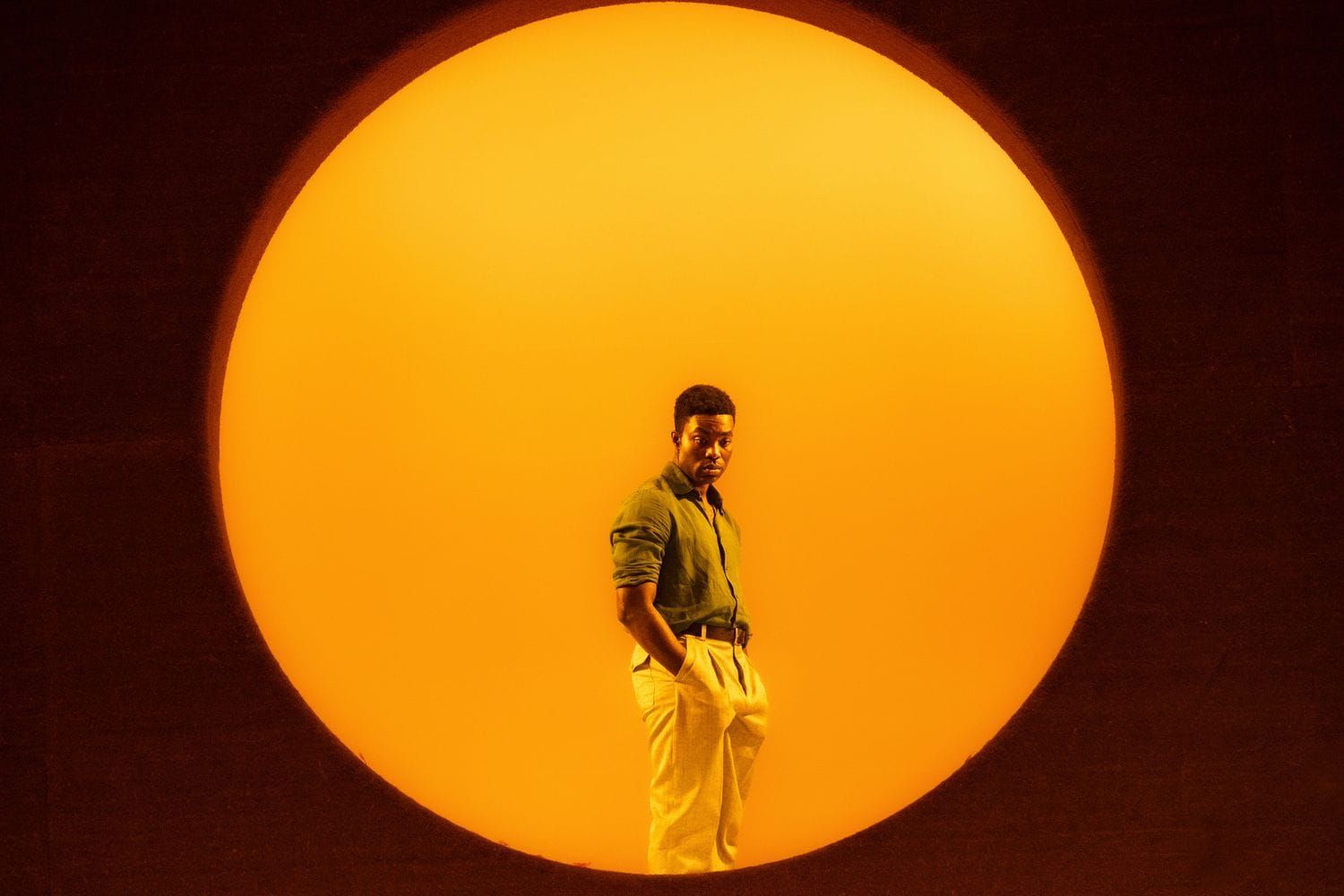
Van Hove, who directed the similarly powerful Miller revival A View From the Bridge several years ago, presents a stark and stunning production that seizes one’s imagination from the start. With thunderous roars and flashes of lightning illuminating the night (and, upon second viewing, the sound of an airplane droning in Tom Gibbons’ sound design), Kate in her nightgown holds onto a huge tree, but it’s soon knocked over on its side. And there it will remain, a big, messy symbol of what was done and cannot be undone.
What appeared to be a moon in that earlier scene — and burns brightly orange the following morning, altering throughout the 2 1/2 hour play — turns out to be a window in the Keller’s home. Beyond that and a dark doorway, there’s not much else in Jan Versweyveld’s set. But the simplicity gives the production an elemental feel.
Cranston is brilliantly cast as a man who does something morally reprehensible, convincing himself that it’s for his family, which sounds awfully like what his famous character Walter White kept saying. Jean-Baptiste, attempting a passable Brooklyn accent, is equally memorable as Kate, who knows more than she lets on and has glommed onto the idea that her son is coming back as a big distraction. But distraction from what? Guilt?
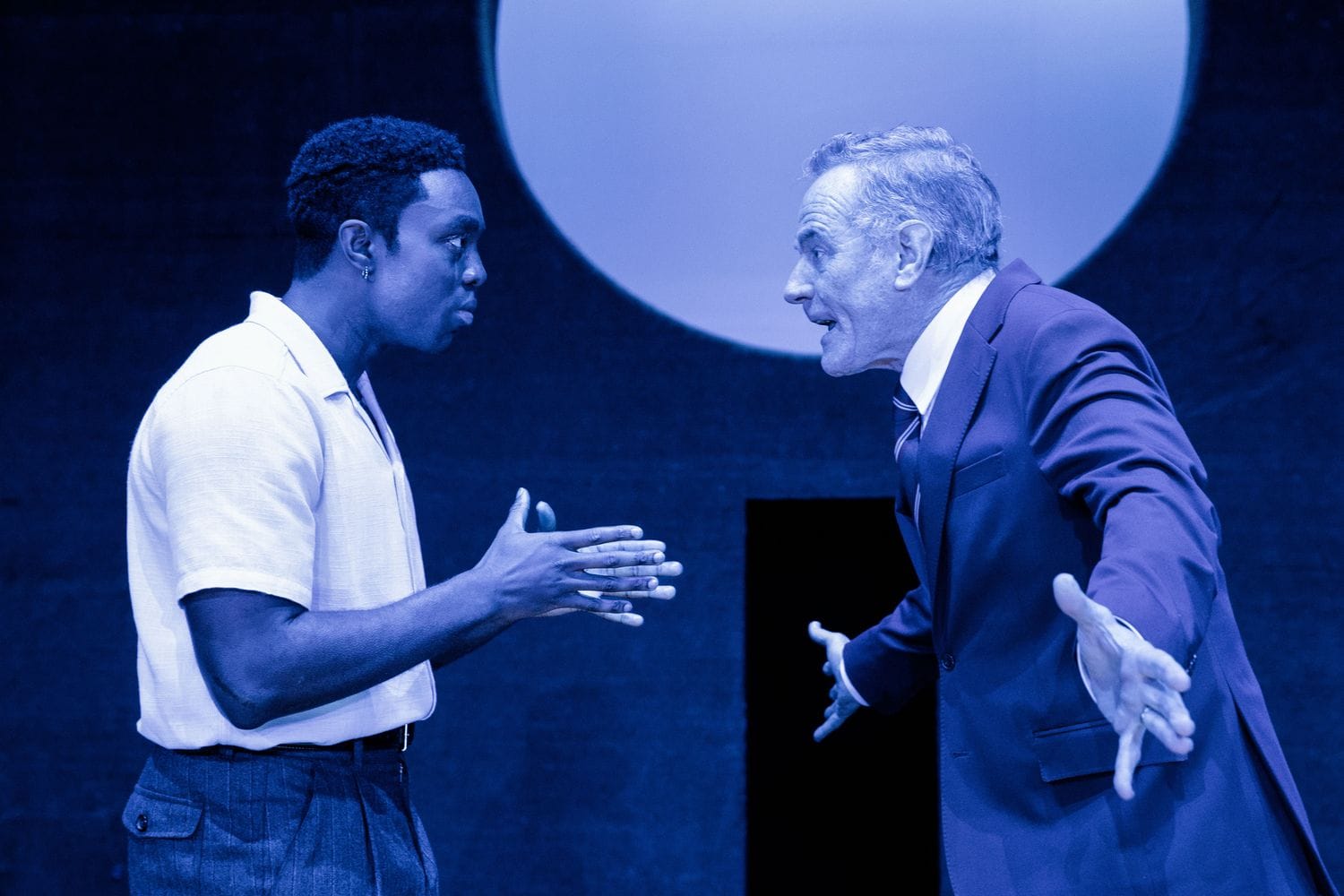
If there’s a lack of passion between Chris and Ann, never mind. The two actors are focused and convincing, especially Essiedu, who brings a jangly, nervous energy to his performance that feels excitingly fresh and contemporary. And speaking of contemporary, when Glynn-Carney appears he’s glowering, shrouded in a hoodie, his entrance underscored by anxious percussion and a light effect.
What makes this current revival so thrilling is that the themes of greed and war couldn’t be more relevant. The full meaning of the play’s title doesn’t emerge until the final moments, but it’s hard not to think of the sons and daughters slaughtered today over the price of oil or a sudden bit of insider trading before a news announcement. Greed.
The times may have changed — Miller’s criticism of the American Dream prompted the HUAC to call him to testify, and the play’s original director, Elia Kazan, notoriously went on to name suspected Communists — but the depths of human depravity remain the same.
One of the signs of a true classic.
All My Sons hits screens Thursday, April 16. See info here
Indie charmer
Toronto-based filmmaker Chandler Levack follows up her terrific debut I Like Movies with Mile End Kicks (Rating: ✭✭✭✭), another look at an insecure yet self-absorbed young person who gets humbled and learns some valuable lessons by the end of the film.
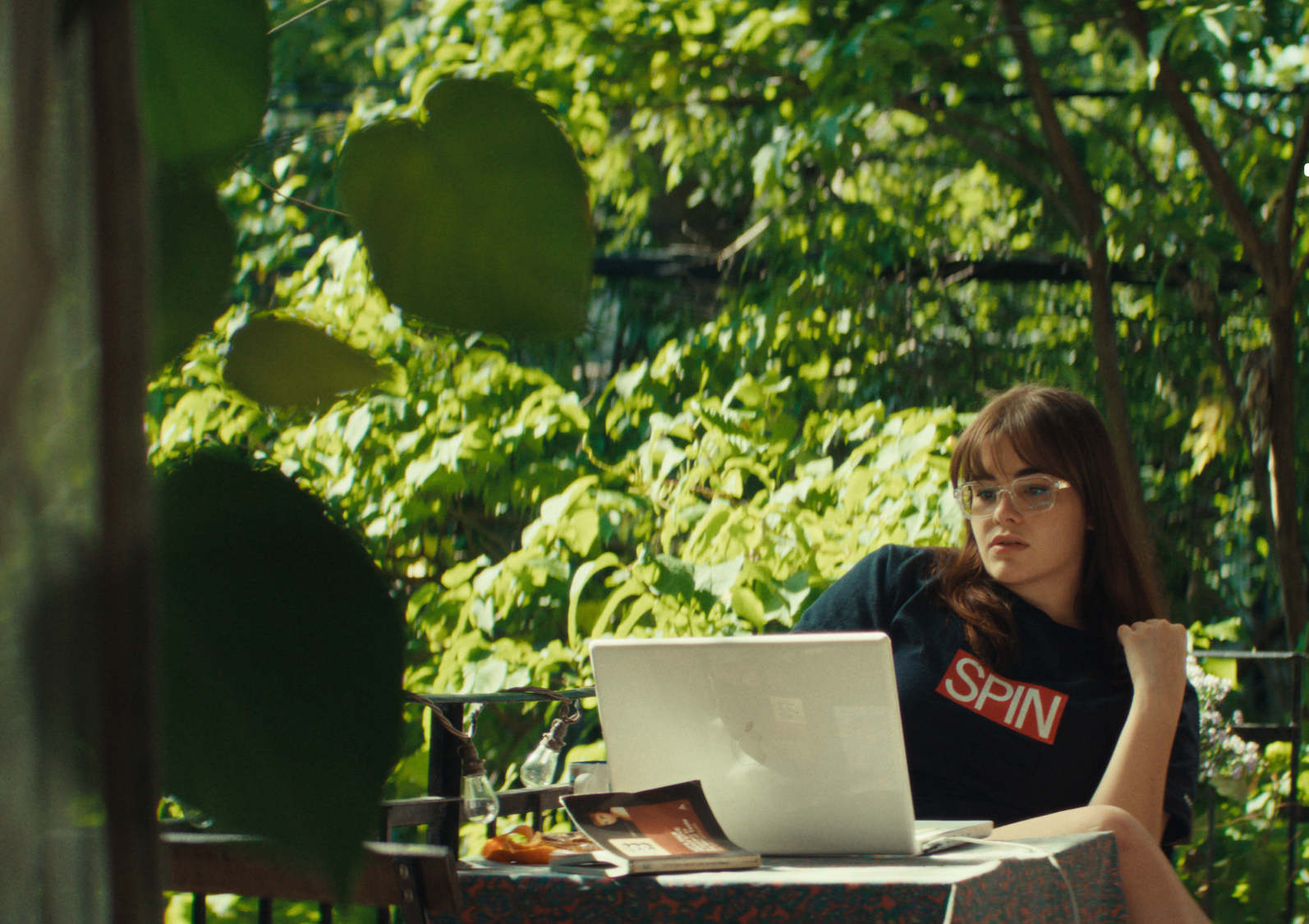
Grace (Barbie Ferreira, from Euphoria) is an overworked and underpaid music critic for a Toronto paper called Merge Weekly (Levack put in time at both NOW and eye Weeklies). It’s 2011, and even though she’s written hundreds of articles for the paper, she can’t break through to the office’s semi-circle of hipster dudes and their bombastic pronouncements.
But after she successfully pitches a 33 1/3 book on Alanis Morissette’s Jagged Little Pill (great cameo by Sabrina Jalees as her editor), she decides to move to Montreal for the summer. Among her goals, clearly stated in her Notes app: write Alanis book; learn French; walk to the top of Mount Royal; have sex.
Soon, through her new DJ roommate’s surly boyfriend, she meets an indie rock band named Bone Patrol, two of whose members catch her eye: lead singer Chevy (Stanley Simons), who says early on that “I like music that’s unlistenable” and guitarist Archie (Devon Bostick), with whom she’s completely at ease. Although she’s stuck on the Alanis book, that last item on her list might become a possibility.
Levack, who’s got a great eye and ear for the fashions and music of the era — the band TOPS contributed two songs — sets up the premise pretty efficiently. But the narrative tension sags a little as Grace gets pulled into the city’s underground music and literary orbit.
To be fair, none of this is especially original, especially Chevy’s passive-aggressive douchery. The fact that Lena Dunham has been publicizing and telling stories about her excellent new memoir, Famesick, has made me realize that all of this could have happened in an episode or two of Girls.
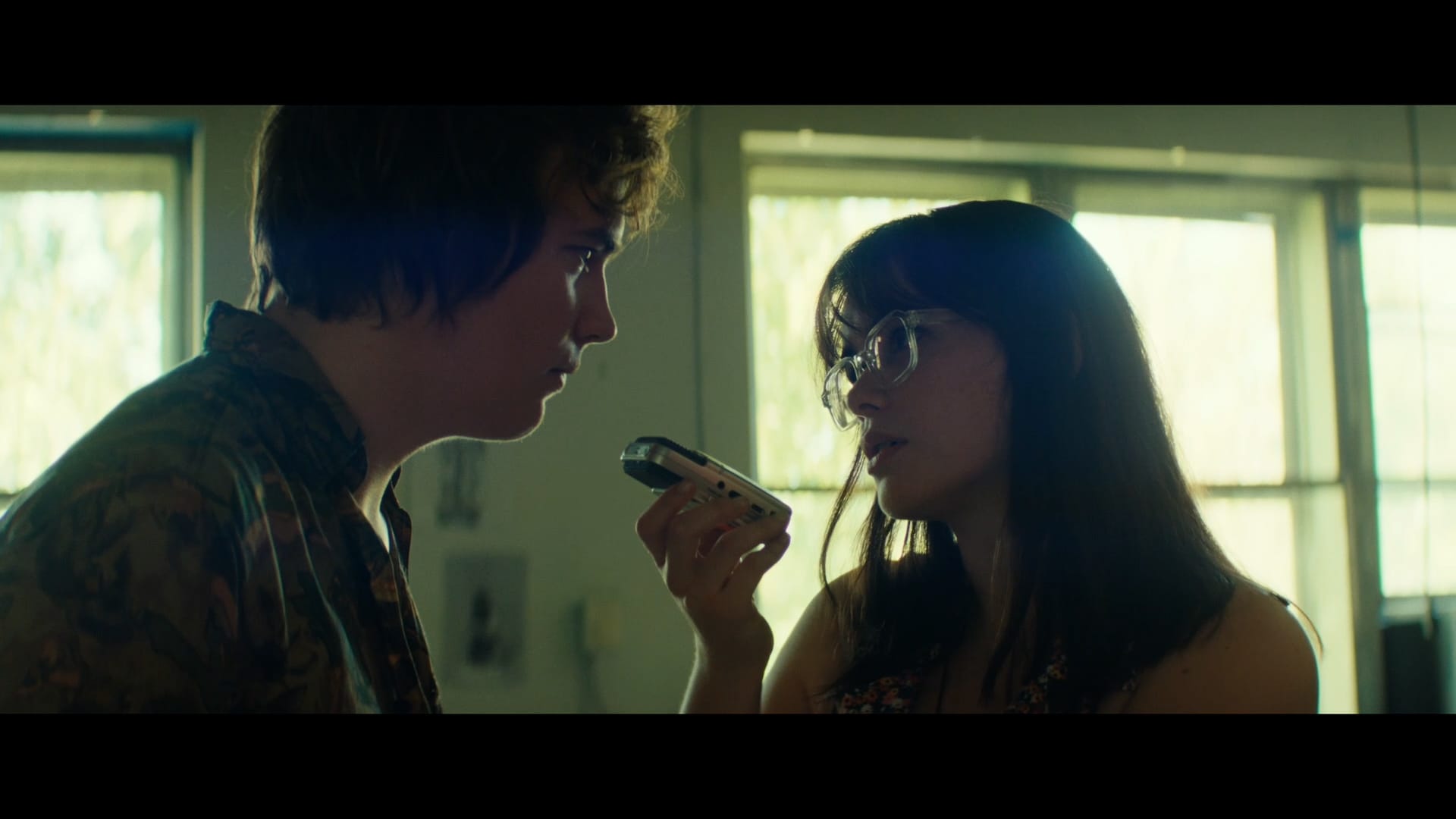
And it feels odd that, midway through the film, Grace turns from being a journalist covering Bone Patrol to their publicist. Some connective tissue behind that decision seems missing.
But Levack handles the material with her own quirky spin, such as when Grace starts making out with a guy, but not before clicking on her “If I Ever Have Sex” playlist. And Ferreira, her eyes framed by a pair of oversized glasses, is masterful in registering anxiety covered up by nonchalance.
It’s also great to see a bunch of talented Canadians on the periphery of the film, including Aurora Browne as Grace’s frustrated mother, Jay Baruchel as publisher of Merge, obviously a sick joke of a name, and Levack’s I Like Movies star Isaiah Lehtinen as the Bone Patrol bassist.
And as someone who (if memory serves) sat next to Levack in a cubicle when she interned at NOW as a teenager, the vibe of those alt-weekly scenes feels eerily authentic. Also authentic? Having hundreds of articles disappear from a paper’s website.
Mile End Kicks belongs on the same shelf as messy but relatable coming-of-age films like Reality Bites and Frances Ha.
Mile End Kicks opens on screens Friday (April 17).