How the National Ballet of Canada’s Romeo and Juliet changed my life
The newly revived John Cranko production of a ballet classic made me a lifetime stage fan

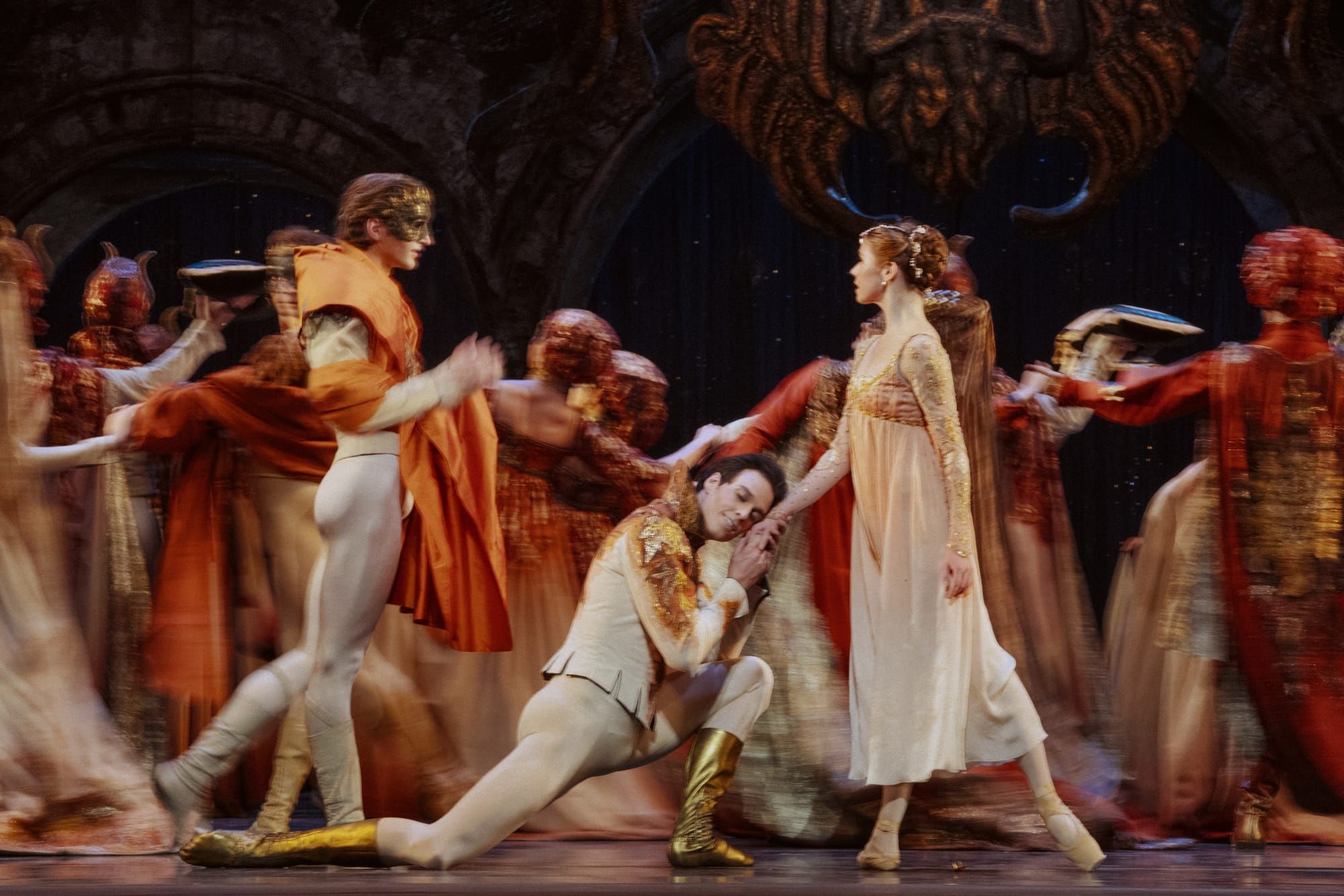
When I heard that the National Ballet of Canada was launching its 75th anniversary season with John Cranko’s 1964 staging of Romeo and Juliet — a work long associated with the company — I quickly arranged for a ticket.
The Cranko R&J was the first live ballet I saw, and it forever cracked open the world of live performance for me. Great art can do that.
I was in high school, a decent student with a wide range of interests but only a vague sense of what I wanted to do with my life. I’d probably seen a dozen or so plays, at school or family trips downtown or at Stratford.
Several friends and I took the bus and subway from the suburbs down to the O’Keefe Centre (now the Meridian) to see it. We must have queued for discounted student rush tickets — something I would repeat throughout high school and university.
I remember we were seated in the rear orchestra, house right — although I didn’t know to call it that then. I knew Shakespeare’s Romeo and Juliet, of course, since it was one of the plays I’d studied in class, so I was familiar with the outline of the story, the star-cross’d lovers, etc.
But I soon realized that I didn’t need to know anything beforehand. Quickly I understood that Cranko, who unbeknownst to me then had died in 1973 at the tragic age of 45, was a masterful storyteller.
All of that returned last weekend when the curtain went up and Prokofiev’s magnificent score — conducted by David Briskin — washed over me, full of complex colours conjuring the passion of young love, the raucous energy of friendship, the strict formality of social conventions, feuding families, impending doom.
Cranko, his steps reproduced by Reid Anderson and Yseult Lendvai, finds a movement vocabulary for all of this so each moment is clear, recognizable and deeply felt.
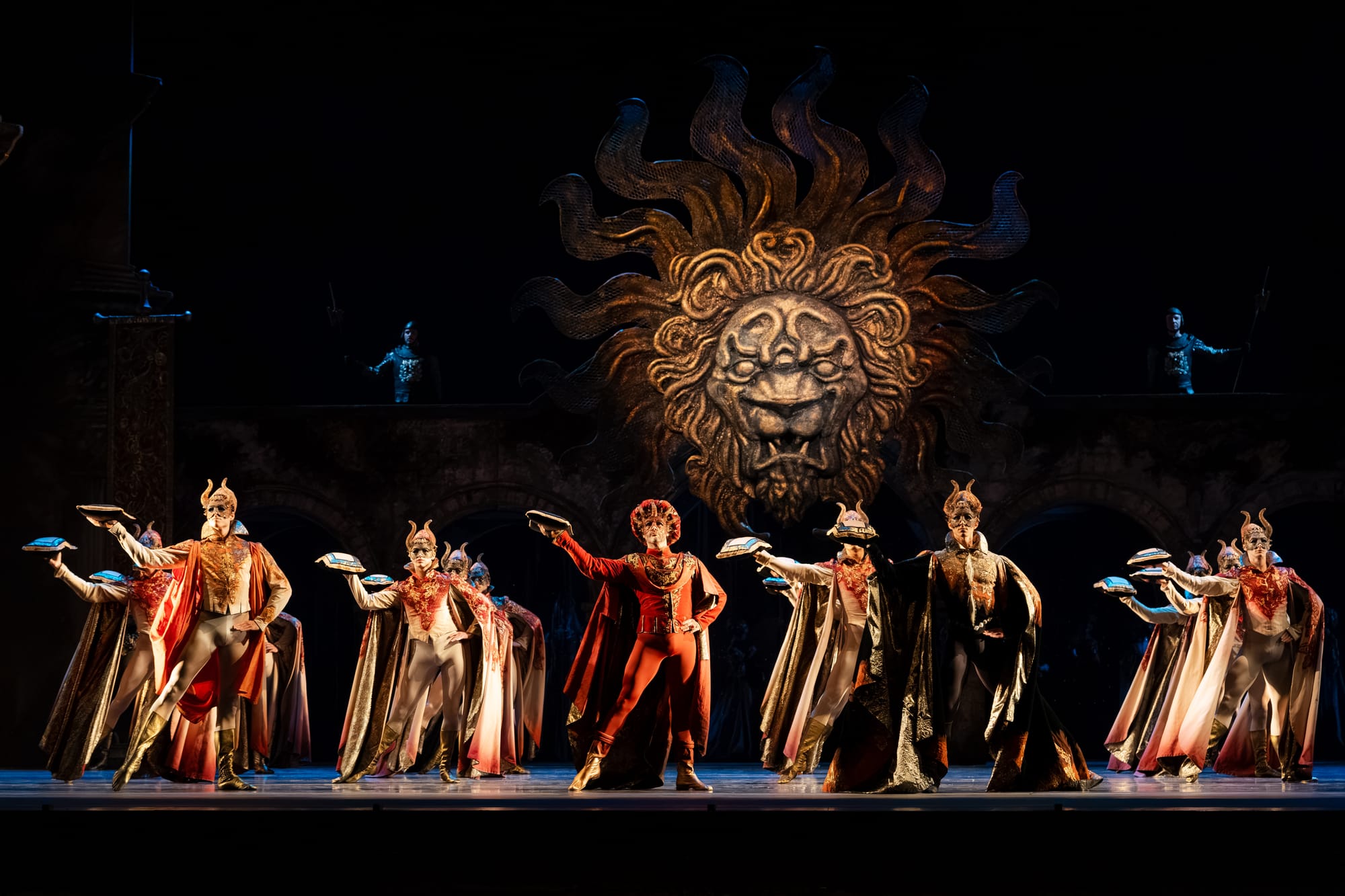
His choreography for the magnificent, booming “Dance of the Knights,” for instance — the music sampled by A Tribe Called Quest and used in everything from the film Caligula and the TV series The Apprentice — establishes the rigidity of this milieu so effectively, a terrifying metallic lion in Susan Benson’s set looking on from above.
You can chart the relationship between the two young lovers through their pas de deux, beginning with their tentative, shy but magically-drawn-together pairing in the ball scene (barely escaping the eyes of Juliet’s relatives, including Tybalt, a fiery Ben Rudisin), their dizzying dance of discovery and passion in the balcony scene and their tragic parting duet in the post-coital scene when Romeo has been banished.
I didn’t recognize any of the lead dancers on opening night, which perhaps was intentional. The tall, elegant Oliver Yonick (Romeo) was plucked from the corps de ballet, while the winsome, dramatically expressive Isabella Kinch (Juliet) is a second soloist. Both are stars in the making, part of the future of the company.
While they naturally exude youthful energy and enthusiasm, making their early scenes together more convincing than their later ones, their interpretations will only deepen with time. (That first time I saw the great Veronica Tennant, late in her career, as Juliet.) There was something a little too safe about their approach to their final duet, particularly in one of my favourite bits of choreography, in which Juliet leaps into the air only to curl up into a ball of despair and avoidance in Romeo’s arms.
Romeo gets lots of athletic leaps and turns, which Yonick executes with grace and accuracy, but Juliet is the character who takes a big emotional journey. By the end, she’s far removed from the young girl who was so shy about her arranged marriage that she hid behind her protective nurse (Stephanie Hutchison), and Kinch captures this maturity beautifully.
The cast I saw was rounded out by Donald Thom’s extroverted Mercutio, Rex Harrington’s stern Duke of Verona and Heather Ogden, a former Juliet who’s retiring this season, as the imperious Lady Capulet, terrifying in her second act closer, in which she wails over the dead body of Tybalt as Prokofiev’s music rises to a harrowing, cymbal-clashing climax.
After seeing that first Romeo and Juliet as a teenager, practically hyperventilating with the emotions and ideas it made me feel, I sought out other performing arts. I stood in line for rush tickets to the opera. I eventually bought student subscriptions to the symphony and a couple of theatre companies.
“This isn’t a typical ballet,” said one of my friends that night at the O’Keefe, and as I was to learn over the years, she was right. I learned the conventions of the more traditional story ballets, which were more technically thrilling but somehow less dramatic or psychologically rich than Cranko’s R&J. Soon I became eager to explore more contemporary works.
Eventually, I started writing about what I thought, seeing what worked and what didn’t, and more importantly why. Other great shows beckoned. I’ve spent the last several decades of my life trying to sum up the art I see on a stage, or on a screen, or read between the covers of a book.
I’ve seen thousands of live shows. When the National launched its 60th season in 2011 with a new version of Romeo and Juliet by Alexei Ratmansky, I had to articulate why I didn’t respond so strongly to it. I only saw it once. I’ve probably seen the Cranko version four or five times, always curious to see how the artists will interpret their roles.
But nothing will replace the sense of wonder, discovery and awe I felt that first time.
Romeo and Juliet continues at the Four Seasons Centre for the Performing Arts (145 Queen West) until Nov. 8. Ticket details at national.ballet.ca