Luminato and Bealtaine Fests, plus: Yiddish Fiddler, Primary Trust, Tiger Bride, Next to Normal and more
Festival season begins with international offerings, plus a round-up of late spring openings


Festival season has begun. I just made my first trip of the year to the Shaw Festival, and I’m going to the Stratford Festival next weekend for a double bill. I’ll post about those shows soon.
In the meantime, Toronto theatre has been busy with its own festivals. Bealtaine, the annual celebration of contemporary Irish theatre, storytelling and music, is wrapping up this weekend (I reviewed the show Chicken in a previous post), and Luminato just kicked off on Wednesday.
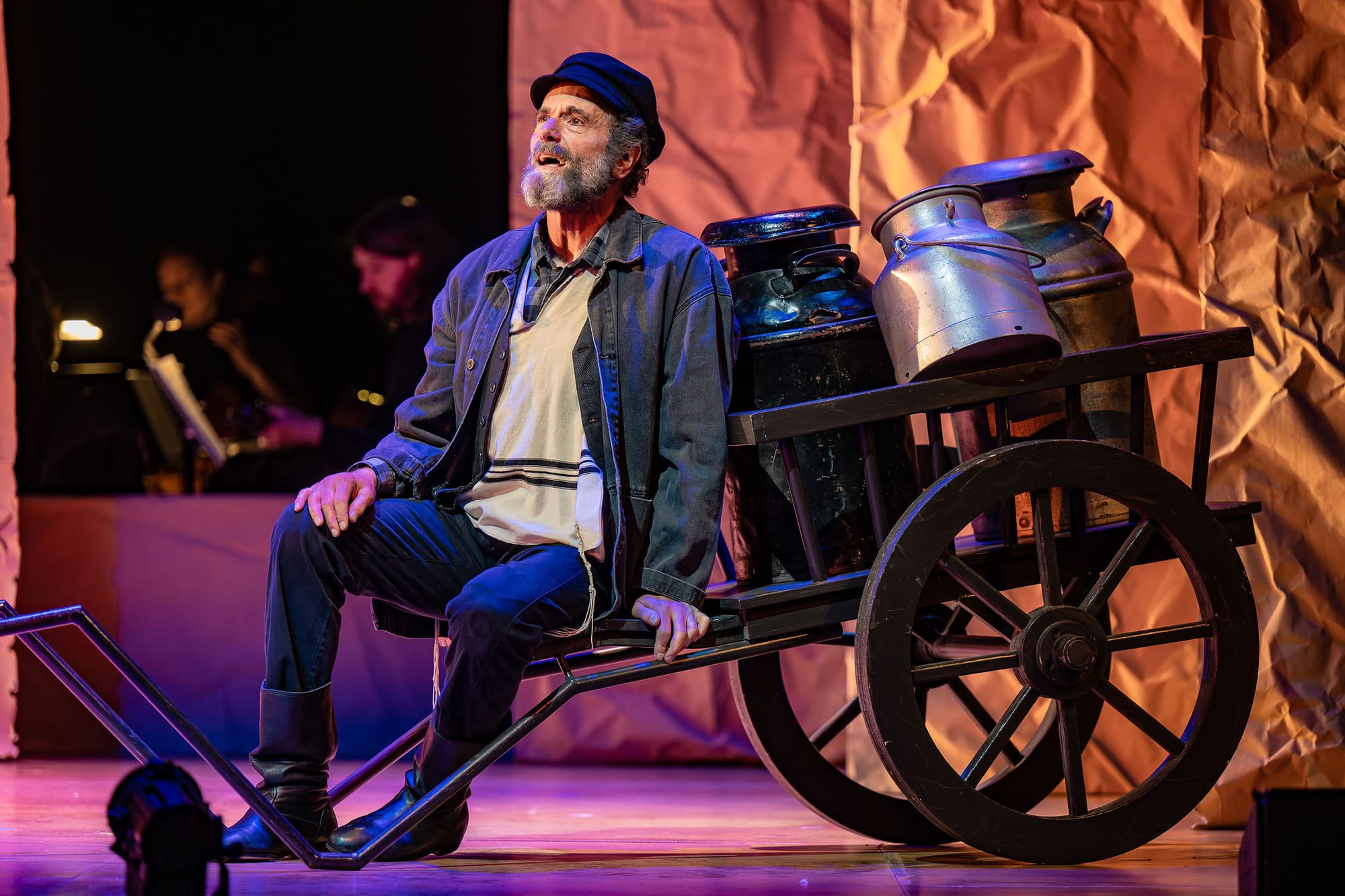
Fiddling with Fiddler
Before you do anything, though, make sure you see the National Yiddish Theatre Folksbien’s exquisite, award-winning production of Fiddler on the Roof (Rating: ✭✭✭✭), presented by the Harold Green Jewish Theatre Company. It closes this weekend after a too-brief run at the Elgin.
I had to trim about 150-200 words from my review in the Toronto Star, which you can find here. One of the things I wanted to mention, but knew I couldn’t fit in, was that the ending of the musical hits very differently in this all-Yiddish production.
When the Jews in Anatevka are forced out of their shtetl and dispersed, one of Tevye’s daughters leaves to settle in Poland. Somehow, it struck me more clearly than in other productions that she and her husband likely wouldn’t survive the atrocities of World War II.
Somehow it also occurred to me that when the diasporic Eastern European Jews entered America at Ellis Island, they would largely be speaking in the Yiddish of this show.
Seeing English-language productions of the musical, written by the descendents of Jewish immigrants, you understand that the journey has already been made, and the artists are looking back. This production made me feel more uncertain about their fates and what they would have to endure in their exodus.
Fiddler on the Roof continues at the Elgin Theatre (189) until June 7. Ticket details here
Primary colours
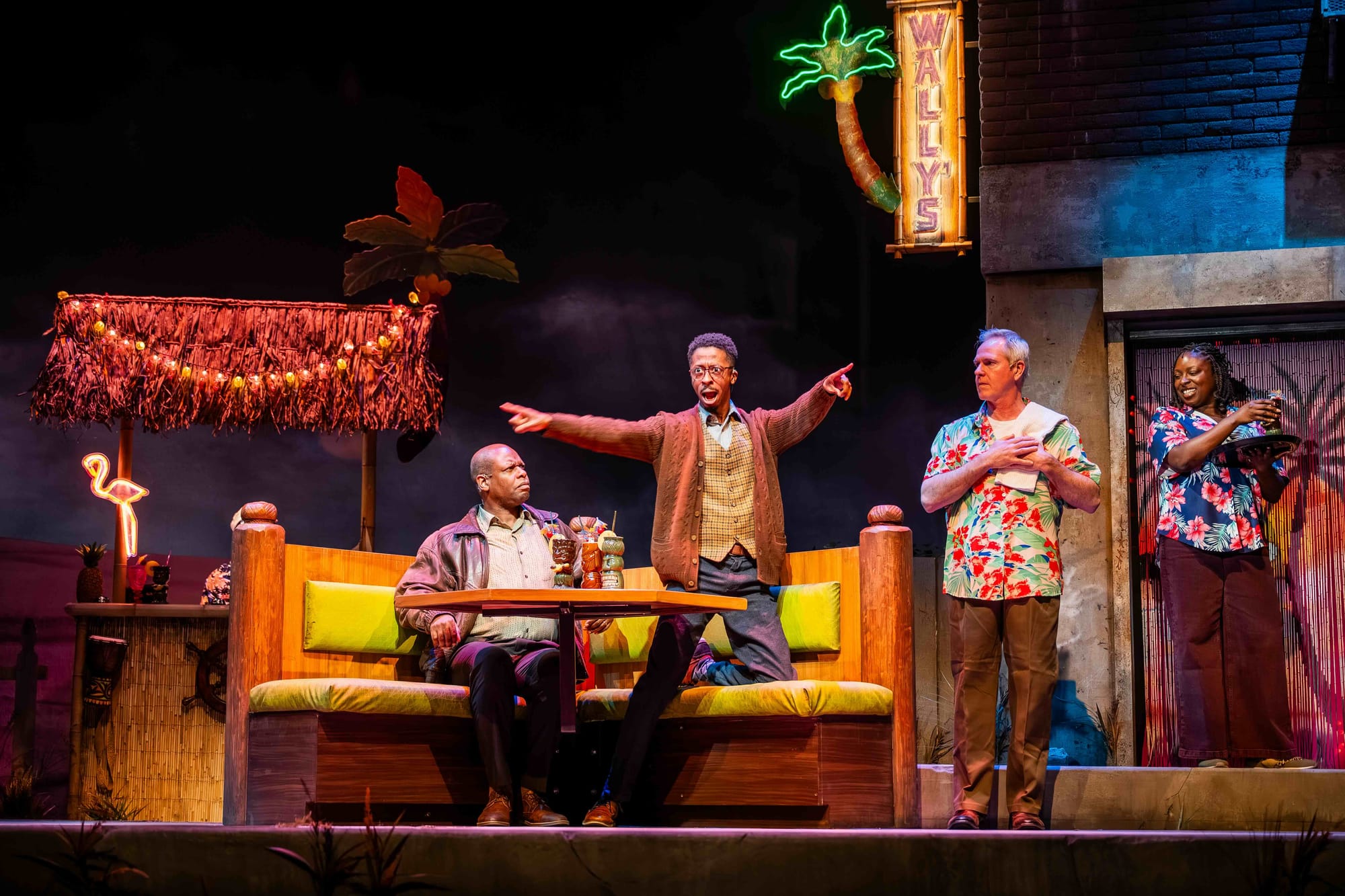
I also quite liked the Crow’s Theatre/London Grand Theatre production of Primary Trust (Rating: ✭✭✭✭), Eboni Booth’s 2024 Pulitzer Prize-winning play about a man finding community and support after suffering several losses.
I didn’t mention it in my review, but after leaving the theatre at the intersection of Carlaw and Dundas, I overheard a couple say, “Well, it must have been a weak year...,” presumably referring to the Pulitzer. That got me thinking about how we expect art to be about “big” subjects, and how refreshing it was to see a play not trip over itself trying to be profound and important.
As far as Pulitzers go, the comparable play that immediately came to mind was Thornton Wilder’s Our Town, which won the award in 1938. (You sense Booth’s indebtedness to that classic in some of the narration.)
Quieter books, rather than plays, more often win Pulitzers. Booth’s win reminded me of modest, character-based novels that have won the prize, like Alison Lurie’s gently satiric academic romance, Foreign Affairs, and Anne Tyler’s Breathing Lessons, a very funny slice-of-life look at a middle-aged couple’s road trip.
At any rate, it was impossible not to feel moved by Cherissa Richards’ lovely production; and Durae McFarlane gives a vulnerable, heartbreaking performance as Kenneth. I hope this means he’ll be doing more theatre in the future.
The show continues until June 21. Ticket details here
Tiger roars
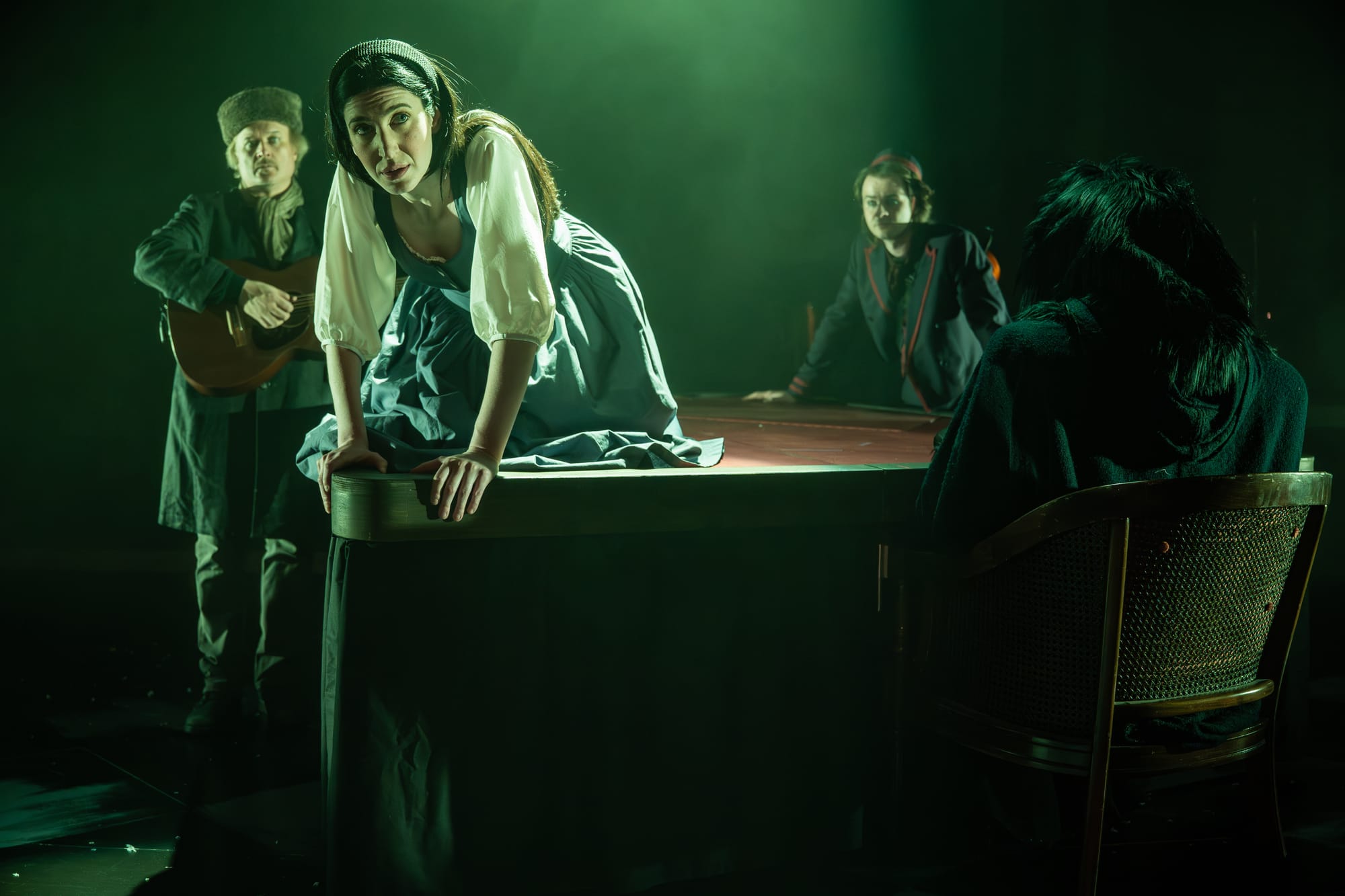
If you’re in the mood for a new musical that’s more vibes than straightforward narrative, check out Tiger Bride (Rating: ✭✭✭), a raucous, imaginative adaptation of an Angela Carter short story, which was itself a take on the classic “Beauty and the Beast” fairy tale.
The heroine, played with intensity and ravishing vocal power by Hailey Gillis — who co-wrote the show with Andrew Penner and director Frank Cox-O’Connell — is no idealistic, romanticized Disney book lover. Near the opening, she’s lost in a game of cards between her degenerate gambler father (Penner) and the Beast, who’s masked, bewigged and shrouded in a cape.
While the narrative at times is confusing — it’s not helped by some songs where lyrics are jumbled together awkwardly — the indie rock score, vivid design and stellar performances (the fabulous Landon Doak is also in the show) help pass the time.
You can read my full review here. The show continues at the Young Centre’s Michael Young Theatre (50 Tank House Lane) until June 21. Ticket details here.
Luminato spotlights
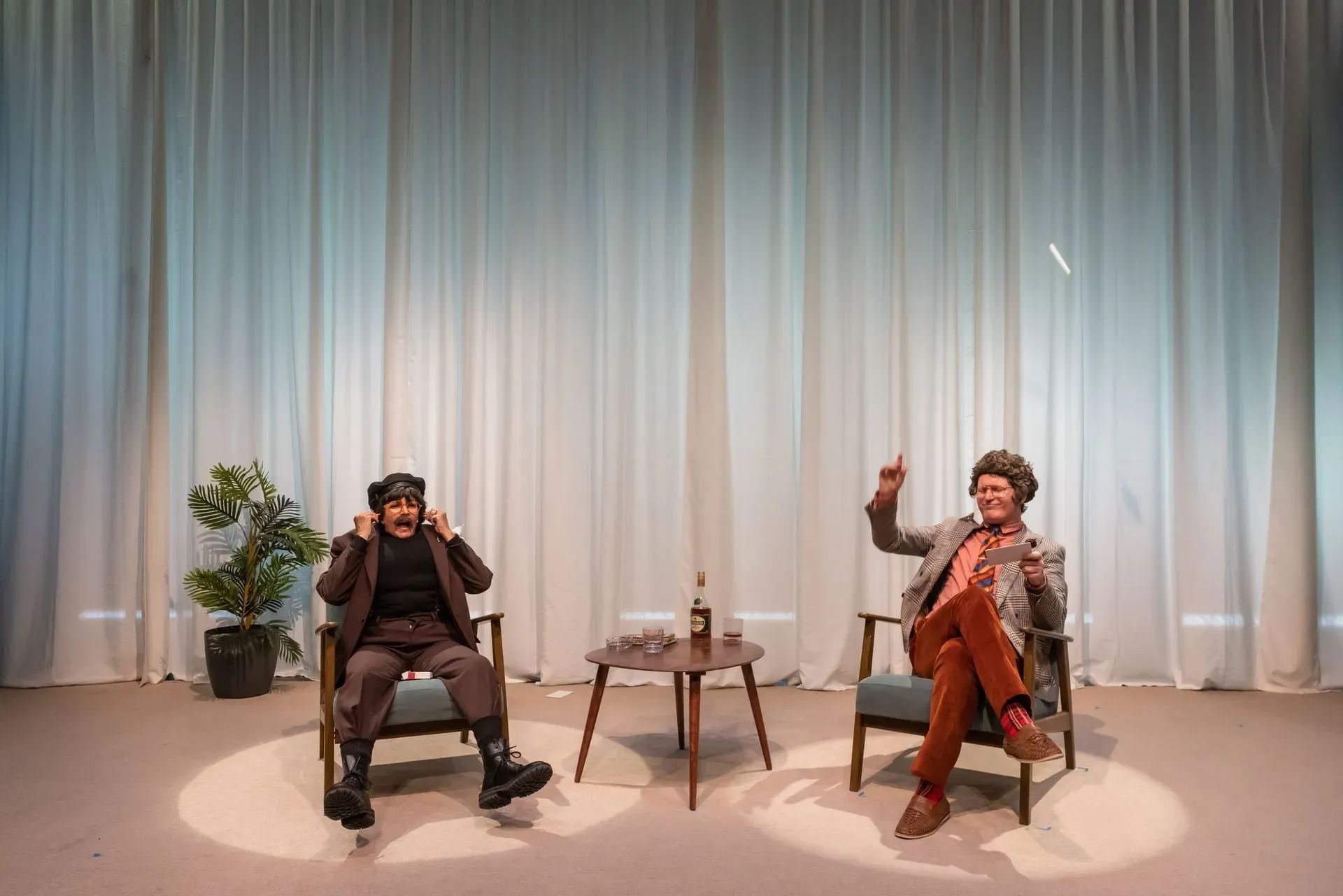
The theatre component of the Luminato Festival got off to a shaky start on Wednesday with Masterclass (Rating: ✭✭), the internationally acclaimed two-hander by the Irish company Brokentalkers.
The show — also part of the Bealtaine Festival — is set up as a live interview between an obsequious host/presenter (Feidlim Cannon) and a prolific, cocky and notoriously misogynistic (fictional) playwright (played by comic Adrienne Truscott).
Truscott, preening and padded, with a fake moustache and cap, responds to questions about his thinly drawn women in works like Fat Cunt; the two proceed to read excerpts from the play, with the writer defending/explaining a female character’s minimal dialogue and motivation.
Employing props — cigarettes, a rifle — the actors sendup the toxic masculinity of a Norman Mailer or Ernest Hemingway. All of this soon comes to a halt when Truscott, taking off her wig and costume, confronts Cannon about his own real-life behaviour towards women.
Both sections go on far too long and have a hectoring, obvious tone. And the ending — which I won’t spoil — isn’t as effective or clever as the artists likely imagined. It’s just awkward and pointless.
Masterclass continues at the Corleck (3 Eireann Quay) until June 6. Ticket details here
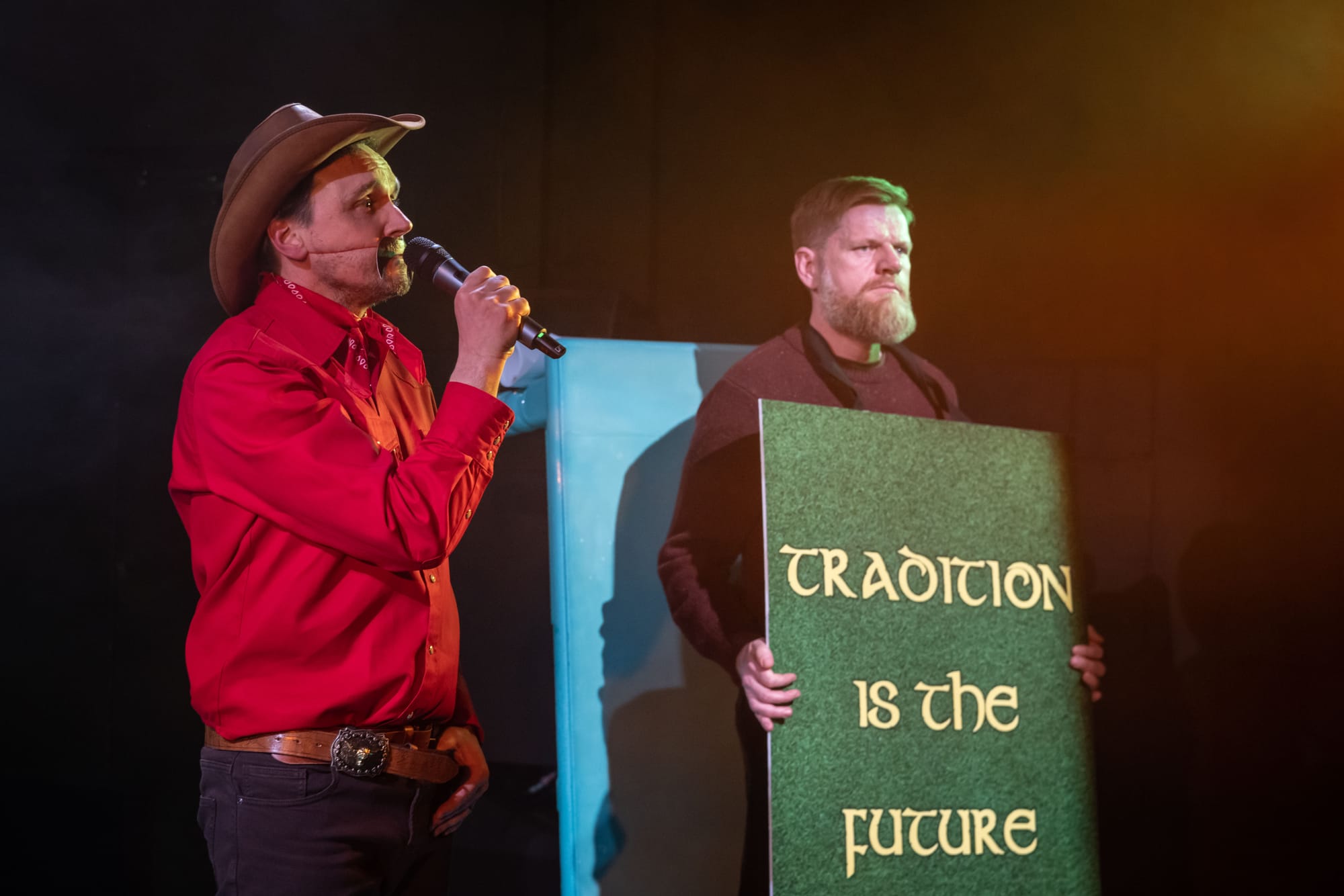
I much preferred Brokentalkers’ show Bellow (Rating: ✭✭✭✭), which played the Bealtaine Fest from May 27 to 30.
Company member Gary Keegan says he received a note from acclaimed Irish accordionist Danny O’Mahony to see if they could create a theatre piece about him and his life.
Keegan and the company work in experimental theatre, and so he uses different techniques to help draw out O’Mahony’s story: improv, word association, role-playing. When they are at a standstill, he brings in dance artist Emily Kilkenny Roddy, who brings a physical element to the show that miraculously ties many of the unspoken elements of the accordionist’s story together.
Playing different accordions — and telling us where they come from, whether it’s a musical ancestor or fellow professional — O’Mahony is a contained, rather laconic actor. He and Keegan (and co-writer Feidlim Cannon) touch on difficult things lingering on the edges of memory. They don’t spell things out; they let us put things together.
O’Mahony is hugely expressive as a musician, of course, and he gets lots of opportunities to play, especially in the finale, in which he is surrounded by life-sized cutouts of other accordionists in his life.
At times his instrument seems to wheeze like an old pair of lungs. At other times, it’s raucous and lively. I came to love the various meanings of the title, summing up the complexity and mystery of the human condition itself.
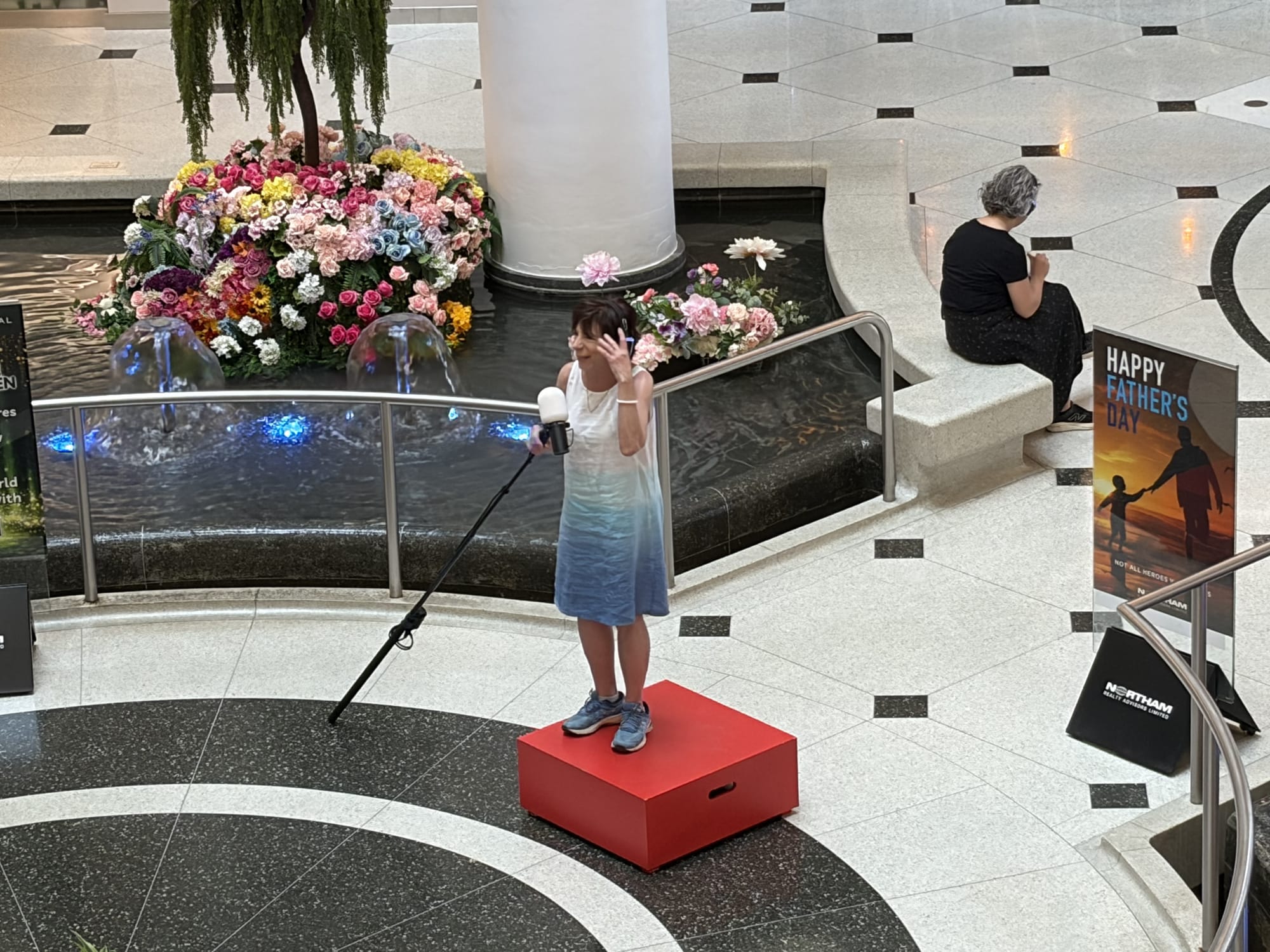
What would a festival be without a walkabout show? Earlier this week, I caught Words to be Scene (Rating: ✭✭✭), a 65-minute-long ambulatory piece that, even if it wasn’t gripping drama, at least got audiences to breathe fresh air and get in some steps (the route was approximately 1.7 kilometres).
The show, which played three performances each on June 3 and 4, began at Brookfield Place, where we received wireless headphones, which gave us access to the audio goings on at six spots from there to Maple Leaf Square and down to the Harbourfront area.
Based on monologues from French author Maylis de Kerangal’s book Canöes, the show seemed to be about women finding their voices. In one vignette, a woman prepares to deliver a speech, but the recording gets interrupted; in another, an aspiring broadcaster is told her speaking voice is too high-pitched — she’s told she must assume a lower, more “authoritative” way of speaking to get a radio job; and in another, a woman who used to work for a map publisher doesn’t know how to spend her time after leaving her job.
The text isn’t the most compelling part of the experience; rather, the various settings give the piece substance and context. For instance, the radio interviewer segment is performed on the patio of the St. Germain Hotel; and the woman discussing what to do with her time speaks in the atrium of Harbourfront Centre, as audiences look down from above and other actors and strangers criss cross in front of her.
The final segment, which alludes to canoes, makes lovely use of Lake Ontario’s history.
Two indie shows about mental illness
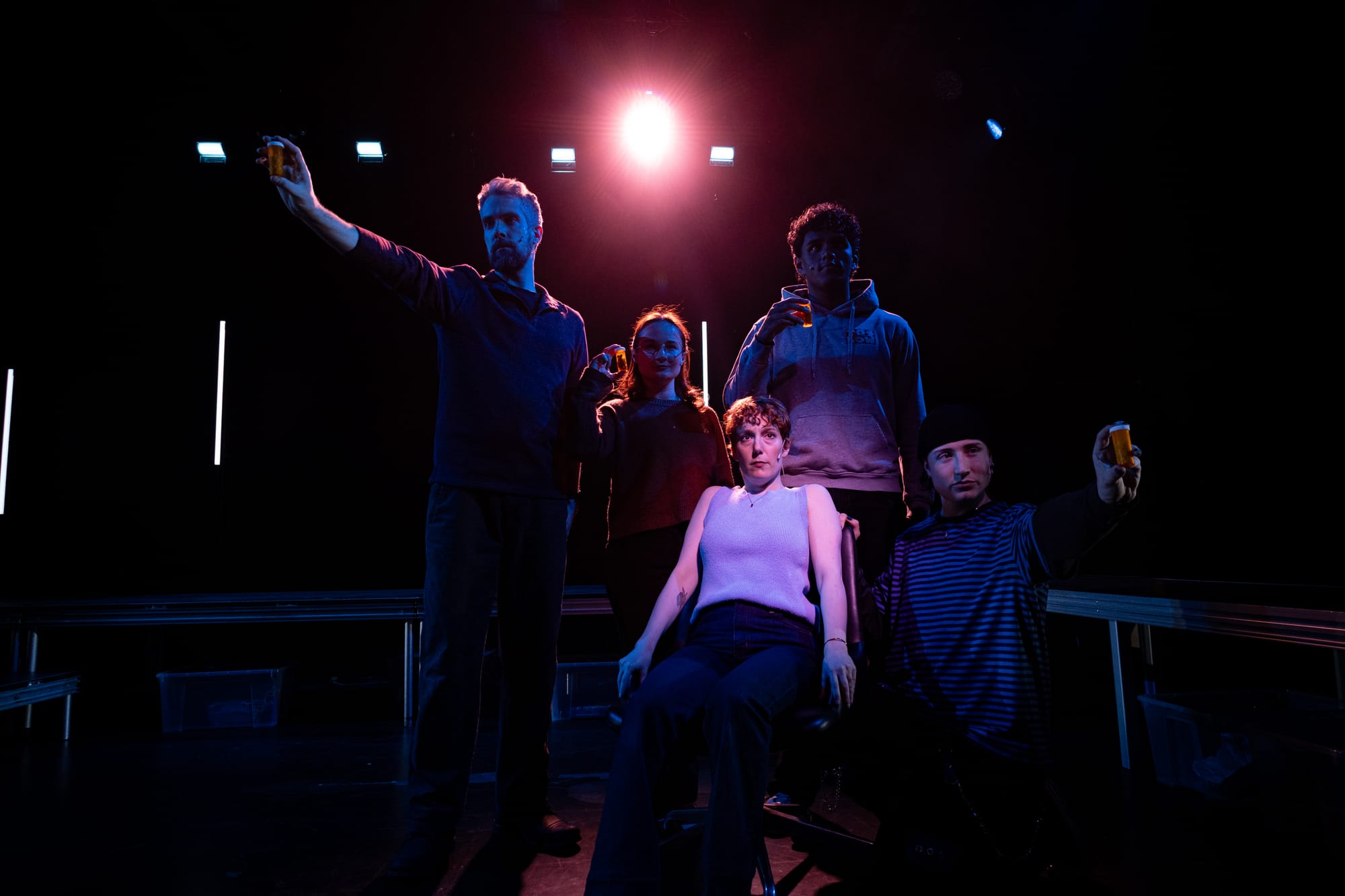
Brian Yorkey and Tom Kitt’s Tony Award- and Pulitzer Prize-winning musical Next to Normal (Rating: ✭✭✭) is difficult enough to stage with a large budget. So recent Dora nominee Bowtie Productions gets bonus points for attempting to put on this show with modest means at the Aki Studio.
Like Fun Home, which the company produced a few years ago, the show explores a family that might seem perfectly happy on the outside but is roiling with tension and secrets underneath.
At the centre is Diana (April Rebecca), who’s been living with bipolar disorder and other mental issues for over 15 years. Husband Dan (Taylor Long) and children Gabe (Christopher Lyon) and Natalie (Aveleigh Keller) each deal with her condition in their own way. And Diana’s physician (Mich Anger) attempts to find the right cocktail of drugs to stabilize her.
This is a hard-hitting musical that nevertheless has some moments of grim humour and real poignancy, and director Anthony Goncharov ensures the narrative and emotional beats land clearly. Rebecca and Long seemed a little too young for their roles, but in a nice touch mother and daughter’s red hair made them seem related.
The rock-infused score (conducted with lots of energy by Michael Ippolito) can be punishingly difficult to sing, but Rebecca and Long deliver fine interpretations, making up in emotional honesty what they might lack in vocal power and accuracy. Keller is a standout for her grounded, convincing portrait of the overachieving daughter who starts acting out (and Samuel Sunil is charming as her geeky, sympathetic boyfriend). And Lyon has a gorgeous lyrical voice used to haunting effect in the most beguiling sequence of the show near the end of the first act.
Goncharov’s set — a series of raised platforms and some chairs — works well in evoking the different playing areas, while Emily Anne Corcoran’s props — cleverly put away in storage containers beneath the platforms — add lots of dramatic surprises.
At the performance I attended, there were some head mic issues, affecting the sound quality. But this is a solid, intelligent production of a difficult musical that feels as relevant today as it did when it premiered almost two decades ago.
Next to Normal continues at the Aki Studio (585 Dundas East) until June 6. Ticket details here
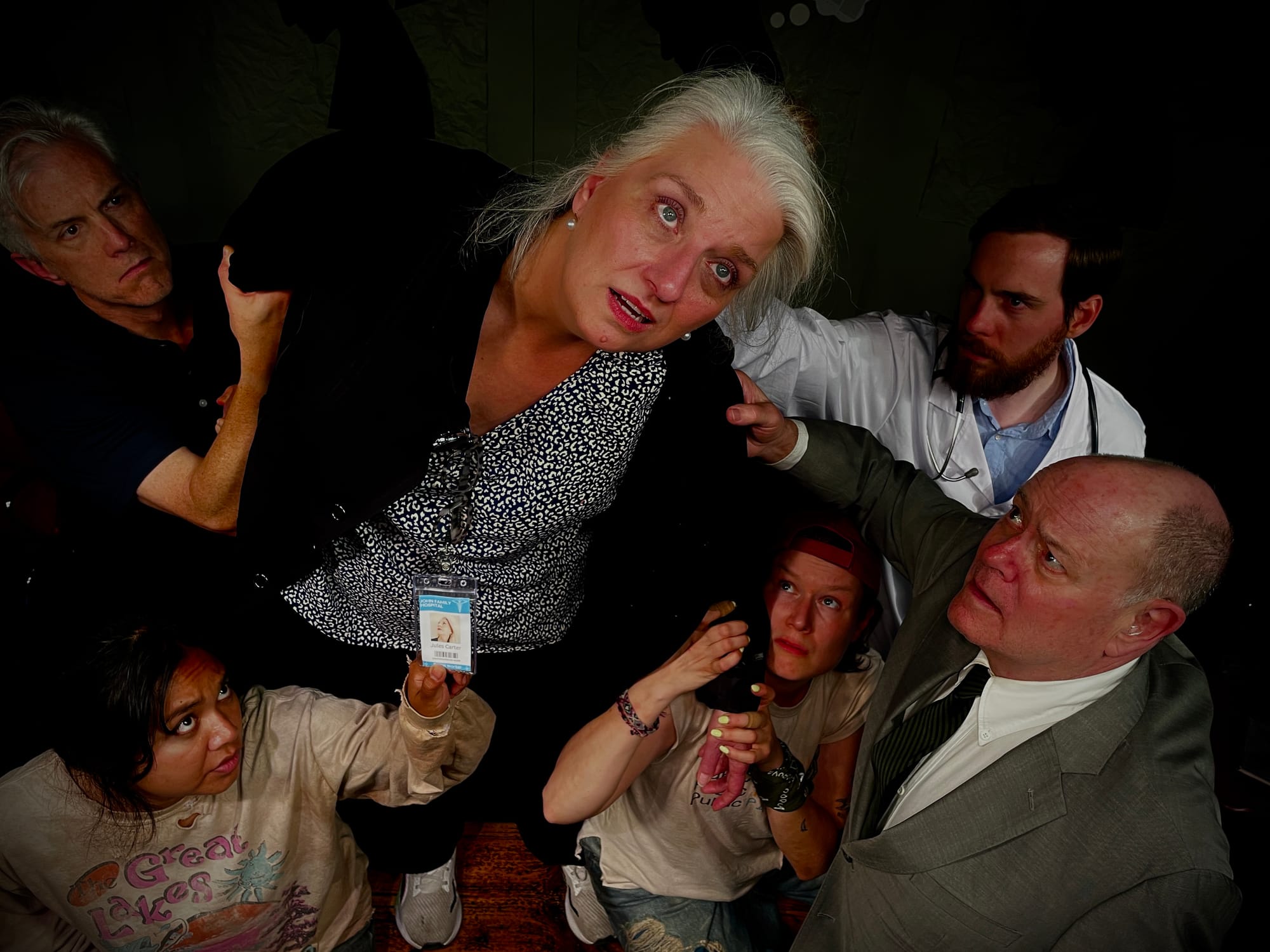
If you’ve witnessed the decline of social services and guardrails for the marginalized in this city, then George F. Walker’s new play, World on Fire (Rating: ✭✭✭), will definitely speak to you.
Harried social worker Jules (Elizabeth Friesen) is losing faith that what she’s doing has any effect on her patients or the dumpster fire world around her.
Her patients include David, a middle-aged man (David Huband) who’s still recovering from the fact that his parents tried to kill him in a pact when he was a child, and Annie, an angry young woman (Marlene Yan) who’s lived on the streets since she was 13.
Complicating things further is the fact that a physician, Dr. Emilio (Alex Clay), believes every issue can be solved with a prescription.
Walker, who also directs, could set up the play better. I was a little unsure where we were at first; is it a medical clinic? A hospital? But soon, through Jules’ brief monologues, we get a better sense of her situation, and her different approach with each one of her patients.
There are some sobering passages, including one in which Annie tells us how long she lived on the streets at 14 before anyone intervened and asked if she needed help. And the acting is solid; Friesen is deeply sympathetic as an overworked, underpaid worker, while Anne van Leeuwen is unforgettable as Casey, a twitchy, nervous but very perceptive activist who preaches about social justice outside a downtown mall.
The play lacks momentum, but it comes together in a group therapy session near the end, posing questions about personal responsibility that linger long after the hour-long show is over.
World on Fire continues at the Assembly Theatre (1479 Queen West until June 7. Ticket details here