Reviews: Hell’s Kitchen, Amélie, Aye Caesar, Wine in the Wilderness, To a Flame and more
The latest openings include the Alicia Keys musical and Carolyn Fe’s impressive playwriting debut


The Toronto theatre season is now in full swing, which means the occasional night when two or three shows open against one another and theatre critics have to decide which one to see first.
As a freelancer, I usually wait and see if I’ve been assigned something to review, and then catch up on the other shows later (pro tip: matinees or Sunday evening shows become very handy during busy times like this).
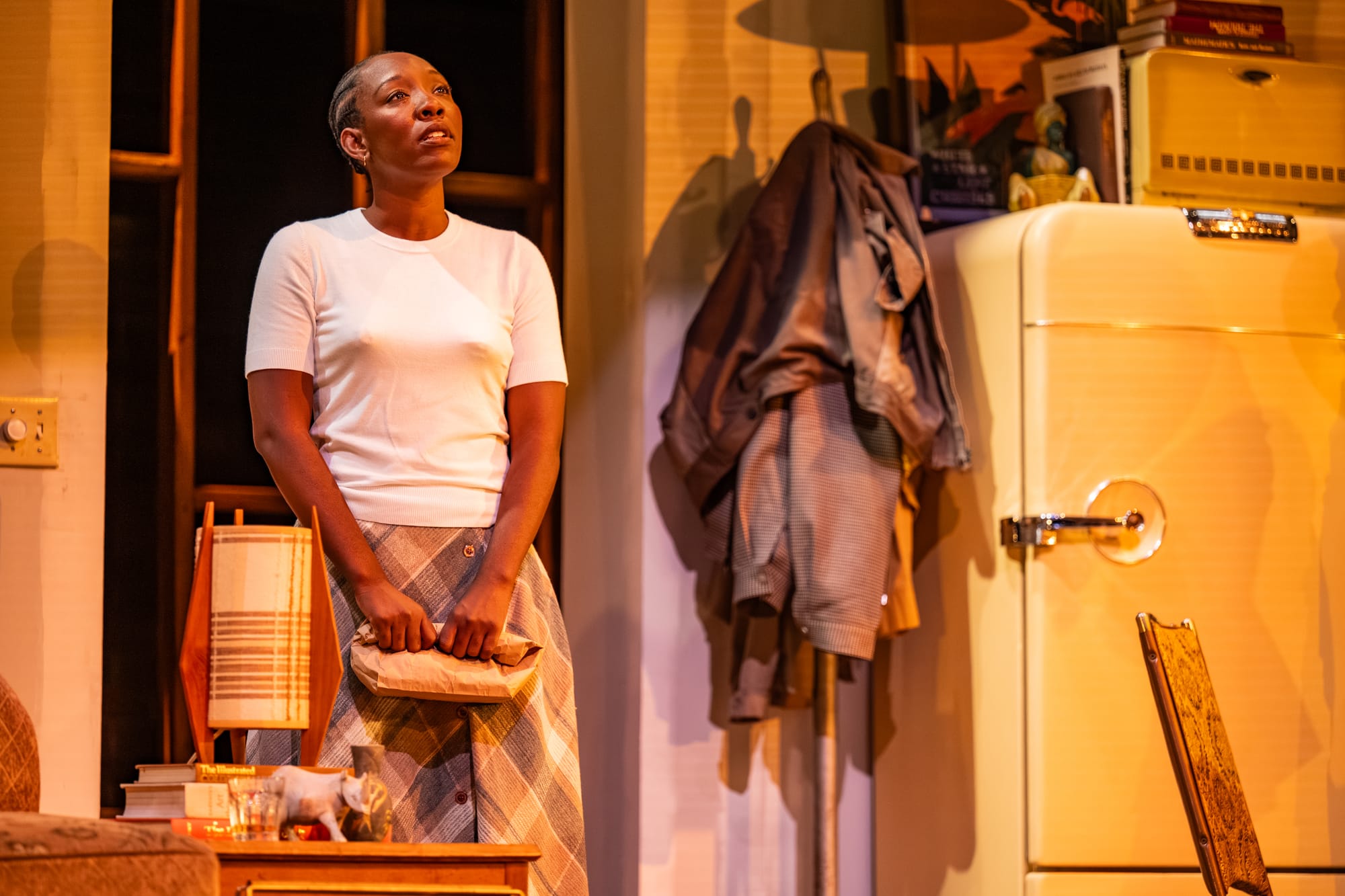
Last Thursday night saw three big openings: Canadian Stage’s revival of Alice Childress’ 1969 play Wine in the Wilderness (Rating: ✭✭✭✭), which I ended up reviewing for the Star and highly recommend (here’s my review); the Broadway tour of the semi-autobiographical Alicia Keys jukebox musical Hell’s Kitchen (Rating: ✭✭✭); and the new Erin Shields play for Nightwood and 1s1 Theatre (in association with Why Not and Modern Times), To a Flame (Rating: ✭✭✭), which I caught later and also really liked (here’s my review).
This is just a preamble to explain why I wasn’t at the opening of Hell’s Kitchen and so missed seeing the leads, which turned out to be a blessing in disguise.
I went into the new semi-autobiographical show knowing only a few of the R&B singer/songwriter’s songs: well-known numbers like “Fallin’,” “If I Ain’t Got You” and “Empire State of Mind.”
I came out more of a fan and admirer. I also came away a fan of the show itself, which feels more like a coming-of-age tale than a typical jukebox rise-and-fall-then-comeback affair.
Seventeen-year-old Ali (powerhouse understudy Sydney Townsend at the performance I saw) is being raised by her single mom Jersey (understudy Sherée Marcelle Dunwell, also excellent) in a government-subsidized highrise for working artists in the titular midtown New York neighbourhood. (It’s the same building where Timothée Chalamet and many other notables lived.)
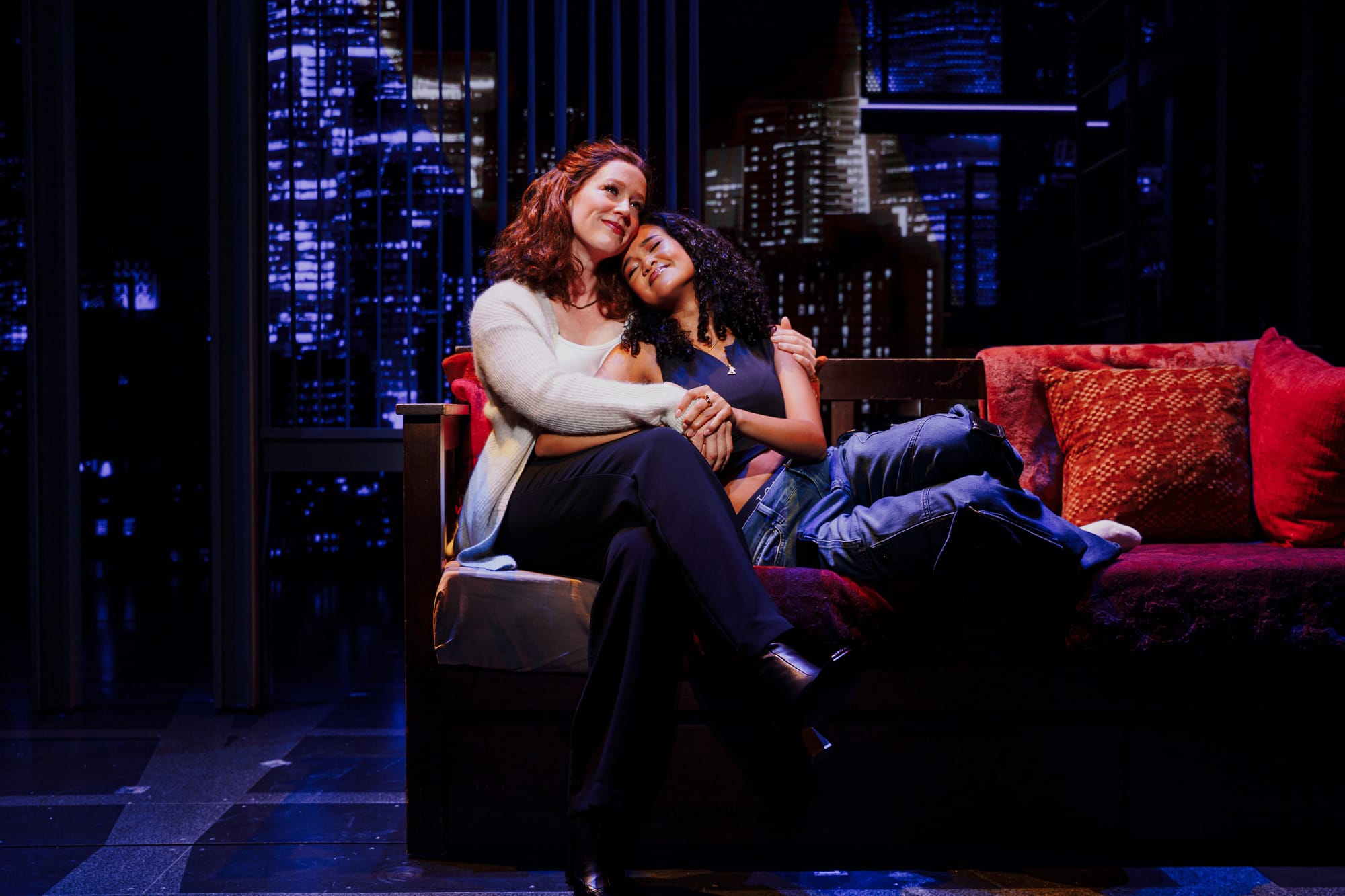
Ali rebels against her mom’s over-protectiveness by hanging out with her girlfriends and pursuing Knuck (JonAvery Worrell), one of the bucket drummers who performs outside her building. This causes tension between mother and daughter.
Blowing off steam after one particularly bad fight and not wanting to return home, Ali finds herself in the building’s Ellington Room, where she hears the resident Miss Liza Jane (Roz White) play the piano. She’s hooked. And soon Miss Liza Jane begins teaching her to play, becoming a cool mother substitute along the way. (The real Keys began studying classical piano at age seven.)
Occasionally, you can sense Keys and book writer Kristoffer Diaz struggling with what story they want to tell, but at least they approach the issue with fun. There’s a very clever moment during the Act One song “Girl on Fire” in which Tiny (Sangeetha “Sang” Santhebennur), one of Ali’s girlfriends, stops the song and says, “Hold up / The world is hers ’cause she got a man now? / That’s what we doin’?” before launching into a lively rap a few bars later.
Ali and Knuck’s relationship is handled with surprising delicacy. The real heart of the show, though, is between mother and daughter. In a beautifully realized flashback, we see how Jersey, at about the same age Ali is now, met and fell for the seductive, but it turns out irresponsible musician Davis (Desmond Sean Ellington), who is Ali’s father. Later, she turns to Davis to help her with Ali.
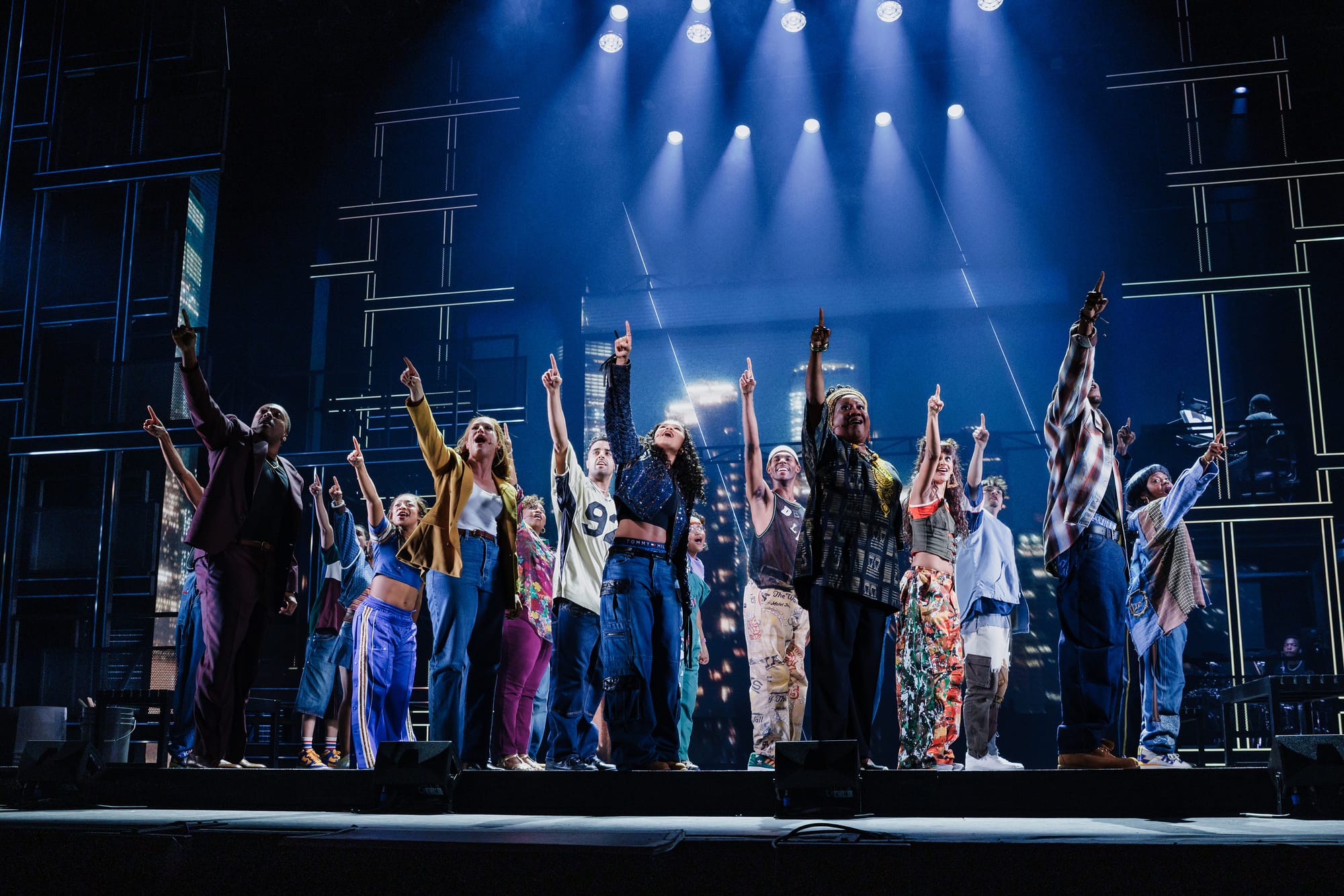
Keys’ songs are integrated so well into the story I wouldn’t have known they weren’t written specifically for the show. (To be fair, Keys did pen some new songs.) Familiar ones, like the aforementioned “Fallin’” take on a context that breathes new life into them.
Director Michael Greif’s production works well in this Broadway tour, with some scaffolding-like structures (sets are by Robert Brill) suggesting Manhattan’s verticality and projection designs (by Peter Nigrini) evoking the city’s various neighbourhoods. Camille A. Brown’s choreography captures a certain time and energy, and the ensemble executes those moves with suitable swagger and attitude. (Although does every up-tempo song need dancers to dance at the top of the scaffolding?).
There are a few gaps in the narrative. Early on, we’re told Jersey was an actor and meet two of her theatre friends — Ali’s “aunties” — who also live in the building. I figured that would mean we’d get a playful friend-group number in act two. Nope. Similarly, Ali’s friends are introduced then quickly forgotten.
More seriously, the subject of police violence against young Black men is brought up but not explored with much complexity. And there’s nary a line in the show about Alice being a mixed-race kid (Jersey is white, Davis is Black). A missed opportunity, I think.
But there’s also so much to celebrate about this show, which doesn’t fall back on typical jukebox musical clichés but wants to tell a story about belonging, hard work, and the creation of an artist.
Speaking of artists, I had no idea I was watching two understudies, and I was hugely impressed. Townsend (who normally plays Tiny) is a dramatic dynamo, convincingly young (she recently graduated from college) and grounded and present for all of her scenes. Vocally, she’s got a huge range, with an especially impressive lower register for those deep and soulful notes. And she’s completely at ease on stage; as I said to my friend after the show, “She has chemistry with every one of her scene partners.”
I’m also thrilled that I caught Dunwell, who got to demolish the stage with her dramatic singing, sweet and nostalgic in “Teenage Love Affair” and rip-roaring diva belter in the showstopper “Pawn It All.” (For those who know musical theatre, Dunwell has played Diana Goodman, which should tell you everything you need to know.)
I guess what I’m getting at is this: you shouldn’t be disappointed when understudies go on. In some cases they bring an energy and spontaneity to a performance because they don’t go on eight shows a week.
Hell’s Kitchen continues at the CAA Ed Mirvish Theatre (244 Victoria) until Oct. 25. Ticket details here
Bloody (good) Caesar
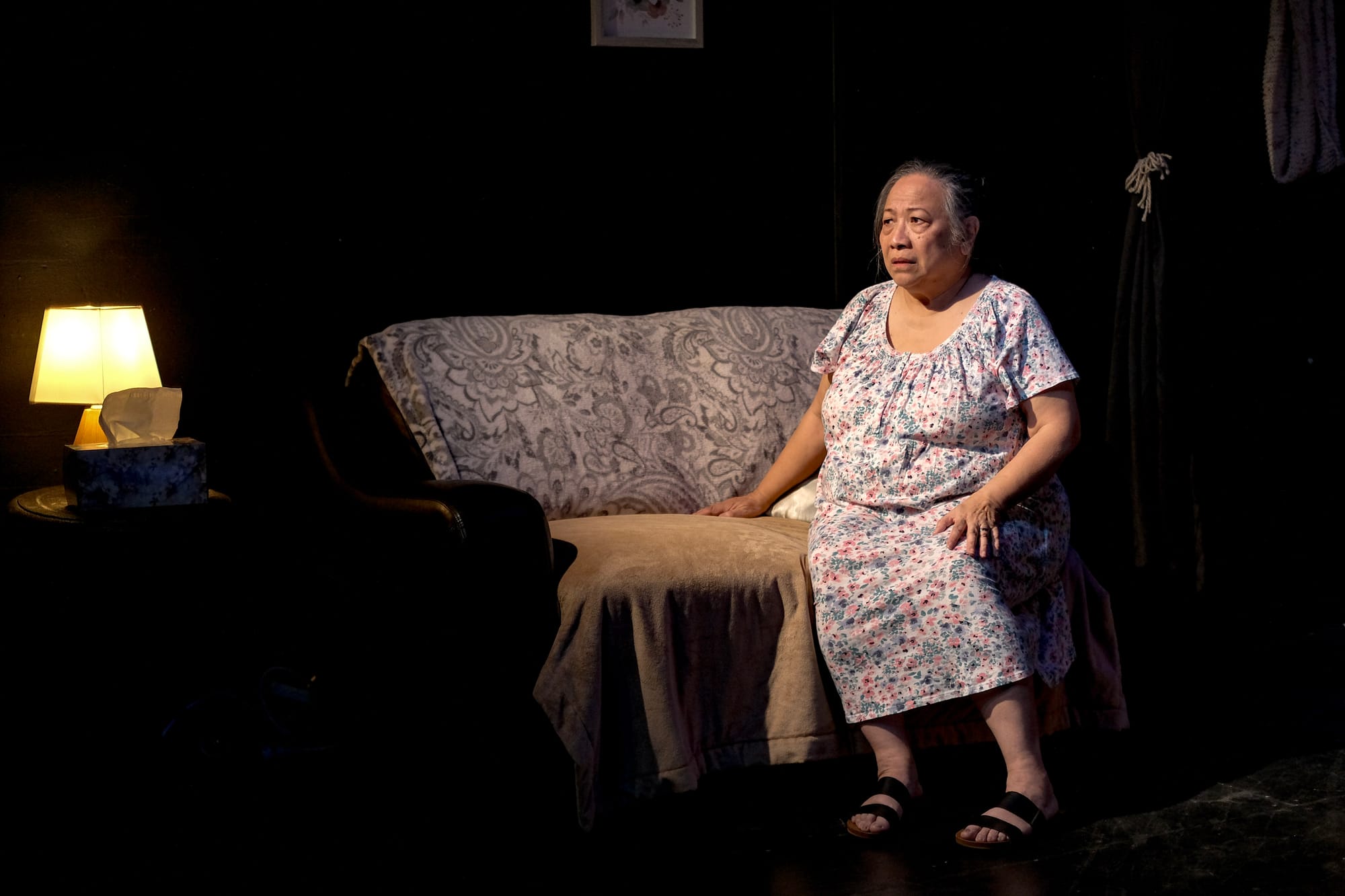
Who among us hasn’t been up in the middle of the night, mindlessly scrolling on a laptop or phone, considering buying something? But when Brenda Reyes (Carolyn Fe), the hugely sympathetic and relatable older woman at the centre of Fe’s effective new play Aye Caesar (Rating: ✭✭✭✭) logs on, she begins chatting with someone — or some thing — and gets more and more drawn into the shadowy, potentially dangerous world of online shopping.
Lonely and still grieving the loss of her husband, Brenda has vague thoughts of writing about their history together; she’s kept scraps of preparatory notes in a shoebox. When she activates the talk function at an online store, she mishears the salesperson’s name as Aye Caesar, and begins discussing with “Aye” the pros and cons of scrapbooks, fountain pens, ink colours and notebooks.
Fe and director Tanisha Taitt set up this relationship carefully, going through all the legal and logistical steps before Aye — played by actor April Leung in a corner of the small Red Sandcastle space — allows Brenda to complete a transaction.
Aye, always cheerful and constructive with just an occasional glitch or pause indicating she may not be “real,” is supportive, and gives Brenda lots of sound advice about completing her task. She also has a fantastic memory.
Gradually, by showing us the passage of time — which Taitt cleverly indicates with some flashing table lamps in her modest living room set — we come to see how dependent Brenda has become on this relationship, and the limited parameters of her shrunken world.
Fe achieves all this without sentimentality or manipulation but with a performance that feels so truthful and deeply felt you might subconsciously arch your back in sympathy as Brenda suffers from a back spasm.
The script is so nuanced it’s hard to believe this is Fe’s first produced script. She’s given us a window into the kind of life that is common but not very often depicted in art. And whatever your thoughts about technology, she’s written a character in Aye that is more sensitive and caring than even the most protective friend or family member. (And Leung makes this difficult role seem easy.)
So if you find yourself wanting to buy tickets to the all-too-brief run of this exciting indie play — produced by Stakes & Embers and Carolyn Fe Productions, in association with Eldritch Theatre — follow the online prompts, type in your credit card information and proudly click “Yes.”
Aye Caesar continues at the Red Sandcastle Theatre (922 Queen East) until Oct. 4. Ticket info here
Light concoction
Whimsy and quirkiness are hard to pull off tonally — especially in the theatre, where budget limitations can put a cap on what’s possible. Filmmaker Jean-Pierre Jeunet’s 2001 confection Amélie succeeded — just barely — because of his restless camera work, witty narration and the winsome, star-making performance by the wide-eyed gamine Audrey Tautou.
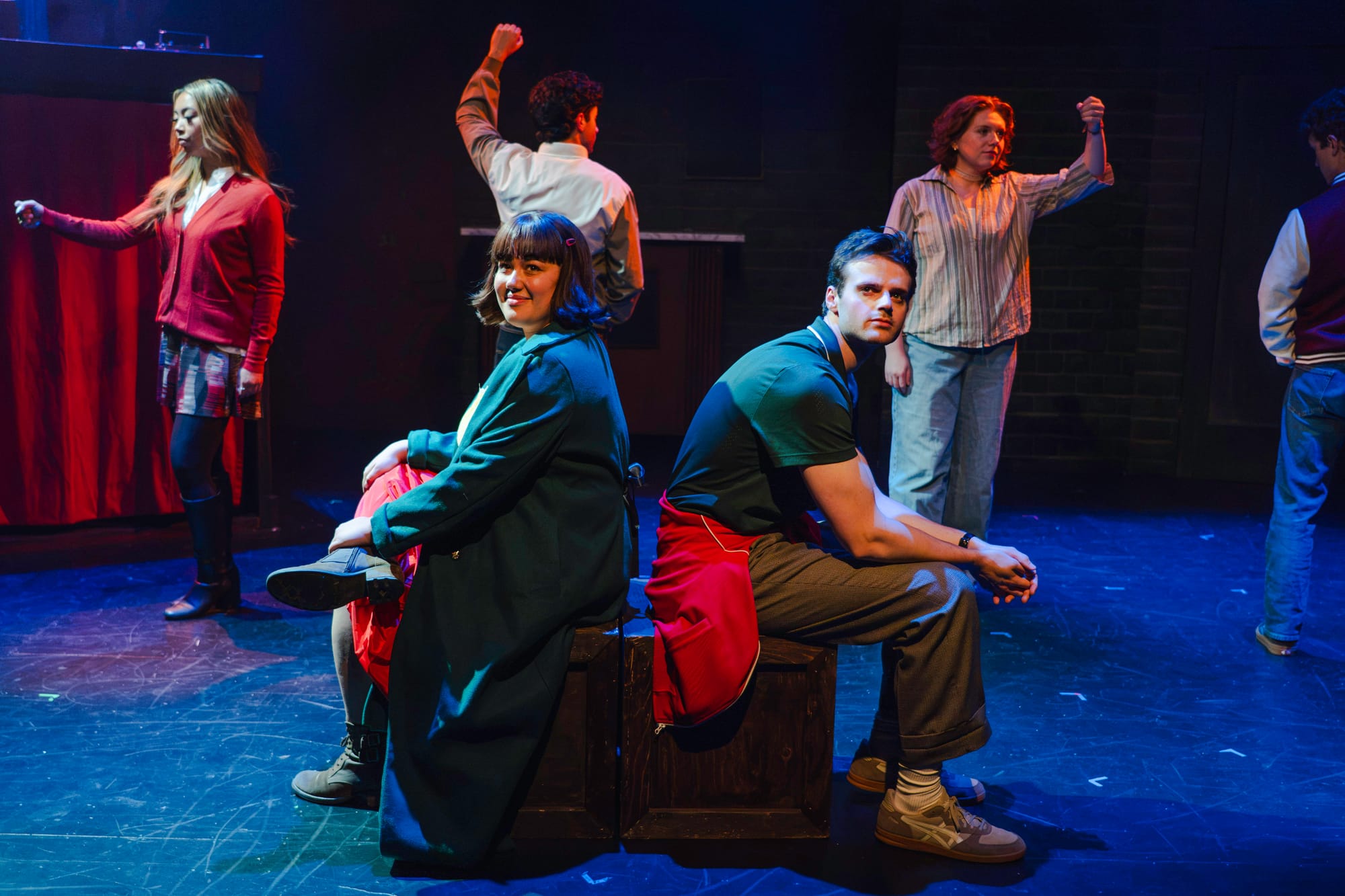
The 2015 musical, with music by Daniel Messé, lyrics by Messé and Nathan Tysen and a book by Craig Lucas, is a tougher nut to crack. And I’m not sure Shifting Ground Collective has succeeded with their uneven production (Rating: ✭✭✭), currently on at the Aki Studio.
The story is essentially the same. Amélie (Colette Richardson) is a 20-something server at a Paris cafe who — perhaps because of a childhood tragedy involving a goldfish, her mother and a possibly faulty heart — mostly keeps to herself.
When she discovers a box hidden away in her apartment for decades, she tracks down the owner and soon becomes determined to make little changes in people’s lives, like her co-workers at her café and a handsome stranger who’s obsessed with discarded photos from one of those vintage photos booths that no longer exist.
She also bonds with lonely shut-in Dufayel (Matthew Romantini), who spends his time painting replicas of a famous Renoir painting, obsessed with a woman holding up a glass.
Where the film zipped along, the musical feels more earthbound, and some of the humour — particularly in the café and Amélie’s neighbourhood — feels laboured. But there are some exquisite numbers, like Romantini’s “The Girl with the Glass” (whose lyrics could apply to the title character) or a lovely song in which Amélie pens a fake letter to a co-worker to give her some closure (sung beautifully by Kayla Samson, a real discovery).
But there are just as many twee songs — including one from the perspective of a travelling garden gnome — that make the two-and-a-half-hour run time feel longer.
Director Catie Thorne does her best with a modest budget, employing a doll for the young Amélie and adding a sense of height in Julia Sanders’ set design by placing Amélie’s apartment over the photo booth.
I also appreciate that — if my antenna are tuned correctly — the creative team has imagined Amélie and her potential love interest Nino (Graysen Lapointe) as neurodiverse characters. (In a sense, this was present in the film, where the narrator’s list of characters’ likes and dislikes anticipated the way people are introduced in the Netflix series Love on the Spectrum.)
That explains the story a bit more, and raises the dramatic stakes. But I wish there were fewer quirky supporting characters so we could get a better sense of this world, which would make the pair’s delayed but inevitable meet-up feel more theatrically satisfying.
Amélie continues at the Aki Studio (585 Dundas East) until Oct. 10. Ticket details here
Upcoming: A review of the excellent documentary You Had to Be There: How the Toronto Godspell Ignited the Comedy Revolution, Spread Love & Overalls, and Created a Community That Changed the World (In a Canadian Kind of Way)