Queering up a century-old love story in Cyrano
Australia’s Virginia Gay talks catfishing, rewriting tragic endings and how live theatre is an empathy machine

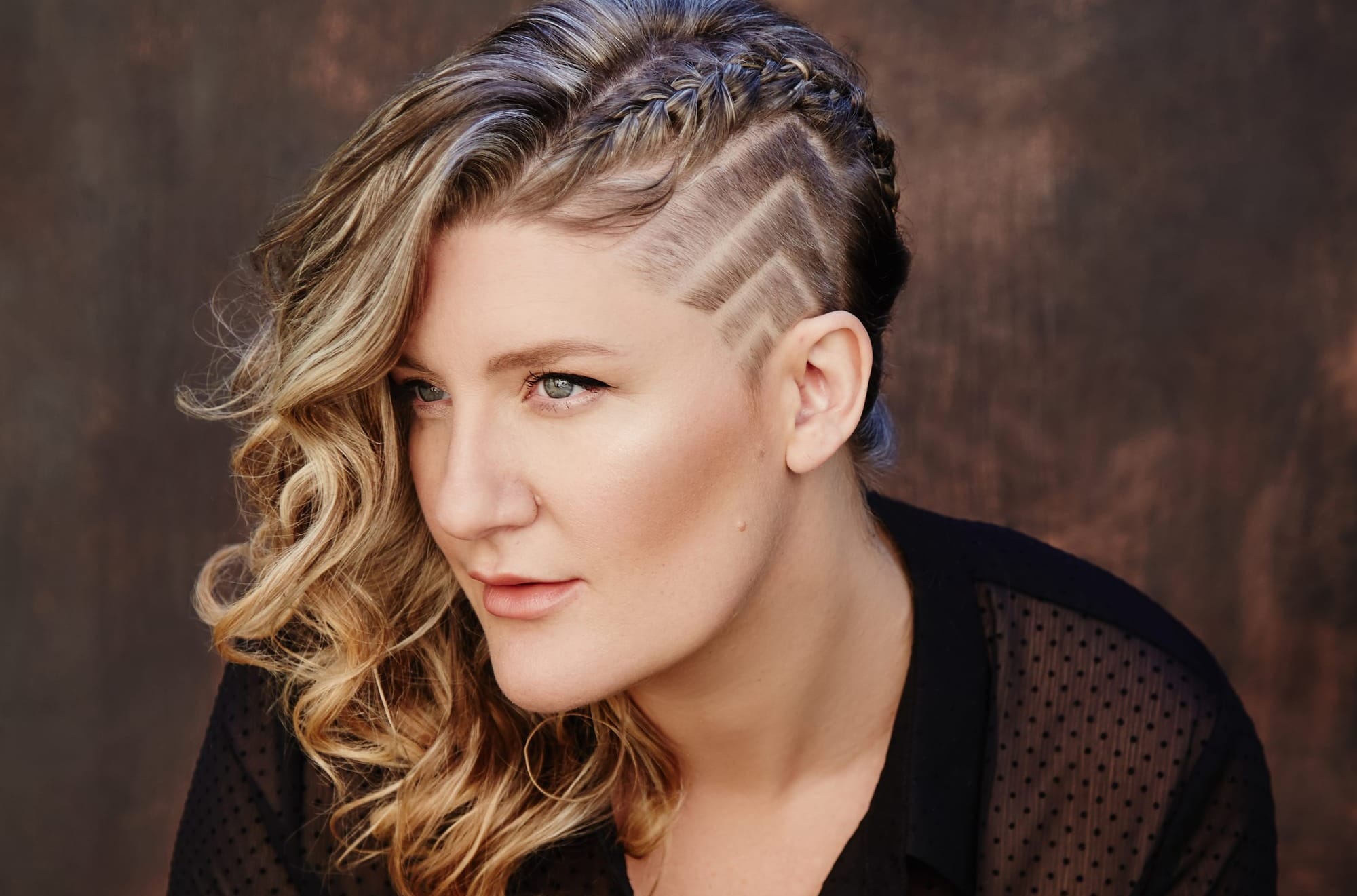
Right before the pandemic, the Australian actor and writer Virginia Gay saw Jamie Lloyd’s stripped-down London production of Edmond Rostand’s Cyrano de Bergerac, featuring James McAvoy in the title role — without the usual prosthetic nose. She was floored — and since it was one of the last bits of live theatre she took in before lockdown, it haunted her imagination.
“It became so clear to me that if you took away the nose, then this was a story about a person who thinks they’re unworthy of love, who thinks there’s something about their body that makes them unworthy of love. And I realized, this is a queer story!” said Gay on a Zoom call earlier this week.
“That’s the essence of queerness in traditional romantic comedies, that feeling of, ‘If only I was the guy they wanted, if only I was in a different body, then I might be worthy of this brilliant person’s love.’”
Gay was in L.A. during the early stages of the pandemic, and the isolation added to her conception of a queer, contemporary retelling.
“We did so many things during the pandemic to keep other people safe, and one of those things was to ask less of the world, to make ourselves smaller. There was a feeling like, ‘I will be less present so that you can survive,’” she says.
“That gave me a kernel of an idea to grow. I also knew that when theatres reopened, I really needed a happy ending to the traditional story. In Rostand’s play, pretty much everyone dies, and Roxanne — depending on which adaptation you use — has the joy of becoming a nun or a whore. So much variety! As soon as it became a queer love story, I knew it had to have a happy, hopeful ending, because I won’t be a part of any storytelling that says queer love is impossible. We don’t live in that world anymore.”
The result was Cyrano, which Gay developed and launched at the Melbourne Theatre Company in 2022. It travelled to the Edinburgh Fringe the following year, where it became a sold-out hit, then transferred to London, with Gay in the title role, almost exactly five years after she first saw the Lloyd production.
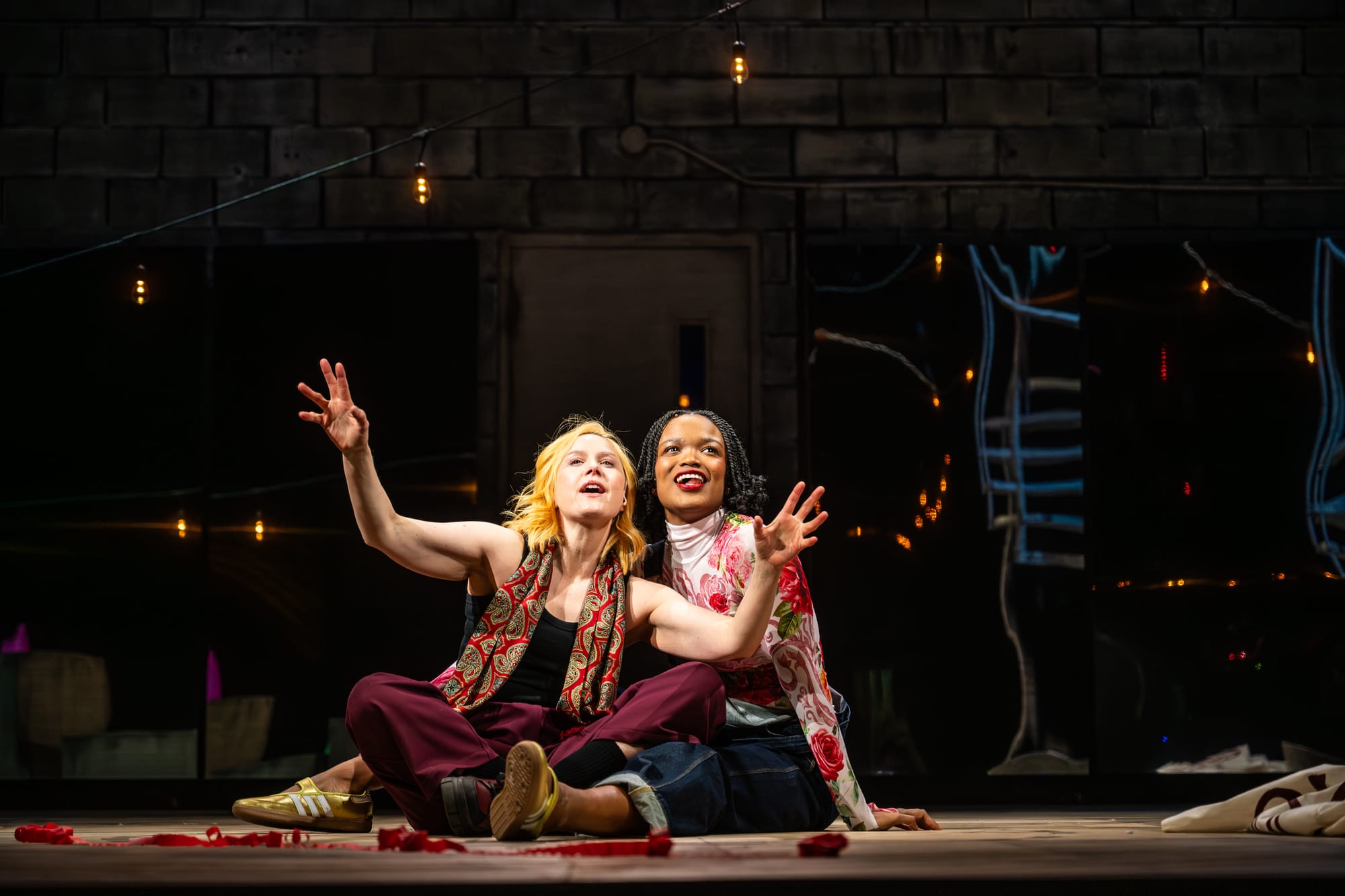
Now it’s receiving its North American premiere as part of the Off-Mirvish season, with Australian actor Eryn-Jean Norvill in the title part. What has it been like seeing someone else in the role that she herself created?
“I very meanly wrote the part for everything that I can do well,” says Gay, laughing. “That was pretty ruthless of me. There’s audience engagement, and a freedom to improvise, plus these big flights of rhetoric and poetry — which are all part of my skill set. What has been great has been seeing the role live in other people’s bodies and thinking, ‘Wow, I’ve never heard it like that, and it absolutely works.’ It’s wonderful to keep discovering things about a show I thought I knew.”
The cast includes Norville, whom Gay calls extraordinary, who originated the recent tour-de-force solo version of The Picture of Dorian Gray (before it was taken over by Sarah Snook) and Madeline Charlemagne as Roxanne.
“I think a Cyrano lives or dies on the strength of its Roxanne,” says Gay. “And we’ve been lucky to have very, very good Roxannes throughout every iteration of the play. They have to be as smart, or even actually smarter than Cyrano, because they have body smarts as well as book smarts — they know what their body wants.”
Gay’s play is very much concerned with the idea of making theatre; it features a collection of actors trying to put on a production of Cyrano and working out what relevance it has today. This allowed her to explore and deepen the character of Roxanne.
“I wanted to give Roxanne much more agency,” says Gay. “In the original, which was written in 1897 and set in the 1640s, she’s a beautiful object, and you only realize that she’s brilliant in the balcony scene. But that’s in act three of a five act play. So I wanted to give people a better sense of her earlier on. Now we meet Roxanne and fall in love with her at the same time that Cyrano does. Roxanne has these huge speeches about the things that excite her, which are equal to Cyrano’s.”
A tricky element of any adaptation (and these includes Steve Martin’s Roxanne, as well as the rom-com The Truth About Cats and Dogs) concerns the skeevy idea of one character pretending to be another — in modern lingo, “catfishing.”
“One of the things that is really interesting about this version is the way that Cyrano walks the line between hero and villain,” says Gay. “If somebody did (what Cyrano does) to you, you would never forgive them. We’re trying to jump the tracks of the old narrative and see if we can make a new one, one that requires everybody’s help. The audience is complicit in this storytelling. They’re cheering and laughing, especially during the balcony scene, which is really hot. But then they have to think about things and wonder what they’ve done.”
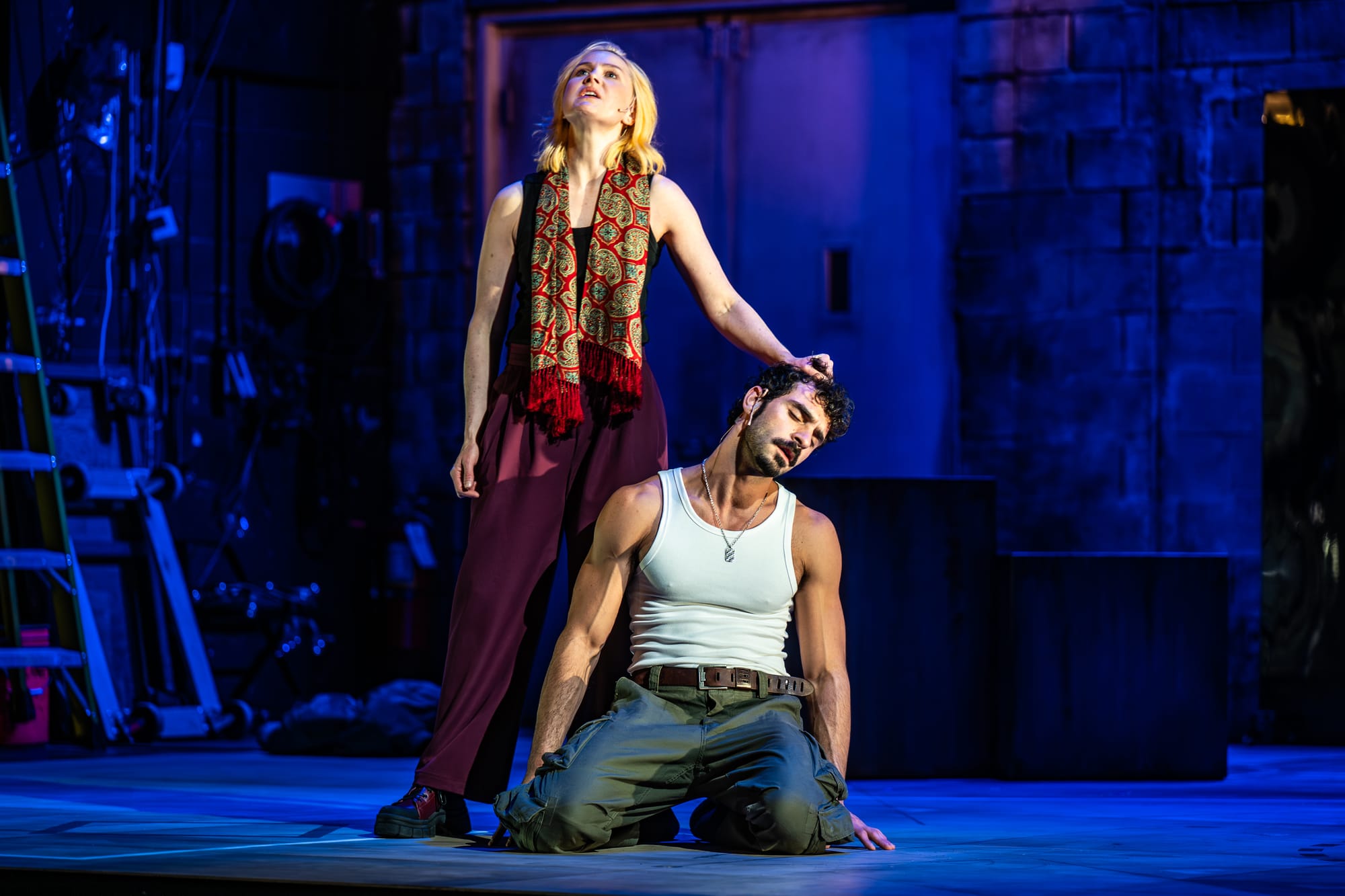
Gay’s CV is gloriously eclectic. Besides her theatre work, she’s done stand-up comedy, acted regularly in comedy and drama on TV (including a five-season run on the hit Australian TV series Winners & Losers), and was the artistic director of the Adelaide Cabaret Festival for two years.
“I had a late life ADHD diagnosis, and it has been really helpful for me to understand that I am truly driven by passion and urgency,” she says. “There’s no linear pathway through my CV. It’s rather my brain going, ‘Oh, that is interesting.’ In all the things I’ve done, I think: ‘Has anybody who looks like me done this?’ Even with Dancing With the Stars, I wanted to see how much I could fuck around with gender roles.
“I’m always thinking about advancing the causes of women, queer people and trans and non binary bodies — that’s been one of the most important things to me. And within that, championing non-white bodies as well, because that’s literally what you need to do with privilege. You need to wedge that door open and make sure you can get as many people in.”
As someone who’s been active in various aspects of the entertainment industry, does she have any thoughts about developing audiences for live theatre? Theatre audiences in Australia, like those in North America, aren’t back to their pre-pandemic levels.
“Price and accessibility are a huge problem,” she says. “I absolutely recognize that the cost of living is rising, but so too is the cost of putting on shows. I know how slim the margins are, even in a really successful season.
“I think the biggest threat is this socially-mandated dopamine slot machine that is welded to our hands,” she says, holding up her smartphone. “I worry what it’s doing to our attention spans. And I worry what that’s doing to our capacity to engage in long-chain thinking, really wrestling with a problem.
“Theatre is the best and almost only antidote to all that. It’s practically the last space in the world that actually demands that you do not look at your phone for 90 minutes or two hours. Sitting in the dark with a bunch of strangers in silent witness to lives other than your own becomes a sacred act, becomes vital in the mechanism of keeping art alive as a kind of empathy machine. It reminds us that we are not the only fucking players in the stories. It’s a kind of collective ego death through group hallucination. That’s magical.”
Cyrano opens March 19 and runs until April 5 at the CAA Theatre (651 Yonge). Ticket details here