Mining the oil sands situation in Strife
Matthew MacKenzie’s new play at the Tarragon explores the complexities of the oil industry among a group of Indigenous characters

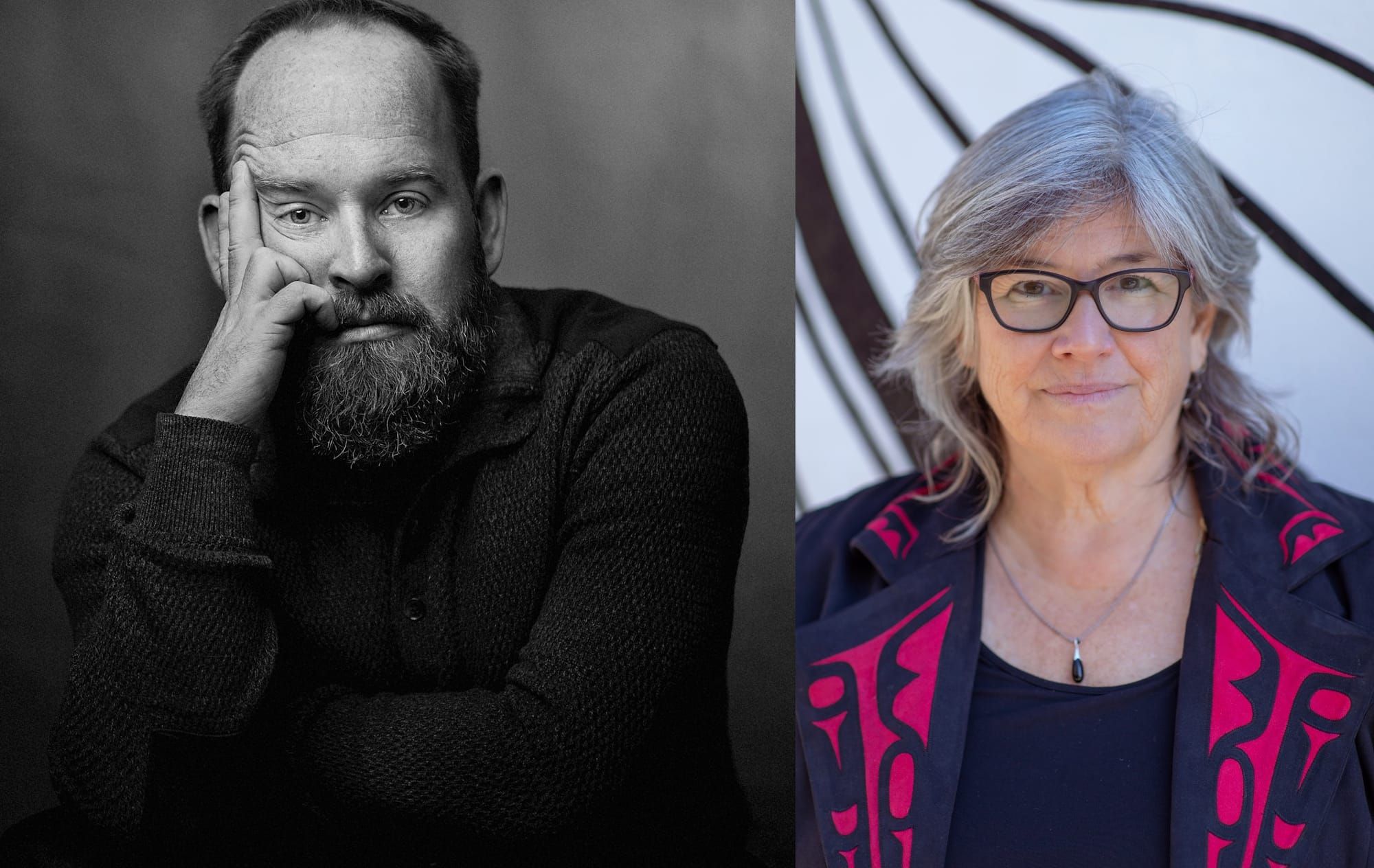
A few of weeks ago, playwright Matthew MacKenzie and director Yvette Nolan were rehearsing MacKenzie’s new play, Strife, in Edmonton.
That was significant, because the play, about an oil patch worker who’s looking for answers after her Indigenous climate activist brother is brutally murdered, is set in Amiskwacîwâskahikan (the Cree word for Edmonton) and Nistawâyâw (Fort McMurray). The latter, of course, is home to the Athabasca Oil Sands.
“We had a couple of run throughs where we invited folks who are up close and personal with a lot of the things spoken about in the play, and it was really special to be grounded in the place and with the people where the play is set,” said MacKenzie on a recent Zoom call before the play’s premiere at the Tarragon this week.
“One man from a Cree community north of Fort Mac — not a theatre guy at all — runs a company up in the patch. He said that the conversations in the play are often had in private amongst Indigenous folks. Not to paraphrase him, but he felt what we were doing was needed. When he started to realize what the play was about, he actually thought he was being punked. It struck so close to home.”
MacKenzie, who grew up in Edmonton and now lives in Toronto, says pretty much everyone in Alberta has some connection to the oil sands.
“In theatre, we’re surrounded by progressive types, but we all have family and friends who work in the patch, so there’s not this sort of theoretical divide you sometimes have in other parts of the country,” he says.
As one character in the play points out, the oil patch is the largest employer of Indigenous people in the country.
“That was why it was so meaningful to get this fellow’s feedback,” says MacKenzie. “It’s important that no one feels they’re being damned or judged in the show. There are different types of folks — in this case, different kinds of Indigenous folks — who are represented. Not everyone thinks and feels the same in different communities and parts of the country.”
Besides Monique (Teneil Whiskeyjack), who works at the oil patch, and her long-term boyfriend, Eddy (Jesse Gervais), who’s in middle-management at an oil company, the cast of characters includes Sarah (Grace Lamarche), the girlfriend of Nathan, Monique’s dead brother, as well as Eleanor (Valerie Planche), Nathan’s mentor at university, and Andrea (Michaela Washburn), the therapist Monique is seeing to work through her grief and conflicted feelings.
But the most striking character is Great Grey Owl (Tracey Nepinak), a narrator figure who often acts as comic relief but also provides a crucial link to the past.
Feeling safe
“When we did a recent reading, one viewer told Jesse that they felt completely safe because of Owl,” says Nolan, on the same Zoom call.
“Owl allowed them to be inside the story and feel taken care of, which is always important to me. It’s a hard story, with hard conversations in it. And we need to find a way for the audience to feel safe. Owl does that. She’s on stage the whole time, and she’s in scenes even though she doesn’t have very many words.”
MacKenzie says that whenever he’s in a room with a bunch of Indigenous folks, even if they’re discussing really heavy stuff, there’s always someone cracking jokes.
“Owl doesn’t always joke, but it definitely makes us feel like we’re not mired in the heavy all the time,” he says. “I’ve worked with Tracey before, and she’s so wonderful because she can be the focus of the stage and in an instant let go and not upstage anyone else. It’s remarkable.”
Planche’s Eleanor is a character who is likely to draw mixed reactions, particularly around her role as keeper of people’s cultures and histories when her own Indigenous background could be questioned.
“Her identity was the big conversation in the room at the recent readings,” says Nolan. “Interestingly, people see what they want to see. Many people saw her as a Pretendian, and of course that’s such a major topic right now. We’ve talked a lot about being deracinated, about where we get our teachings.
“My mom’s from Kitigan Zibi in Quebec, but because of the residential school system never got back to her community. So I was born in Saskatchewan in Cree territory. My elders are all Cree and Métis, and I that’s where I get my teachings. I also get teachings from my community, but not in the same way as I would living in it. There’s a lot of infighting in Indigenous communities about who is a knowledge keeper and who isn’t.
Grappling with ideas of culture and teaching
“All of the characters in the play are connected to their identities in different ways,” she continues. “Monique keeps saying, ‘I’m not cultural, I’m not cultural,’ but she knows things like pipe ceremony protocols. And Eleanor, who’s had to find her way back to culture, has picked up Sioux stuff and teachings from other places. I think this is one of the things that makes the play really boil. Even within a family unit, people are grappling with their ideas of culture and teachings.”
For his part, MacKenzie says that while other playwrights are working on scripts dealing with the subject of Pretendians, he had other interests.
“Everyone in this play is Indigenous, and it’s about how we navigate, for good or bad, what we know, what we’ve learned, and how we how we hold that.”
MacKenzie, who’s an assistant professor at Brock University, says he’s the only Indigenous faculty member in his building that houses multiple departments.
“Academia is very much like theatre, where you might have one Indigenous person in a room — or a show — and they’ll essentially be asked to be the Indigenous expert on everything. Plenty of settler theatre companies get money to produce Indigenous work, and maybe they put Indigenous people onstage. But do they have an Yvette Nolan in the room? Do they hire elders and knowledge keepers? Do they have all the supports that when I’m working with Indigenous artists in an Indige-led space, it goes without saying you have? I’m not sure.”
The play, which MacKenzie has been working on for 12 years, includes a detail about seats at a certain historic Toronto theatre that will have long-time theatregoers laughing.
“Years ago, I had the conversation that’s in the play, and I absolutely couldn’t believe it,” he says.
First Métis Man of Odessa update
MacKenzie’s First Métis Man of Odessa, which he co-wrote and starred in with his wife, Mariya Khomutova, dealt with, among other things, their relationship during the outbreak of Russia’s war on Ukraine. How are his in-laws coping with the ongoing war?
“We sadly lost my father-in-law last summer,” says MacKenzie. “We managed to go and visit him, and he came to Moldova. We spent a beautiful week with him. And then later he had a heart attack and passed away. Our family and friends there are safe right now. We don’t know whether he would have had the heart attack if the war hadn’t happened. With the stress he was under all that time, it feels like we got robbed from having time with him. But at least we had that week, and he was with his grandson.”
Speaking of which, how is Ivan, born to MacKenzie and Khomutova during the pandemic?
“He’s five years old and in kindergarten here in Toronto,” says MacKenzie. “He’s doing well. He’s the smallest kid in his class, but he’s the most aggressive, so he holds his own.”
Strife begins previews at the Tarragon Extraspace (30 Bridgman) on Tuesday (April 7), opens April 9 and continues until April 26. Ticket details here
Congratulations to Madryn M., who won a pair of tickets to Strife in a recent So Sumi contest. She correctly answered that MacKenzie’s play Bears was among the works that had been previously produced in Toronto.