Interview: Toasting the Ladies Who Lunch with Company’s Gabi Epstein
The acclaimed actor and cabaret artist discusses learning from Sondheim, interpreting iconic songs and the secret to a happy marriage

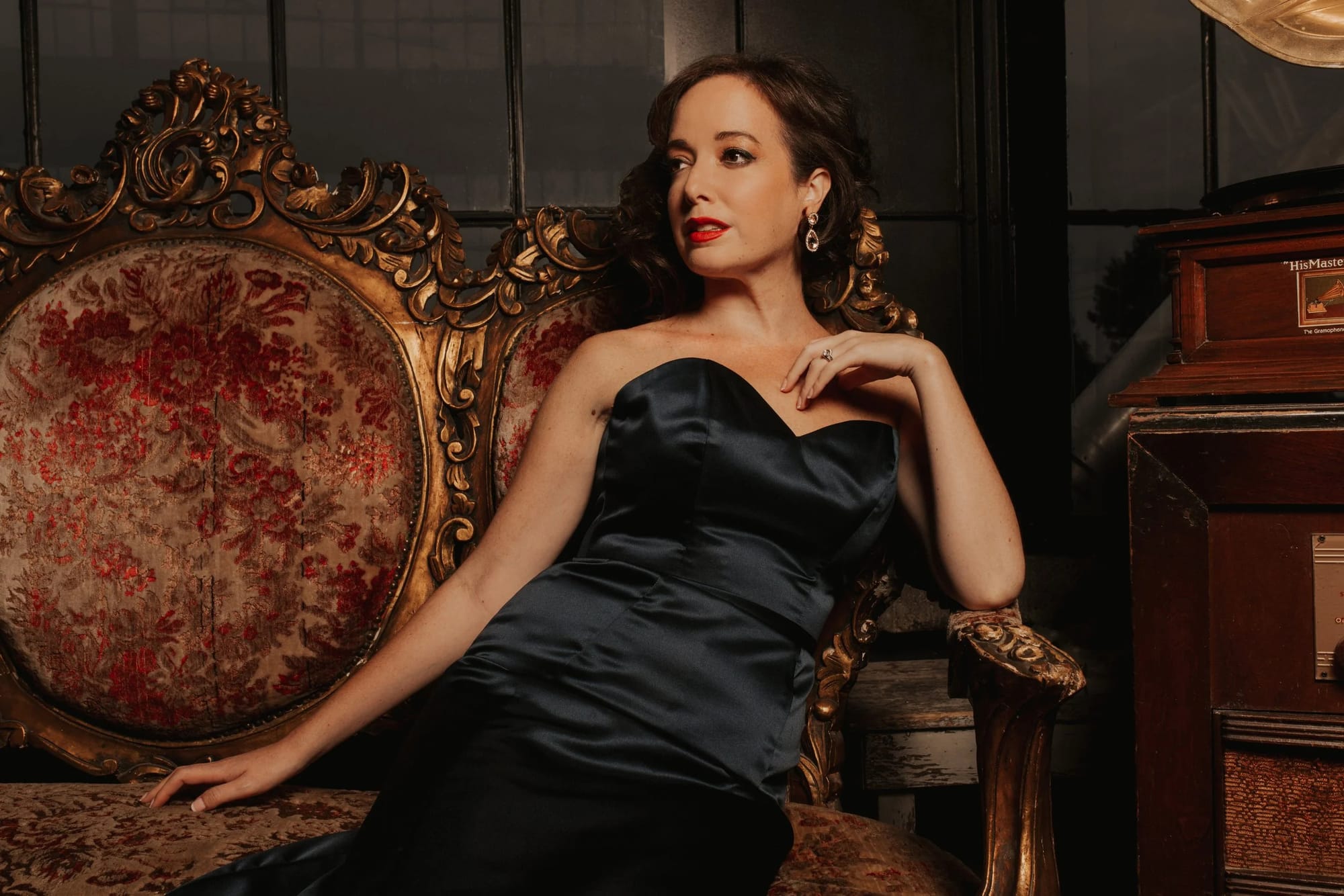
The 2026 Toronto theatre year officially kicks off next weekend with four openings, including the much-anticipated Talk is Free Theatre production of Stephen Sondheim and George Furth’s 1970 musical Company.
The show centres on Bobby (Aidan deSalaiz), a New York bachelor who on the eve of his 35th birthday takes stock of his life. In a series of vignettes with his married friends and a couple of single women, he ponders what to do with his life.
A critical hit when it first appeared (it won that year’s Best Musical Tony), the concept musical ran for two years and became one of the few Sondheim Broadway shows to recoup its original investment.
Since then, it’s had many revivals, and Furth and Sondheim revised the libretto in the 1990s. (I once planned an entire New York trip around an excellent concert version of the show at New York’s Lincoln Center.) In Marianne Elliott’s 2018 staging, the gender of the show’s protagonist was switched from male to female.
The Talk is Free production, directed by Dylan Trowbridge (Cock, La Bête), is opting for a less radical production. But it features a terrific cast, headed by deSalaiz and including Noah Beemer, Jeff Irving, Richard Lam, Krystin Pellerin and Michael Torontow.
One of the juiciest roles in the show is Joanne, a many-times-married woman who’s been around the block and dispenses cutting bons mots, usually while holding a cocktail.
She’s being played by Gabi Epstein, who’s starred in many TiFT shows as well as leads in Stratford’s Little Shop of Horrors and Funny Girl at the Segal Centre. Epstein is also an acclaimed cabaret singer. We spoke recently via Zoom.
So how big of a Sondheim fan are you?
Huge, but the shows that mean the most to me usually take on new meanings when I’m in them. My first Sondheim experience was when I was 15 years old at Earl Haig Secondary School, in my high school production of Anyone Can Whistle. I played Fay Apple, and I remember going to Sam the Record Man and discovering that Bernadette Peters had been in a concert version of the show, so all of a sudden I saw myself in this legendary person's experience, and I could connect to it.
Since then, I’ve seen a lot of Sondheim, and I love it. This is my fourth Sondheim show in four years: I did TiFT’s Sweeney Todd, and A Little Night Music and Into the Woods at Koerner Hall. By doing them, my fandom has grown, because I get to dive into every single lyric and note and metaphor and theme. So it’s made me an even bigger fan.
What have you learned about Company while working on this production?
I didn’t realize that the show began as individual one act plays by George Furth. It was (director) Hal Prince and Sondheim who decided they would make a good musical. The show makes so much more sense knowing this. It’s a concept musical — really, the first ever.
In traditional musicals, songs come out of what’s happening in a scene. In Company, it’s sort of one layer above that. The first scene of the show features married couple Harry and Sarah, and the scene leads up to them doing karate and physically fighting. They don’t have a fight scene song, which might happen in another show. My character Joanne comes in and sings about the little things you do together that make perfect relationships. The show looks at love and relationships in a whole bunch of different ways.
So my appreciation of Sondheim just keeps growing. Even though he’s got such a unique and specific voice and point of view, he does something so different with each one of his shows. No two are the same.
There have been different interpretations of the show over the years. Perhaps the most radical was Marianne Elliott’s gender-reversed one. Can you tell me a bit about Dylan Trowbridge’s concept for this production?
From the beginning, Dylan has said that he wants this to be the highest stakes version of Company that anyone has ever seen. He says that not only are these profound scenes and moments in Bobby’s life, but they are literally life or death moments. So we take the title of the song “Being Alive” literally: it’s about choosing to live versus choosing to die. He’s made sure that every moment is not just intentional, but that it must happen. It must happen so we get Bobby closer to being alive. And he also says that everything we do in the show must make the audience feel more alive, too.
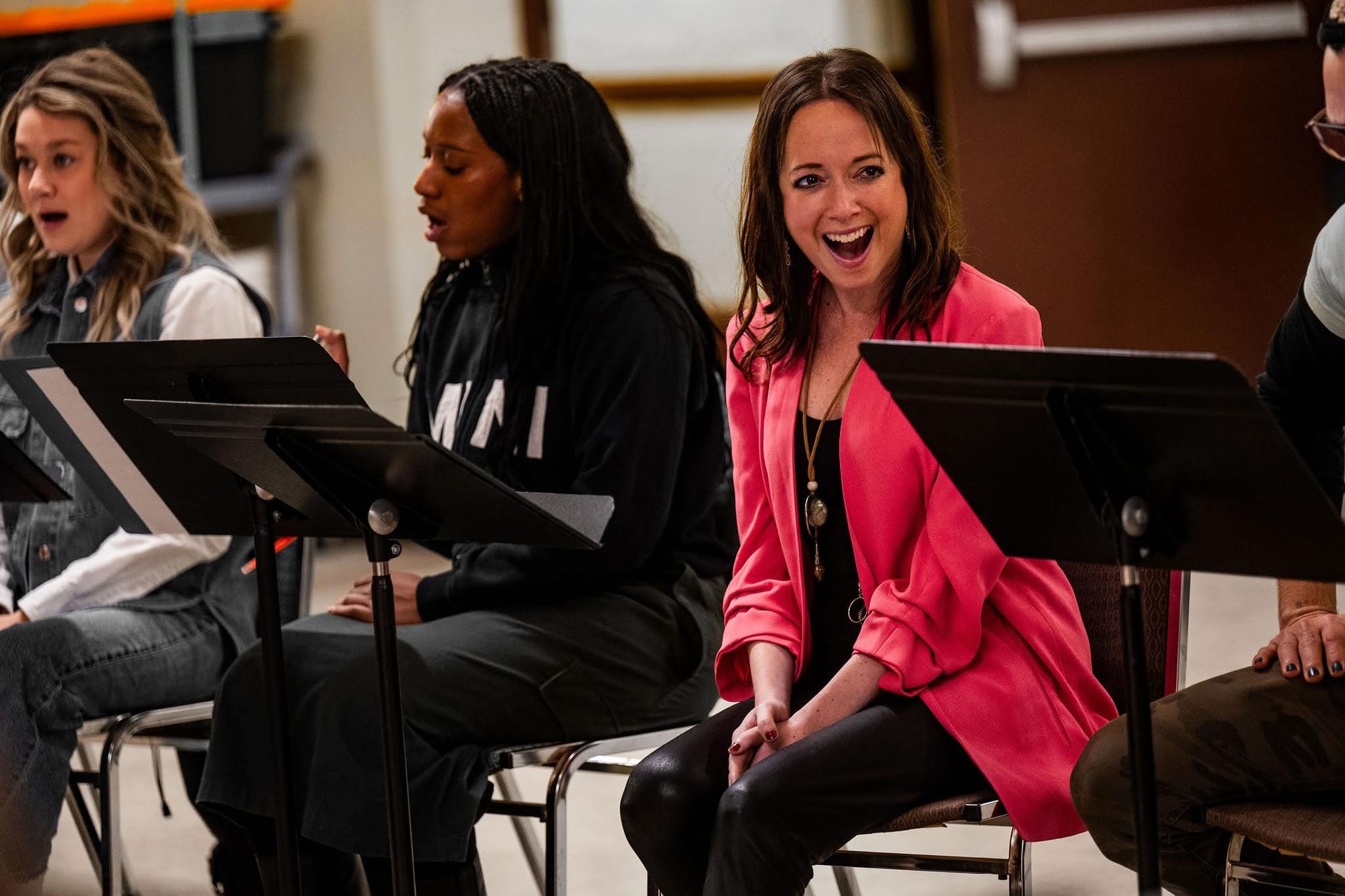
Aren’t you a little young to be playing Joanne? Patti LuPone was in her 70s when she played the part in the recent Broadway revival.
I think Elaine Stritch was around 45 when she originated the part. In your 40s you’ve experienced a lot of life; not a lot of new or exciting changes generally happen after then. I also think that being 40 in the 1970s was different than it is today. Even Bobby turning 35 is much different today than it would have been then. This is definitely a period piece.
So sure, Joanne is traditionally played by an actor who’s much older: she’s sort of a bitter older woman. But all of that isn’t actually in the text. Also, she and Bobby are friends — they hang out together! She’s not some strange older lady who’s like his mom. So she does have to be something of a contemporary. That’s why their friendship makes sense; when he looks at Joanne, he doesn’t think, “Oh, she’s way too far gone.” I think he thinks, “This is all coming sooner than I realized.”
So yes, technically I am younger than many actresses that have played the role. But I’m now in my 40s, I’m married. I think there’s a difference between old and just experienced, someone who has a knowledge that Bobby doesn’t necessarily want. Also, I’m not a bitter person — I have a happy marriage, like many of the people in the show, funnily enough, including Dylan.
I’m enjoying this process of finding the hope in the show. The song “The Ladies Who Lunch” can make it seem like we’re all doomed — or it can be a call to action. I’m not telling Bobby to rise at the end of that song. I’m saying it to everybody.
Speaking of “The Ladies Who Lunch,” it’s so iconic that it has a life outside the context of the show. How do you find your way into it and make it your own?
It’s always a challenge — less so for me than for what audiences expect. I encountered it when I played Fanny Brice in Funny Girl. I remember thinking, “You can’t take the Barbra Streisand out of it — that would be wrong.” So you sort of tip your hat to it, you acknowledge it, and then you let it go. That’s kind of what I’m trying to do here.
I don’t want to ignore the iconic women that came before me playing this role. But I’m not them. If you study the text, Joanne is singing about all of these women who exist in the world — women she realizes are all a part of herself. In one way, it’s just a song about being at a turning point in your life, finding your way and figuring out who you are.
I think it helps that I’m different than a traditionally cast Joanne. It allows me some freedom in doing something different. People aren’t going to come in and expect me to be Elaine Stritch.
How many times have you watched Stritch recording the song in the D.A. Pennebaker documentary about the OBC recording?
[Laughs] It’s amazing, isn’t it? There’s so much conflict in it. But she brought it on herself! She insisted on going on last, so it’s like, “You did this to yourself, lady.” It reminded me of that recent documentary about the making of We Are the World. It was this pressure cooker situation, and went late into the night. It captures a really interesting energy that you sort of feel in Company. The clock is ticking down to Bobby’s 35th birthday. And really, the clock is ticking down for all of us, so what are you going to make of your life?
You mentioned your happy marriage. You’re married to another actor, Jeremy Lapalme. So I was wondering, if Gabi and Jeremy were Bobby’s friends in Company, what would they be doing — and what advice would they give him?
What a fun question. We would probably be performing together, because that’s how we met and where we are so happy. So maybe we’d meet Bobby on a show or backstage. And our advice, something we always say, is: Spend your time with that other person, hang out together, play games, have cocktails, just enjoy your lives together.
You’ve worked a lot with Talk is Free Theatre. What do you like about them?
This is my 10th production with them. I love that they always take these big swings with shows, no matter what they are. I’m always challenged as an actor. Arkady (Spivak, TiFT’s artistic producer) has put me in shows and roles that I never, ever would have played. I’ve done world premieres of new musicals and bit parts in Russian dramas. The range they offer is incredible. So as an actor you always say yes, because it’s going to be an adventure. It might get a little crazy at times, but it will always be a wild adventure.
Arkady loves artists, he loves actors. What’s been especially amazing for me is I’ve got to take on some leadership positions in the company. I’ve done some project managing and associate producing. He implicitly trusts artists to make big decisions, and that’s inspiring. In a world where actors don’t feel like they have a lot of power in the thing that they do, he kind of flips the paradigm and puts artists near the top of the decision-making list. That’s empowering, and I think it makes us stronger performers outside the company as well.
Company previews Jan. 15, opens Jan. 16 and runs until Feb. 8 (extended) at the Theatre Centre (1115 Queen West). Ticket details here
Real life lessons
If you’re one of the thousands of people who have made Michael Healey’s play Rogers v. Rogers such a huge success — it’s sold out all advance tickets at Crow’s Theatre until Jan. 17 — you might be curious what one of the main characters in that show thought of how he was portrayed.
Last week, I talked with Matthew Boswell, who as Canada’s former Commissioner of Competition tried to prevent Rogers Communications’ attempt to buy Shaw Communications a few years ago, shrinking the telecom market from four players to three. Boswell essentially co-narrates the play.
I also talked with playwright Healey, who adapted Alexandra Posadzki’s award-winning book for the stage, and Tom Rooney, who in a tour-de-force performance plays Boswell, Edward Rogers and a dozen other characters.
You can find that conversation here.
Ticket giveaway update
Congratulations to Steve F., who won a pair of tickets to the upcoming Shakespeare BASH’d production of Troilus and Cressida. To the question, “After the prologue, what character speaks the play’s first line of dialogue?” he correctly answered Troilus.
Find info about the show, which opens Jan. 29 at the Theatre Centre and is one of the things I’m most looking forward to on Toronto stages this winter, here.
Upcoming: A peek behind the new CBC PlayME podcast season of bingeable Canadian audio plays; an interview with Gabe Meacher and Taylor Hreljac, the funny but deeply serious duo behind the monthly Spotlight at the Second City series.