Q&A: Eureka Day’s Sarah McVie and Jake Epstein
Two co-stars of Toronto’s funniest play discuss parenthood, politics, vaccines and absurd Zoom calls

This post is sponsored by the CBC podcast PlayME. The full audio version of Akosua Amo-Adem’s Table for Two is now available for streaming here or on your favourite podcast app. See more at the end of this article.
The funniest play currently on in Toronto is Eureka Day, Jonathan Spector’s savage satire about what happens when a mumps outbreak hits a seemingly progressive private elementary school in Berkeley, California.
Two of the parents on the school’s board are Suzanne, one of the co-founders and nominal head of the group, and Eli, a major donor who’s got a child currently enrolled.
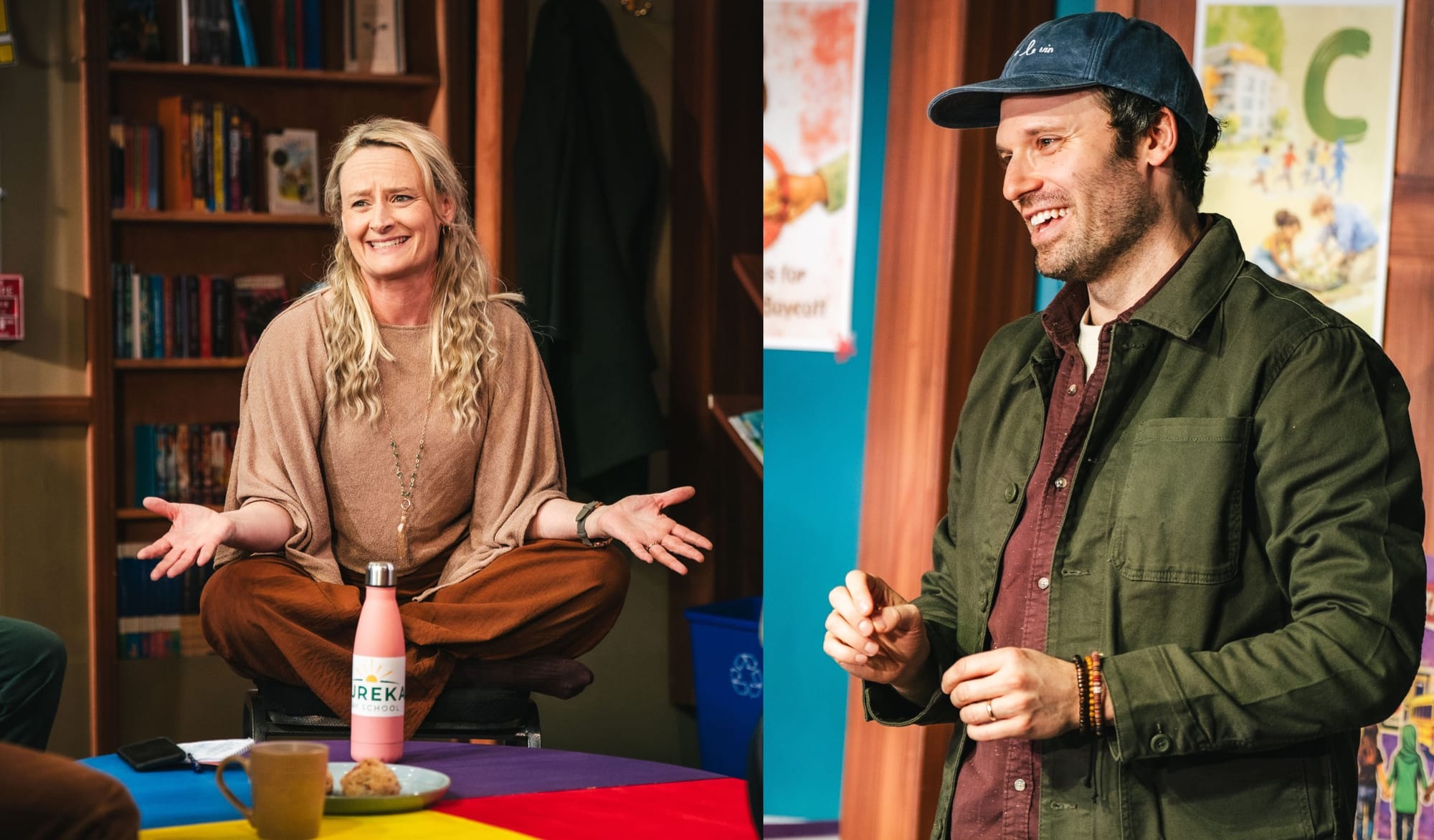
Coincidentally, actors Sarah McVie (Workin’ Moms) and Jake Epstein (Degrassi: The Next Generation, Boy Falls From the Sky) who play the characters, are relatively new parents themselves. I asked them about that and more when we talked recently by video call — a call that was much more civilized than the one depicted in the show (IYKYK).
The night I attended the show, there was lots of laughter, but there were also cringy groans of recognition. What is that like to experience that kind of charged response nightly?
McVie: So satisfying. Theatre is a place where we can explore complicated emotions, and release some of our frustrations with each other. Whether you recognize yourself or people you deal with on a regular basis, you need an opportunity to go Ugh and let it all out.
My character, Suzanne, gets a lot of groans. She has her biases and her blind spots — as we all do. I really appreciate that people are recognizing the truth of how people can appear one way, but really, even if they don’t realize it, they’re silencing, trampling on or ignoring others.
Epstein: The play feels like such a dialogue with the audience. So when there’s a vocal response to something — obviously the funny lines, but also the shocking things — it’s fantastic. It means everyone’s with us and experiencing it on a vocal, visceral level.
Were you surprised, like me, to find out the play debuted in 2018? It feels like it came out of the pandemic — not just with all the talk about vaccines and quarantines but also the use of video conferencing apps.
Epstein: Absolutely. I was just reading a bunch of Jonathan Spector interviews, and he said he didn’t have to rewrite the Skype scene. It largely remains exactly how he wrote it. He nailed the absurdity of trying to have a large, serious debate online over Zoom, something we’ve all experienced 50 horrible times in our own ways.
McVie: The fact that he mentions trolling is prescient, because back then the idea of people feeling empowered to say things online that they would never say to people’s faces was newer. And now we’ve become so accustomed to it.
As relatively new parents, does performing in the play hit home in a different way for you?
McVie: I became a stepmom — or a “bonus mom” as I call it — two or three years ago to my partner’s two sons who were, at the time, seven and 14. I wanted to be a mother my whole life. Part of why I wanted that was to be engaged in my community. Besides acting, I’ve always taught. I just love nurturing other humans.
So this is actually my first week of being a working actor and a mom. I dropped the younger one off at school this morning. I’ll pick him up in the afternoon, and then race to the theatre. I’ve always been in awe of the parents that do that — that work as artists and juggle everything, including parenting.
Epstein: My eye is twitching as we talk (laughs). I’ve got a two-year-old at home. My partner, Vanessa Smythe, is also an actor, and at one point we had to go, “Can we do this? Is it possible?” One of the reasons I’ve been trying to do theatre in Toronto is because I can work close to home. Coal Mine is in the east end, and we live in the east end, too. I thought it might make it easier.
How is it affecting me? I’m exhausted all the time. I often come in flustered. I had a great chat with our director, Mitchell Cushman, and he said: “Use it. That’s what your character is, a full-time father.” So it is sort of built-in research.
And certainly with the things that happen to my character in the play... not to give away any spoilers, but it is really hitting me in a way that I don’t think I fully expected when I started.
I guess I’m entering my era of dad roles right now, and am trying to embrace that as much as I can and use it and bring it in to the theatre with me.
Sarah, did you have any experience with vaccine mandates in schools?
McVie: I just got my COVID-19 booster. I appreciate the science behind the vaccines, and understand that we need to protect each other. However, I do have empathy for people who are confused. This is such a strange time, with so much misinformation, especially on the internet. I’ve encountered people I love who are skeptical or don’t want to get vaccinated, and have seen firsthand how hard it is to connect with them and find common ground.
I was in Ottawa during the lockdowns, a place that early on embraced the shutdowns. I was frustrated at first why everyone wasn’t complying, but I realize that was my bias, too. I was living in a place that understood the science behind things. I come from a family of civil servants, and things were explained to me very clearly.
I don’t think there was an easy way — especially then — to bring people together to share ideas and debate them. And so things went online, which we see in a scene in the play, which descends very quickly into emotion, anger and rage.
My sister’s a teacher, a child psychologist and counsellor. Certainly in her work, she encountered a lot of that debate about what schools should do in the moment. And yeah, it was complicated.
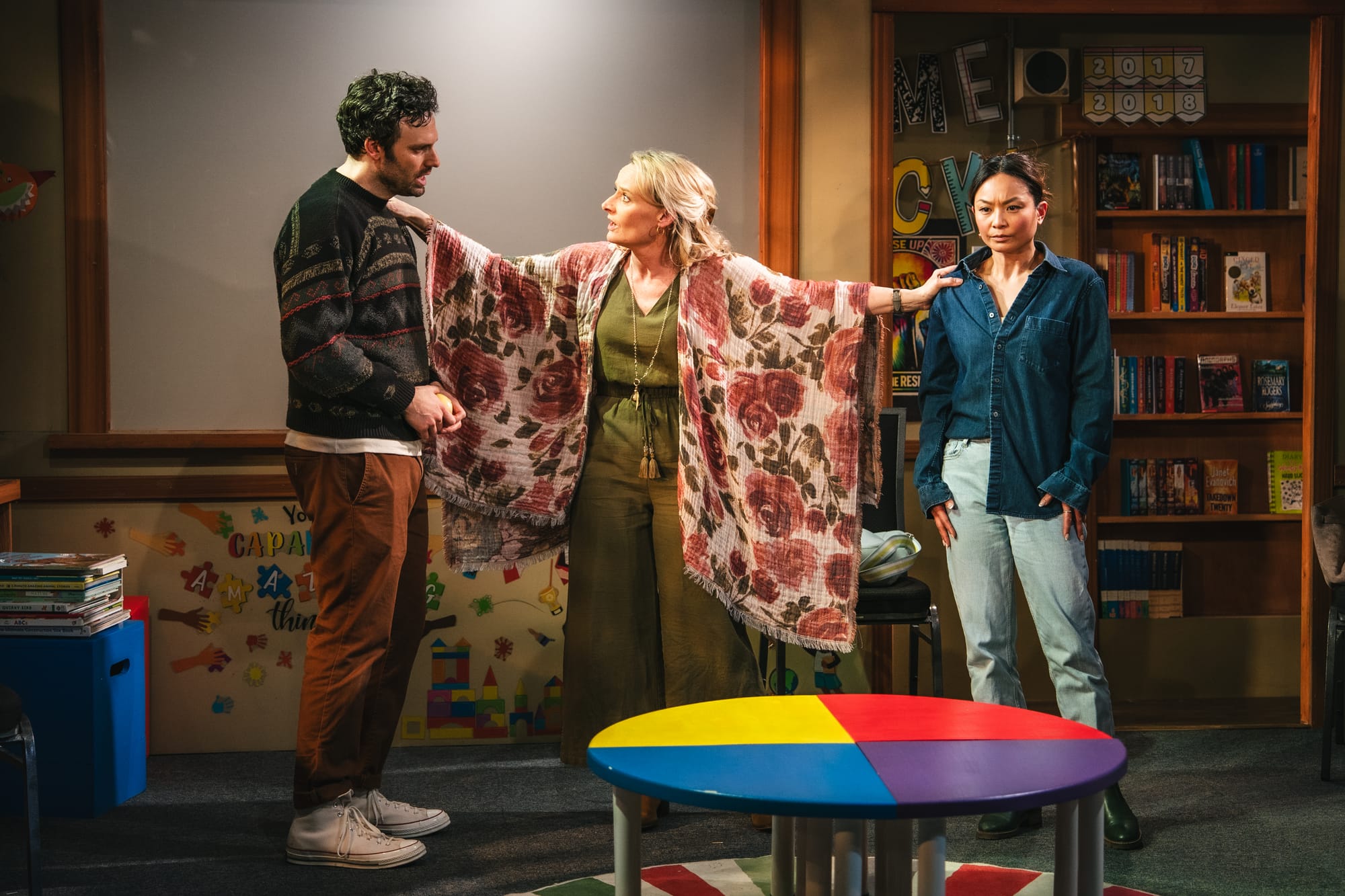
If there is an antagonist in the play, I suppose it’s Suzanne, who doesn’t believe in vaccines. How did you go about getting into her skin?
McVie: I’ve met so many different people in my life. I draw inspiration from them, and certainly I’ve been lucky enough to have a lot of well-meaning people in my sphere of influence. I can sometimes see that they have biases. We all do.
There’s a resistance to admit any kind of potential flaw in your thinking, as if it means you’re somehow not perfect. I would love us to move away from this idea that we need to be these perfect beings that have always been right. We should embrace saying, “You know what? I was wrong about that.”
I also think Suzanne’s reaction is trauma-based. Extricating herself from that would require quite a bit of time spent looking at that trauma. Psychology is a huge interest of mine. Being able to identify how trauma has influenced you, and extricating it from your decision-making, is a long process, but you have to be willing to go there. So much of it comes down to not having to feel like you’re right or wrong. We need to get rid of this binary attitude. The truth lies in all the shades between black and white.
Epstein: What’s so funny about this play is these characters are so well meaning to the point of being overly cautious about offending anyone. Because of that, they’re filled with blind spots. There’s so much comedy in it because we recognize this behaviour. It’s part of the way that professional rooms work, rooms where we make policy, in communities, schools — politics at all levels. We’re all terrified of walking this line. And I feel like Spector really captured all that well.
All of a sudden, when these fearful, well-meaning people have to talk about something serious, like vaccine policy, they’re completely in over their heads.
And to go back to the idea of Suzanne as antagonist, what I love about this piece — it comes out in the writing and Sarah’s performance — is that you really understand her by the end. You really understand why she’s making these choices.
Again, not to give away anything, but Suzanne has this very moving monologue later in the play. Sarah, can you feel the audience changing its feelings about her?
McVie: Yes! A few people who are firmly pro-vaccine have come up to me after the show and said that at that moment they felt differently about my character. I can sense people shift. I almost want Spector to write another play about what happens to Suzanne after the play. She spent 13 years of her life building this school with blood, sweat and tears. Where is she going to go?
Jake, we find out a little later in the play that Eli is an extremely wealthy tech entrepreneur. Did you study the behaviour of any tech bro Silicon Valley types, like Sam Altman?
Epstein: A little bit. But also, a very good childhood friend of mine was very high up at a Slack, the workplace app. He’s a lovely guy, and one of my best friends. But seeing him change a little bit, and seeing what money does to a person was intriguing. This is a big generalization, but what I’ve noticed about people with massive wealthy is they will sometimes speak without thinking. They’ll just talk and take up the space.
We were talking about blind spots and character. What’s so fun about Eli, especially in the first half of the play, is that he is a character who is filled with blind spots. He believes he’s on the right side of history, and in doing so is sometimes rude, cutting people off.
It’s definitely in the writing, and there’s a little bit of my friend in there. But Eli has something he experiences midway through the play. And shifting to that — playing these two sides of a character — was really interesting.
I love how beautifully choreographed this production is. You can tell a lot about where people are sitting in relation to each other, how close they get to them to make their points. And I really like how at the top of the show, Sophia Walker’s character, Carina, the newest member of the group and the only Black parent, has her back to the audience so we can’t see her expression. That’s so clever.
Epstein: That decision came from Abigail Whitney, the play’s assistant director. We see this strange group of characters through Carina’s eyes. Also, Mitchell (Cushman) embraced the small space, capturing the awkwardness of moving around each other, especially in that Zoom scene, where everyone was trying to get their point across. It doesn’t feel choreographed, but of course it is.
McVie: Mitchell is a really wonderful director. He took us on such a well laid-out journey, and it helped to be able to work in the theatre, with that set, pretty early on. In the script, there’s no punctuation, but Spector has written every “um” and “ah.” We had the time to understand all of that and ground it in some reality.
Epstein: It’s a bit of a cliché, but it does feel like we’re in a band, and if one person is a little off one night it affects the whole rhythm. Of course, things happen, and we’re there to pick anyone up. But Mitchell got us to really drill down in each moment. During rehearsals, he would constantly stop us, and ask, “What are you saying? What are you saying?”
Can you talk to me about that famous third scene with the Skype call? Is the laptop in front of you mirrored to the screen the audience sees?
Epstein: Yeah, so we’re all seeing exactly what the audience is seeing. We’re reacting to the comments in real time.
McVie: The actors are reacting to what we’re seeing, and when we added the audience, they react to things. It’s like a dance that changes every night. The timing is different each time.
Especially in the U.S., there’s a real push by the current administration to get rid of diversity, inclusion and equity in schools, workplaces and government buildings. It feels like that could happen here as well. How concerning is that?
McVie: Whatever is happening in the States feels like a pimple popping on something very gross and harmful. I can’t wait for us to get on the other side and savour how wonderful it is to be in a diverse group of people with different backgrounds. I teach my kids, it’s just a more interesting life. Do you want a boring life where everything is the same, and you’re in an echo chamber?
That’s another reason why I look to the theatre. I took one of the boys to The Mush Hole recently at YPT, about the residential schools, told mostly through dance. It just expanded his mind. And that’s important now, because kids are being fed this slop online.
I remember my first read through years ago at the Stratford Festival. It was Diane D’Aquila, Sara Topham and myself, and all these men. Everybody was white. I remember thinking, as a woman, this is bizarre. I had just come from theatre school where they were more women graduates than men. And I thought: Where are we going to work? This is not right. Why are we telling stories with this much representation of one gender? And very quickly I became hyper aware of the fact that also everybody was white. So I think it’s wonderful what places like Stratford have done to take on inclusion. That is the way we have to go. There’s no doubt about it.
Epstein: Theatre is political no matter what. What better time to do a play like this to reflect what’s happening in the US? One of the interviews I read with Spector discussed how the play was meant to represent the different points of view of Americans. When he wrote it he didn’t believe Trump would get elected, and it was about hope. When Trump did get elected, he said, suddenly the play became about the failure of America, which is also the failure of Canada.
There is a danger of allowing every single opinion to have equal weight. As a Canadian, as a dad, as a theatre artist, it’s a totally confusing time. This play feels like a reflection of what’s happening in the world right now and how complicated it all is.
What I love about Eureka Day is that it’s so funny. It shows that the way in to really serious and important conversations is through humour.
This interview has been edited and condensed for clarity. Eureka Day continues at the Coal Mine Theatre (2076 Danforth Ave.) until Mar. 1. Ticket details here
A play to fall in love with
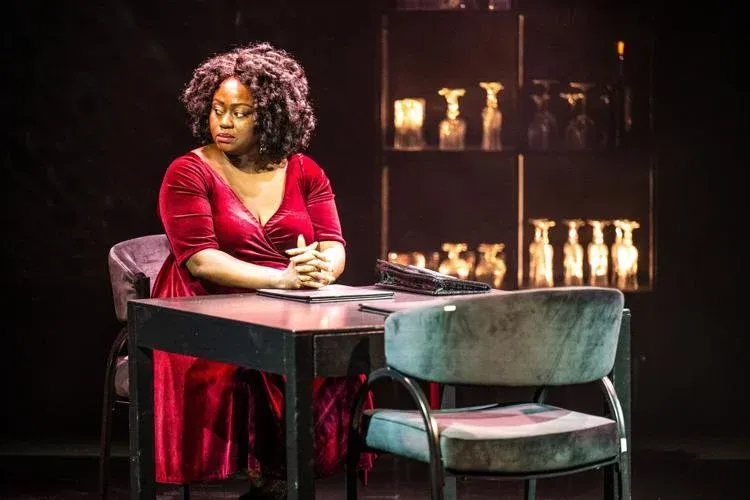
This week, in honour of Valentine’s Day, the CBC podcast PlayME dropped the audio version of Akosua Amo-Adem’s play Table for Two, which premiered at Soulpepper a year ago.
Having seen and liked that production (here’s my original review), I was looking forward to this podcast. And to be honest, I enjoyed the audio play more than the staged production.
Amo-Adem’s script — about Abby, a woman in her mid-30s who’s looking for love — hops around in time and place. With the right sound cues, audio drama can make that happen effectively. It’s always clear where we are, and the sound designers also use a nifty echo effect to indicate when Abby is addressing the audience.
The laughs are funnier than ever; I don’t remember a self-pitying song Abby sings when her first love, Patrick, decides to go teach English in Korea, but the mock bluesy number works brilliantly in audio.
And the poignant moments — between Abby and her bestie Janelle (Meghan Swaby) and between Abby and her judgemental mother (Bola Aiyeola) — all land with perfectly timed emotion. All the actors, including Ryan Allen as various men in Abby’s dating life, are first-rate.
I didn’t appreciate how well Amo-Adem had structured the ending until listening to this version. Whatever stage of love you’re in — with a significant other, your best friend or with yourself — you’ll find something that will tickle your funny bone and warm your heart.
You can listen to the play in two parts starting here, or wherever you get your podcasts. And look for PlayME’s interview with playwright/actor Amo-Adem when it drops on Feb. 18.
Upcoming: Reviews of Some Like it Hot, Summer and Smoke, Copperbelt and White Rabbit Red Rabbit.