Curtain rises on new season of CBC theatre podcast PlayME
This year’s audio dramas include Kim’s Convenience, The Drawer Boy and a new play by Nicolas Billon that’s at the Tarragon in late February

Sometimes getting out to see live theatre can be challenging. There’s the cost of tickets, of course, but there’s also the pressures of daily life: post-workday exhaustion, traffic, transit, parking.
That’s where the CBC podcast PlayME comes in. For eight years now, the series has been capturing some of the best new and newish Canadian plays for your listening pleasure. They feature all or most of the same cast that starred in a particular production you may have seen. Best of all? They’re available whenever you want to experience them on your favourite podcast app.
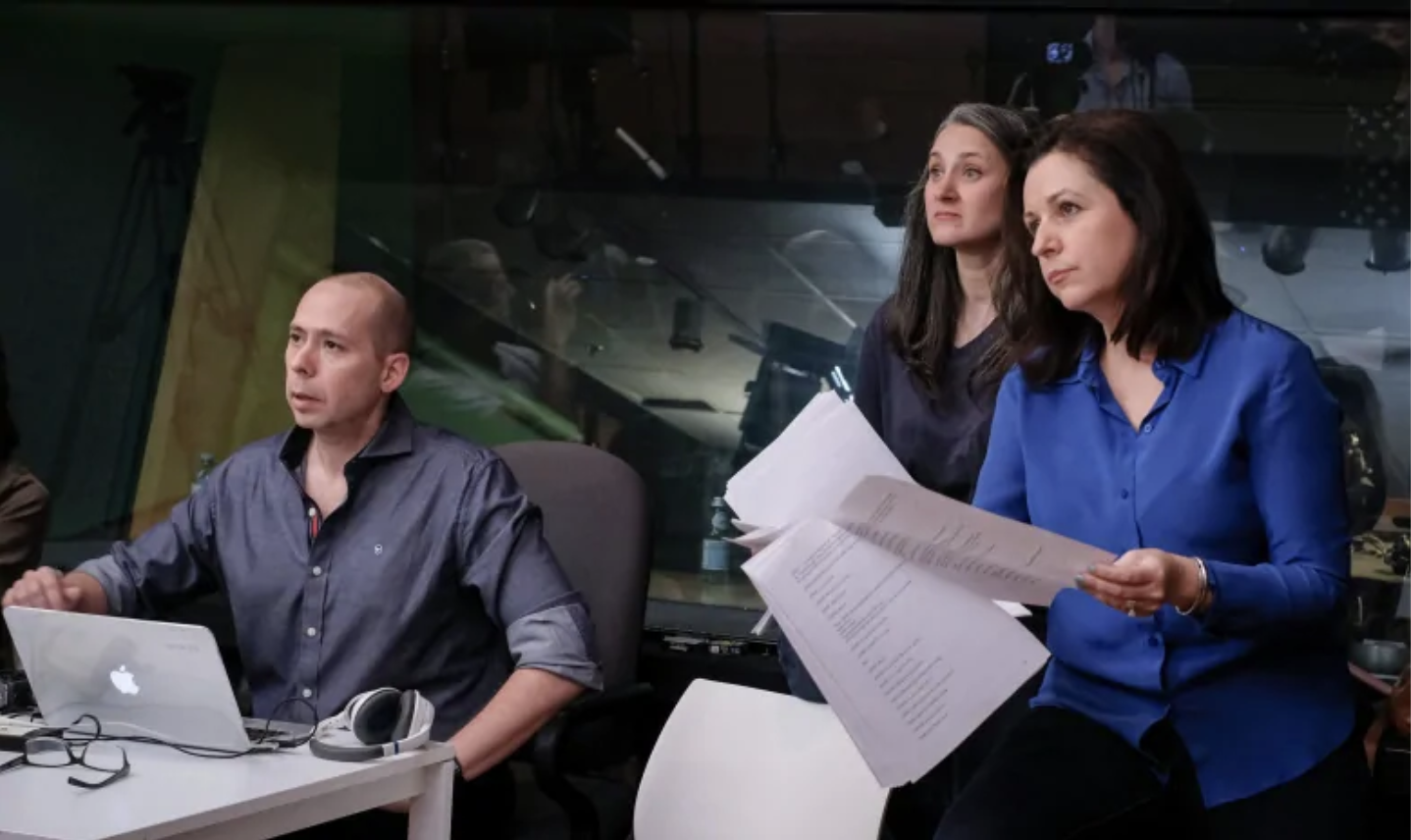
Another favourite feature is the interview the hosts conduct with the playwrights. Because PlayME’s co-hosts/producers Laura Mullin and Chris Tolley are theatre makers themselves — they run Expect Theatre — they are genuinely intrigued by all aspects of the art form. It shows.
I talked recently via Zoom with Mullin and Tolley before the launch of their new season, which kicks off Wednesday, January 14 with the celebrated revival of Ins Choi’s play Kim’s Convenience. Both parts of the classic play will be available then, and the following week Mullin’s talk with Choi (which she discusses below) will drop.
After that, the four other productions will appear monthly and are: Akosua Amo-Adem’s Table for Two (nicely timed for Valentine’s month), Michael Healey’s The Drawer Boy, direct from the recent revival at Thousand Islands Playhouse, Pamela Mala Sinha’s NEW and Nicolas Billon’s Neighbours, which is part of the Tarragon’s winter programming.
Full disclosure: While this is a sponsored post, neither Mullin nor Tolley requested it, directed the questions, or read the article before it was published.
How did you plan or organize this new season of audio dramas?
Laura Mullin: There’s never really any grand plan. Plays come to our attention that have had a good history on stage, or are by artists we think people will want to hear from and that we think will translate well to audio.
Ins (Choi), for instance, was in a show that Expect Theatre did when we were all right out of school. We’ve wanted to do Kim’s Convenience for a while, and the stars aligned with this latest production. We were also happy to find out that The Drawer Boy was being done. While we do contemporary plays, if a play is older and is being remounted, we’ll consider it contemporary because it’s being performed.
So it was nice to have those two Canadian classics. Pamela Sinha’s NEW, I think, is a classic in the making. Table for Two is super contemporary, very young and of-the-moment. And Neighbours is brand new; nobody’s seen it yet, but we read the script and loved it.
You’ve talked in the past about seasons having themes. Is there one this season?
Mullin: There’s a loose theme about connection, which seems important at a time when people are feeling so isolated. In these works, people are trying to make a love connection, or connect with a community or even connect to people within a family.
I notice that plays are being released in two parts on the same day. Before, you used to have to wait a week for the second part to drop.
Chris Tolley: Yes. Last year we tried this as an experiment, where we dropped both parts of a play at the same time, so if you wanted to binge them and go straight from the beginning to the end you could. People also listen to them on the treadmill, so you can listen to one half of a play on the treadmill and then the other half later. It gives you more flexibility.
Mullin: If you look at streaming sites, a lot of them have changed how they release episodes. Some like Netflix used to drop them all at once, while others released them once a week. They’ve gone back and forth to see what works best. I think if someone’s listening to a play, they’re more likely to listen to the second part of the play if it’s already up.
Not to pick favourites, but what things are you most excited about this season?
Mullin: I just taped a really great interview with Ins (Choi). He was incredibly candid. He talked about the script and playing Appa after playing the son, Jung. We revisited when and how he wrote it. I know much of that has been documented, but it’s been a while, and I think there’s a whole new generation of people — especially audiences who know the material only through the TV show — that will get to appreciate it.
I asked him about the TV series: the difference in being a playwright and then going to write for television. He was candid about how hard it was going from his first play to writing for TV where there’s lots of money on the line. I found that really interesting.
Tolley: This season, all five shows are so completely different. They’re different moods, genres, writing styles. I love the idea that you can go from one to another to another. They were each shows that made us go “Wow” when we read or saw them. It’s just nice to see that so many different kinds of plays can be so good, yet so different.
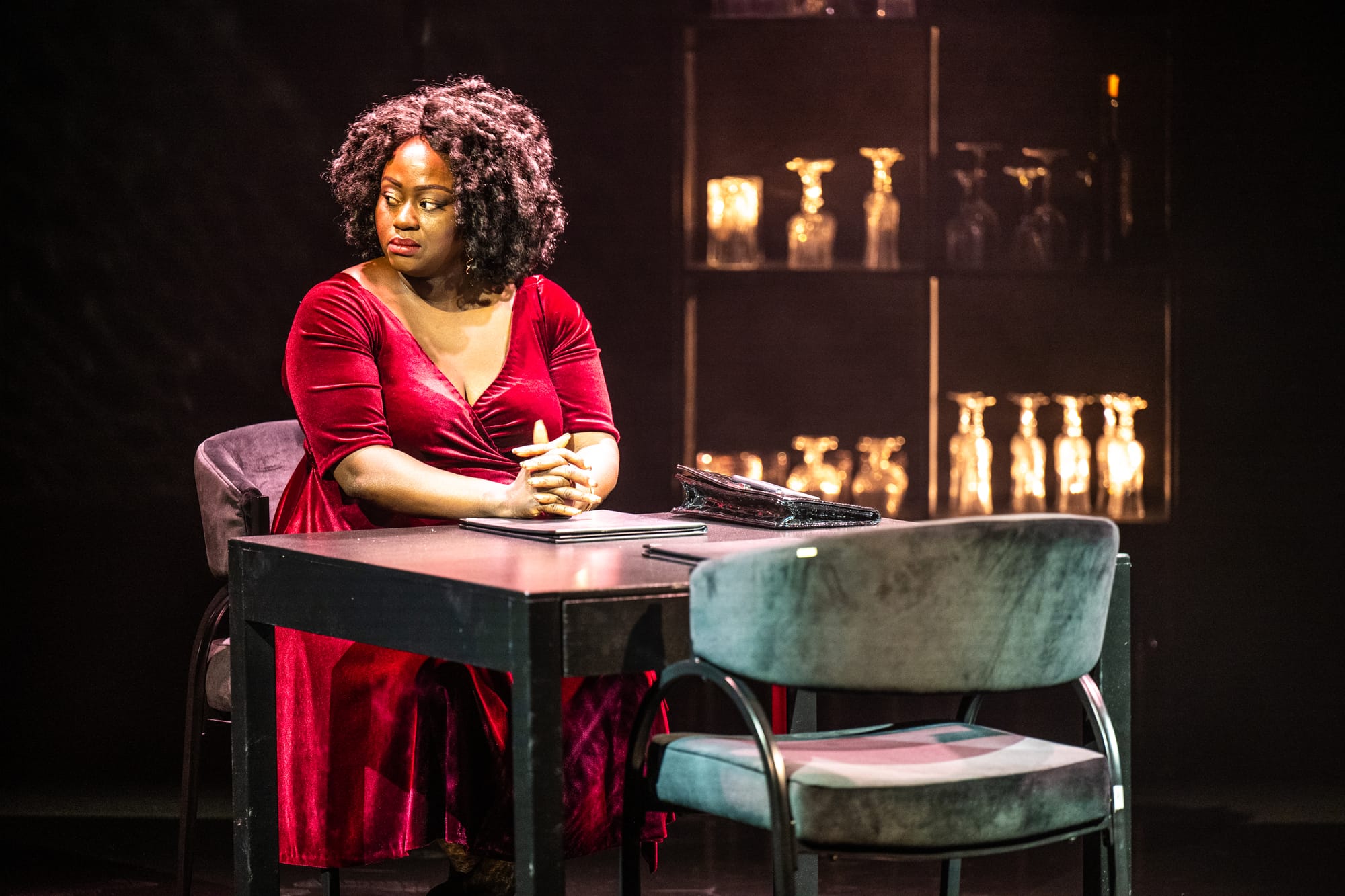
I’m curious how you deal with some things in a production that are more visual than aural. I’m thinking of some of playwright/actor Akosua Amo-Adem’s deadpan looks to the audience in Table for Two, or her use of a certain clothing item at the beginning of the play. How do you translate that?
Tolley: For that clothing item, you can really play with the sounds of the material stretching. It takes on a different character, but it works. What always surprises me is this: if it’s a good play, it will translate.
Speaking of sounds, Chris, I believe you do the sound design. Can you tell me about some techniques and tools you’ve learned about over the past eight years?
Tolley: Sure. I think sound effects can generally play two roles. One is straight and practical: somebody enters the room, so you have to hear the door and footsteps, because you need to know that the person has entered a room. But you can also learn a lot by how they enter the room, how the door even sounds. The door sound can tell you about the social and economic situation they’re in. How forcefully does it open? And you can tell a lot about a character before they speak by how they walk. I noticed that this year with Kim’s. All the movement builds story and character.
Laura and I teach now at the Tarragon, and it’s really fun to see participants realize that just the act of drinking tea can be completely different depending on how the person puts the tea cup down, or how long it takes them to sip it. You’re building an entire story right in that little moment.
Do any plays resist this medium? I’m thinking of Hannah Moscovitch’s Red Like Fruit, in which a character (played by Michelle Monteith) is silent for about 90% of the play, and a lot of the experience comes from just watching her reactions to her own story being read out by another character.
Mullin: Yes, definitely, for that particular play. When we did Butcher, the final moment involved a silent character that came on, and we did our best to articulate that moment. A lot of people messaged us for clarification, and we replied to every question. An audio version is never going to be the same experience as seeing a play live. Obviously, you should always go and see the play. Or experience both, if you can.
How difficult is it to assemble casts for the tapings? For a play like The Neighbours, I’m sure the cast from the Tarragon/Green Light Arts production will be here and can tape together. But that might not always be the case. And for NEW, I noticed there are actors like Lisa Ryder and Zorana Sadiq who weren’t in the version that played the Berkeley several years ago.
Mullin: Yeah, scheduling can be a challenge. We just taped the NEW podcast, and (playwright) Pamela (Mala Sinha) is a wonder of a human being. She handled a lot of the organizing of people’s schedules. They did a few more rehearsals.
When we taped Kim’s, one actor was in Vancouver, so we went into a different studio and he was on a screen while everybody else was there in person. During the pandemic, we did tons of remote stuff, and it actually made us realize we didn’t have to be in a studio at all. But this was the first hybrid taping. I’m glad we can do it. We don’t want to be limited to plays that only get produced in Toronto.
Tolley: I’m always so impressed with theatre artists’ efficiency. With some tapings, you’ve got actors who’ve done the show dozens of times working with actors who are new to the script.
Sometimes it can be more difficult if you know the script well. If you’ve done, say, 100 performances of a production and suddenly you’re taping and no longer performing on a stage, you might have to break the habits, all the muscle memory stuff, that worked so well onstage.
Sometimes actors will begin a scene, say a few lines and then ask to stop. They know it’s not landing the way they want. And then by the second or third take, their instincts kick in and they find it.
I love the playwright interviews. Do any conversations stand out over the past seasons?
Tolley: One of the most satisfying interviews was with Keith Barker, who was just so honest and upfront. Even though the play we were discussing, This Is How We Got Here, wasn’t drawn from his life, there were so many connections in it to his own lived experience. When he talked about it, he broke down and cried. To put yourself in such a vulnerable position and be so honest and genuine was incredibly moving.
The podcast space has really changed in the last couple of years. One of the biggest trends is videotaping the podcast and uploading it to YouTube, then chopping it up into clips for TikTok and Instagram reels for virality. I’m not a fan, because I really don’t want to look at two people wearing headphones talking into microphones. What do you two think about that?
Mullin: First of all, we couldn’t afford to do it because it would involve a different contract with ACTRA. Also, you might as well go see the play live. What I like about audio dramas is that you create the pictures in your mind and imagination.
That said, through our contacts at the CBC, the number one platform for consuming podcasts is YouTube. We could do the interviews on video; maybe one day we’ll do that. One of the benefits of working in audio is that you don’t have to worry what you look like when you tape something. I don’t want to have to be worrying about hair and makeup.
We are thinking of other ways to animate what we’re doing, however. We have some ideas — one is to take that Tiny Desk model from NPR, to take bits of plays, so we play with form, and we could include some stunt casting.
It feels like what you two are doing with PlayME has expanded. You’re launching the new season this week, but you’re also running what seems like a professional development series on many aspects of the entertainment industry. It almost feels like a Master Class series.
Mullin: Yeah, it’s called PlayPEN, and we started it about a year ago. Chris and I studied theatre and helped make theatre, but we’ve also worked in TV, radio, audio and film. It often felt like we didn’t have permission to switch things, even though being an artist, being a writer, should be a transferable skill.
As we’ve done PlayME, I think we’ve realized, particularly when we’re working with playwrights like Ins, who’s worked in theatre and TV before, people want to be able to experiment and explore other things. They want to know how to do those things, and they want access to industry professionals. And so we thought we’d try to make that happen.
One of the first artists we worked with was Mark Crawford, which was great because not only did we get to explore working in theatre and comedy, but Mark was so much fun. Coming up, we’re doing intensives on sketch, true crime. It’s been fun seeing what people want to learn.
Oh, and everyone we do a course with we interview for an upcoming PlayPEN podcast. So even if you didn’t get to take part in an actual class, you’ll get to hear from artists like Sook-Yin Lee, Daniel McIvor or Anusree Roy.
Where are they available?
Tolley: We have something called PlayME Plus, where people can subscribe and have access to this material. You get some of our back catalogue that has left the CBC podcast hub, and you also get early access to episodes.
You can find CBC PlayME here. It’s also available on CBC Radio.